GippsAero GA8 Airvan
Australian light utility aircraft, introduced in 2000, known for roles in humanitarian work, medical evacuations, and passenger transport. Key figures: top speed 241 km/h, range 1,352 km, service ceiling 6,100 m, max takeoff weight 1,814 kg, built 250. In service with 1 air force as of 2026 — Lesotho (1).
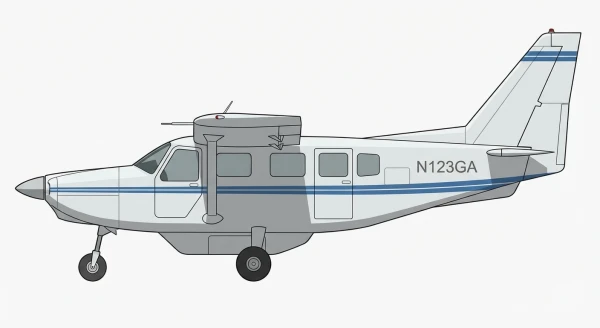
| Crew | 1 |
| Length | 9.0 m (29.4 ft) |
| Wingspan | 12.3 m (40.3 ft) |
| Height | 3.9 m (12.8 ft) |
| Wing area | 19.3 m² (208.0 sqft) |
| Empty weight | 997 kg (2,198 lbs) |
| Max. takeoff weight | 1,814 kg (3,999 lbs) |
| Powerplant | 1 × pistons engine Lycoming IO-540-K1A5 227 kW each |
| Maximum speed | 241 km/h (150 mph) |
| Operational range | 1,352 km (840 mi) |
| Service ceiling | 6,100 m (20,013 ft) |
| Climb rate | 4.0 m/s (13.1 ft/s) |
| Takeoff distance | 347 m (1,138 ft) |

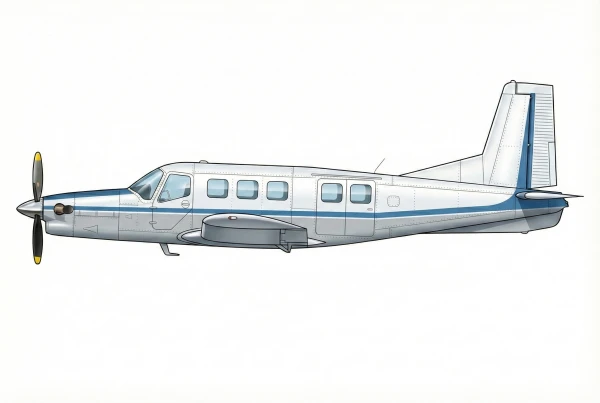
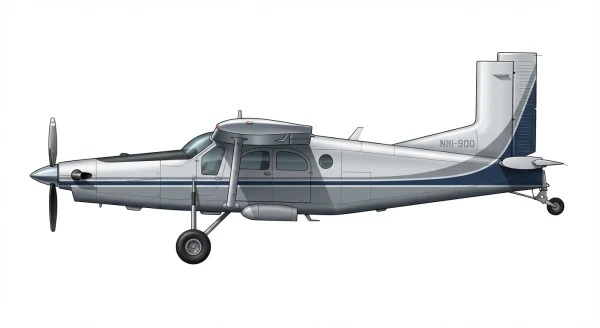
Description
The GippsAero GA8 Airvan is a single-engined utility aircraft built by GippsAero (formerly Gippsland Aeronautics) of Victoria, Australia. Seating up to eight including the pilot, it was designed for remote-area work from austere strips, covering passenger and freight services, sightseeing, parachuting, observation, intelligence, surveillance and reconnaissance (ISR), and search and rescue. It first flew on 3 March 1995 and was type certified under FAA Part 23 requirements in 2004.
Development
The design, led by Peter Furlong, targeted the gap between the six-seat Cessna 206 and the fourteen-seat Cessna 208 Caravan. Part 23 certification involved dynamic testing and validation of controllability following loss of any primary flight control. A turbocharged version was planned from 2002; the prototype began flight testing in October 2006, the Australian Civil Aviation Safety Authority amended the type certificate in February 2009, and first deliveries of the GA8-TC320 followed that month to customers in Australia and New Zealand. A floatplane model was evaluated in 2005, with production announced in 2011 in partnership with Wipaire. A supplemental type certificate for a 200 lb increase in maximum take-off weight was issued in December 2010. On 8 July 2010 a GA8-TC320 flown by Kenneth Evers and Timothy Pryse became the first Australian-designed and built aircraft to circumnavigate the Earth under FAI rules. Soloy Aviation Solutions was appointed component distributor for the United States in September 2012, followed by dealers West Coast Aviation Services (November 2012) and Summit Aviation (January 2013). Following the acquisition of GippsAero by India's Mahindra Group, the type was renamed Mahindra Airvan 8 at EAA Oshkosh 2014, and a North American assembly line was proposed. Mahindra Aerospace ended production in November 2020, citing the COVID-19 economic slowdown. Cofounder George Morgan repurchased the company in November 2023, and manufacturing restarted in June 2025 with serial number 263, with new-build aircraft expected operational in 2026.
Design
The GA8 has a rectangular fuselage and shoulder wing in a layout similar to the Cessna 208, with outward-bulged passenger windows and a centre aisle. Power is a 300 hp Textron Lycoming IO-540-K1A5 flat-six driving a two-bladed Hartzell constant-speed propeller; maximum take-off weight is 1,814 kg, cruise speed 222 km/h and range 1,352 km. Take-off run is 525 ft, allowing operation from 1,000 ft strips. Fuel is carried in 92.2 US gallon wing tanks feeding a single sump tank with no fuel selectors, and the tricycle undercarriage uses oil-free spring suspension. Flaps are mechanically actuated; the wings are rated for 92,000 hours and the aft vertical stabiliser fitting is life-limited to 15,000 hours. An optional cargo pod holds 440 lb. ISR fits use a modular pod housing retractable sensors such as a Wescam camera turret, with up to three operator workstations on the standard seat rails. Avionics include a Garmin G500 multi-function display, GTN 750 and GTN 650 units, and analogue backup instruments.
Operational History
228 Airvan 8s were in service as of July 2019, mainly with charter, skydiving and feeder operators. The Civil Air Patrol flew 18 for search and rescue and disaster assessment before phasing them out from 2022. Mission Aviation Fellowship Australia operates 11 and MAF Suriname three. Other users include Maya Island Air, Grant Aviation, the California Highway Patrol, SDIS66 at Perpignan for wildfire surveillance, and the Lesotho Defence Force. On 14 July 2019 a Skydive Umeå GA8 crashed on Storsandskär, Sweden, killing nine; groundings by CASA, the New Zealand CAA and EASA were lifted early after no unsafe condition was found.
Variants
- GA8: Production version with the Textron Lycoming IO-540-K1A5 engine.
- GA8-TC320: Turbocharged variant with a 320 hp Lycoming TIO-540-AH1A fuel-injected engine, certified 2009.
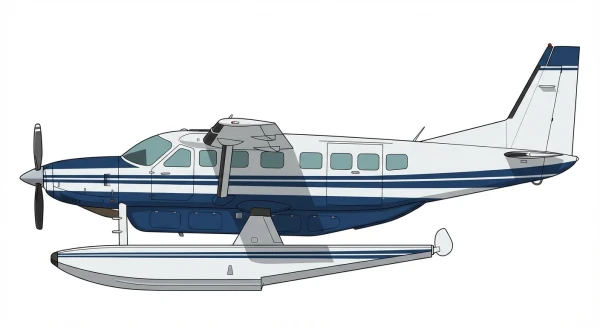
- GA8 floatplane: Float-equipped model evaluated from 2005 and developed with Wipaire.
- GA10: Stretched ten-seat derivative powered by a Rolls-Royce 250-B17F/2 turboprop, retaining maximum commonality with the GA8.
Frequently Asked Questions
What type of aircraft is the GippsAero GA8 Airvan?
What is the maximum speed of the GippsAero GA8 Airvan?
What is the range of the GippsAero GA8 Airvan?
When did the GippsAero GA8 Airvan first fly?
How many GippsAero GA8 Airvan have been built?
Which countries operate the GippsAero GA8 Airvan?
What is the service ceiling of the GippsAero GA8 Airvan?
- AUG 302026 Updated Description updated
- JUL 272026 Updated Name updated
- JUL 232026 Updated Sources and cross-references refreshed
- APR 72026 Updated Sources and cross-references refreshed
- JAN 122026 Updated Range updated in a site-wide editorial pass