Malta Military Forces
Malta ranks #148 of 170 militaries worldwide in 2026, with 1,950 active troops. The Air Force flies 7 aircraft. Malta has no nuclear weapons.
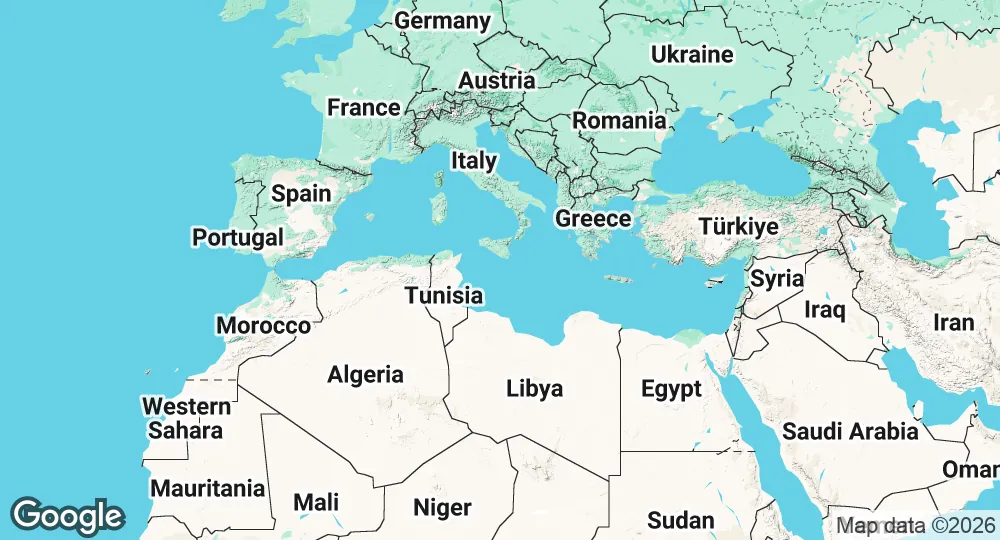
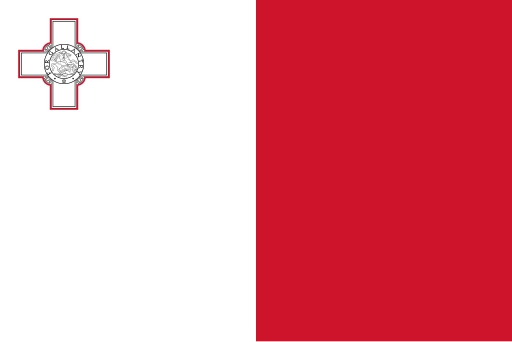
Armed Forces in 2026
| Domain | Strength | Composition |
|---|---|---|
| Air Wing of the Armed Forces of Malta | 7 aircraft | 3 helicopters 1 air bases |
| Personnel | 1,950 active | 260 reserve |
ATLAS Index (Aggregate Total of Land, Air and Sea strength)
Full ranking →| Pillar | Weight | Score | Basis |
|---|---|---|---|
| Manpower | 10% | 15.7 | Active, reserve & paramilitary personnel |
| Ground forces | 20% | 0.0 | ARMS inventory power: armour & artillery by type and era, attack helicopters, armament |
| Naval power | 20% | 0.0 | SEAS inventory power: hulls by type, size and era, air wing, sustainment, armament |
| Air power | 25% | 13.2 | AIRS inventory power: aircraft by type and generation, enablers, armament |
| Nuclear deterrent | 10% | 0.0 | No declared nuclear capability |
| Defense budget | 15% | 12.7 | Annual spending, purchasing-power adjusted |
| Availability | modifier | ground ×0.92 · naval ×1.00 · air ×0.97 | Budget per point of each force, from the branch indexes |
Country File
| Population | 568K (2024) |
| GDP | $25.0 billion (2024) |
| GDP per capita | $43,899 |
| Military budget | $125M (2024) |
| Share of GDP | 0.5% (2024) |
| Military spending per capita | $220 (2024) |
| Inflation rate | 1.65% (2024) |
| Capital | Valletta |
| Region | Europe |
| Land area | 316 km² |
| Coastline | 252 km |
| Currency | EUR |
Strategic Overview in 2026
Strategic Position
Malta’s defense policy is governed by a constitutional declaration of neutrality, adopted in 1980. This status prohibits the stationing of foreign military forces on Maltese territory and prevents the use of its facilities for foreign military actions, except in cases involving UN Security Council mandates or self-defense. Malta is a member of the European Union (EU) and participates in the Common Security and Defence Policy (CSDP). While not a member of NATO, Malta is a member of the NATO Partnership for Peace (PfP) program, having rejoined in 2008.
Primary security concerns are centered on the Mediterranean maritime environment. These include irregular migration, human trafficking, and smuggling. Malta manages a Search and Rescue Region (SRR) covering approximately 250,000 square kilometers, necessitating continuous maritime and aerial surveillance.
Bilateral defense relationships are primarily maintained with Italy. Under a longstanding memorandum of understanding, the Italian Military Mission (Missione Italiana di Collaborazione nel Campo della Difesa) provides technical assistance, training, and SAR cooperation. Malta also coordinates with regional partners through the 5+5 Defence Initiative, which involves five Mediterranean EU states and five Maghreb countries.
Military Forces
The Armed Forces of Malta (AFM) is a unified, single-tier military structure. It comprises approximately 1,700 to 2,000 active-duty personnel. The AFM does not maintain separate service branches but organizes capabilities into specialized regiments and wings under a centralized command.
1st Regiment (Land Forces) This unit functions as the infantry component of the AFM. It consists of three rifle companies and a support company. Equipment is limited to light tactical assets, including Land Rover Defender vehicles and various transport trucks. Small arms are standardized on the Beretta ARX160 assault rifle, Heckler & Koch MP5 submachine guns, and FN MAG general-purpose machine guns. The regiment lacks heavy armor, main battle tanks, or field artillery.
Maritime Squadron The squadron is responsible for coastal patrol, border control, and SAR operations. It operates a fleet of offshore patrol vessels (OPVs), inshore patrol boats, and specialized search and rescue craft. The fleet includes the P71 offshore patrol vessel, which is the largest asset in the inventory, featuring a helicopter landing deck and the capability to deploy small boats. Other vessels include the P61 (Diciotti-class) and P62 (Protector-class) patrol boats.
Air Wing The Air Wing provides maritime surveillance, casualty evacuation, and SAR support. The fixed-wing inventory includes Beechcraft King Air B200 maritime patrol aircraft. The rotary-wing fleet operates AgustaWestland AW139 and Alouette III helicopters. These assets are equipped with thermal imaging and radar systems for maritime domain awareness.
Specialized Units The Special Operations Unit (SOU) is trained for counter-terrorism, maritime boarding (VBSS), and high-risk security details. The 3rd Regiment provides logistical and engineering support, while the 4th Regiment manages communications, information systems, and Explosive Ordnance Disposal (EOD).
Defense Industry
Malta has no domestic arms manufacturing industry. The AFM is entirely reliant on foreign procurement for its equipment, primarily from manufacturers in Italy, the United States, and the United Kingdom. Maintenance and repair for maritime and aviation assets are conducted at the AFM’s internal facilities at Hay Wharf and Luqa, or through local commercial aviation MRO (Maintenance, Repair, and Overhaul) providers.
Strategic Trends
Defense spending in Malta remains at approximately 0.5% to 0.6% of GDP. Procurement focuses on replacing aging maritime assets and improving surveillance technology. A primary objective is the integration of unmanned aerial vehicles (UAVs) to extend the reach of maritime patrols without the operational costs of manned flights.
In 2025, the AFM initiated infrastructure upgrades at the Luqa Air Wing facilities and the Hay Wharf maritime base to accommodate more complex sensor systems and larger patrol vessels. Current doctrinal shifts emphasize cybersecurity and the protection of critical subsea infrastructure, such as power and data interconnectors between Malta and Sicily.
Participation in EU missions, such as Operation Irini, remains a central component of Malta's defense posture. These deployments focus on maritime security and the enforcement of UN arms embargos in the Mediterranean. Constraints on military expansion include the limited personnel pool and the strict adherence to constitutional neutrality, which prevents participation in collective defense arrangements like NATO’s Article 5.
Military Expenditure: CIA World Factbook. Last updated on 4 August 2026. Suggest a change
Frequently Asked Questions
How large is Malta's military?
What is Malta's defense budget?
How does Malta rank militarily in the world?
Does Malta have nuclear weapons?
How many aircraft does Malta's air force have?
What percentage of GDP does Malta spend on defense?
What is Malta's military personnel per capita?
- AUG 42026 Updated Global Military Index updated in a site-wide editorial pass
- JUL 162026 Updated Global Military Index updated in a site-wide editorial pass
- JUN 162026 Updated Yearly statistics, military spending and 2 more fields updated
- MAR 162026 Updated Reserve personnel updated
- JAN 202026 Updated Coastline length updated
- JAN 132026 Updated Description added