French Polynesia Military Forces 🇵🇫
Military Strength Overview
Geography
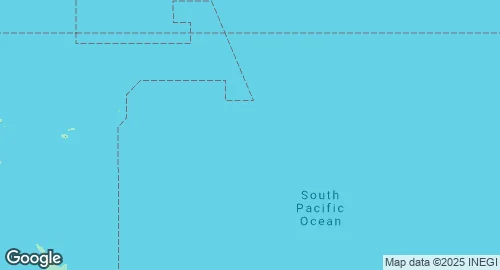
| Capital | Papeete |
| Land Area | 3,827 km² |
| Coastline Length | 2,525 km |
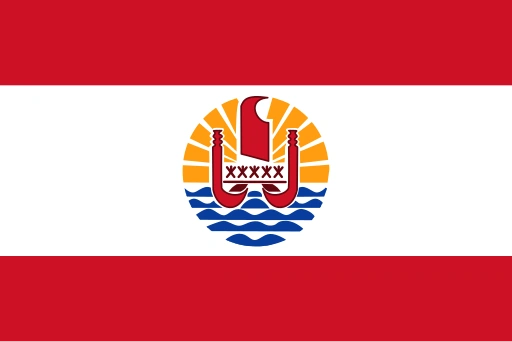
National Flag
Defense Statistics & Key Metrics
| Population | 279792 (2021) |
| GDP | $6.2 billion (2021) |
| GDP per capita | $21983 (2021) |
Population and Military Personnel Trends
GDP and Inflation Rate Trends
Strategic Overview in 2026
The defense of French Polynesia is provided by the Forces armées en Polynésie française (FAPF), a regional command of the French Armed Forces. The territory's defense posture is determined by its status as an overseas collectivity of the French Republic and its integration into France’s broader Indo-Pacific strategy.
Strategic Position
French Polynesia serves as a primary support point for French military operations in the South Pacific. Its strategic priorities are dictated by the requirement to secure an Exclusive Economic Zone (EEZ) of approximately 5 million square kilometers, representing nearly half of the total maritime domain of France. Primary security concerns include the maintenance of maritime sovereignty, the regulation of Illegal, Unreported, and Unregulated (IUU) fishing, and environmental protection against climate-related disruptions.
As an integral part of France, the territory is covered by NATO collective defense and European Union security frameworks, although its operational focus is regional. France maintains cooperation in the Pacific through the FRANZ Arrangement (France, Australia, New Zealand) for disaster relief coordination. The defense doctrine emphasizes a "third way" strategy, positioning France as a resident Pacific power that seeks to maintain stability and freedom of navigation without strictly aligning with bipolar power competition. Regional engagement is facilitated through multinational training such as Exercise Marara, a biannual humanitarian and disaster relief (HADR) event involving over fifteen nations.
Military Forces
The FAPF are directed by the Commandant supérieur (COMSUP FAPF), who concurrently holds the titles of Admiral commanding the Pacific maritime zone (ALPACI) and Commandant of the Pacific Experimentation Center (COMCEP). The total force consists of approximately 1,200 military and civilian personnel.
Army
The land component is the Régiment d’infanterie de marine du Pacifique - Polynésie (RIMaP-P). Stationed at Arue and Papeari on the island of Tahiti, the regiment consists of a permanent staff and companies on short-term mission rotations from mainland France. Its responsibilities include sovereignty missions across the five archipelagos, protection of military installations, and maintaining a permanent surveillance detachment on the former nuclear testing atolls of Moruroa and Fangataufa. The regiment also operates the Centre d’aguerrissement et d’instruction tropicale d’Océanie (AÏTO), providing specialized training in tropical environments.
Navy
The maritime component is the primary branch of the FAPF, based at the Papeete naval base. The fleet includes Floréal-class surveillance frigates, such as the Prairial, which carry organic helicopters. Surveillance and patrol capabilities are undergoing modernization with the induction of the Patrouilleur d’Outre-mer (POM) class. The first of these, Teriieroo a Teriierooiterai, entered active service in 2024. The Navy also operates Bâtiment de soutien et d’assistance outre-mer (BSAOM) multi-mission vessels, such as the Bougainville, for logistics, law enforcement, and environmental protection. Maritime gendarmerie units provide coastal security using smaller patrol craft and tugboats.
Air and Space Force
The air component is organized under the Détachement air 190 (DA 190) at Tahiti-Faa’a. It operates CASA CN-235 tactical transport aircraft for logistics and personnel movement throughout the archipelagos. Maritime surveillance and search-and-rescue (SAR) missions are conducted using Falcon 200 Gardian aircraft and Dauphin helicopters.
Strategic Trends
The defense posture in French Polynesia is currently undergoing modernization under the French Military Programming Law (LPM) 2024–2030. A priority is the renewal of naval and aerial assets to enhance maritime domain awareness. The transition to the POM-class vessels is a central focus, with additional hulls expected to be delivered through 2026. These vessels utilize integrated aerial drones to extend their surveillance capabilities across the EEZ.
In the aviation sector, the Air and Space Force plans to replace the aging Falcon 200 Gardian fleet with Falcon 2000LXS Albatros maritime patrol aircraft toward the end of the decade. Force structure adjustments in 2025 and 2026 include an increase in personnel, with approximately 80 additional military staff arriving to form new infantry sections within the RIMaP-P. This expansion is designed to support more persistent deployments in remote archipelagos and increase the frequency of maritime law enforcement operations in the South Pacific. Budgetary trends reflect a steady investment in infrastructure, including the renovation of naval piers in Papeete to accommodate the increased displacement of new vessel classes.
Frequently Asked Questions
Does French Polynesia have nuclear weapons?
Military Expenditure: SIPRI Milex. Suggest a change