Seychelles Military Forces
The Seychelles ranks #155 of 170 militaries worldwide in 2026, with 420 active troops. The Air Force flies 4 aircraft. The Seychelles has no nuclear weapons.
Armed Forces in 2026
| Domain | Strength | Composition |
|---|---|---|
| Seychelles People's Defence Force Air Wing | 4 aircraft | |
| Personnel | 420 active |
ATLAS Index (Aggregate Total of Land, Air and Sea strength)
Full ranking →| Pillar | Weight | Score | Basis |
|---|---|---|---|
| Manpower | 10% | 10.2 | Active, reserve & paramilitary personnel |
| Ground forces | 20% | 0.0 | ARMS inventory power: armour & artillery by type and era, attack helicopters, armament |
| Naval power | 20% | 0.0 | SEAS inventory power: hulls by type, size and era, air wing, sustainment, armament |
| Air power | 25% | 11.2 | AIRS inventory power: aircraft by type and generation, enablers, armament |
| Nuclear deterrent | 10% | 0.0 | No declared nuclear capability |
| Defense budget | 15% | 7.7 | Annual spending, purchasing-power adjusted |
| Availability | modifier | ground ×0.80 · naval ×1.00 · air ×0.80 | Budget per point of each force, from the branch indexes |
Country File
| Population | 121K (2024) |
| GDP | $2.2 billion (2024) |
| GDP per capita | $17,859 |
| Military budget | $32M (2024) |
| Share of GDP | 1.5% (2024) |
| Military spending per capita | $268 (2024) |
| Inflation rate | 0.31% (2024) |
| Capital | Victoria |
| Region | Africa |
| Land area | 455 km² |
| Coastline | 491 km |
| Currency | SCR |
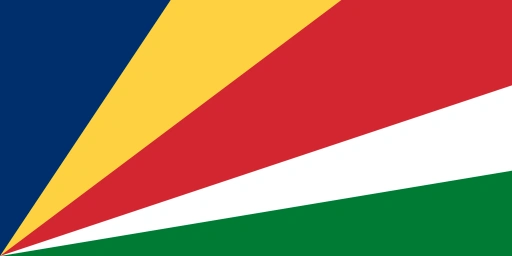
| Aspect ratio | 1:2 |
| Colors | Red, blue, green, yellow, white |
Strategic Overview in 2026
Strategic Position
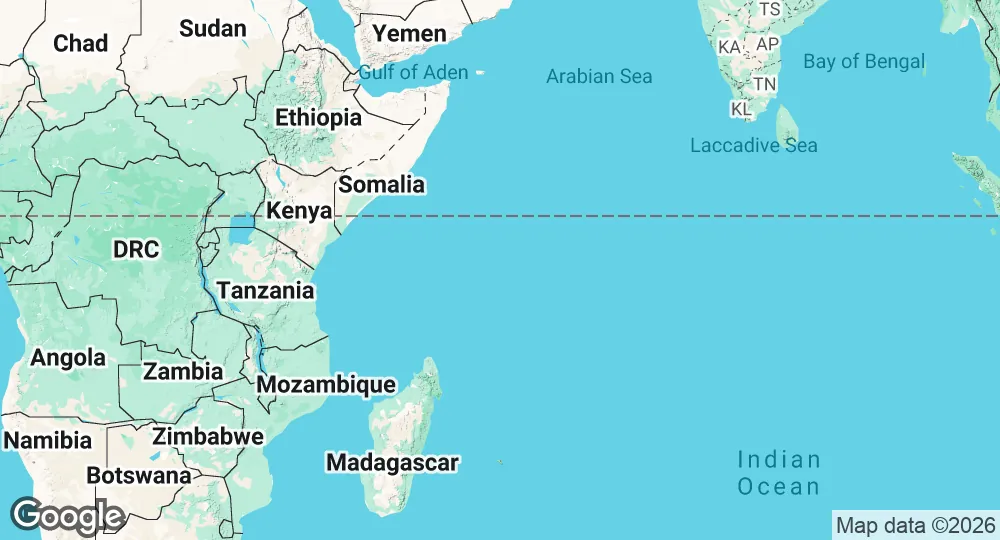
The Seychelles’ defense posture is dictated by its location in the Western Indian Ocean, situated along major Sea Lines of Communication (SLOCs) connecting East Africa, the Middle East, and Asia. The primary security focus is the protection of an Exclusive Economic Zone (EEZ) covering approximately 1.3 million square kilometers. Security concerns center on non-traditional threats, including maritime piracy originating from the Horn of Africa, narcotics trafficking, and Illegal, Unreported, and Unregulated (IUU) fishing.
Seychelles is a member of the African Union (AU) and the Southern African Development Community (SADC). It participates in the Indian Ocean Commission (IOC) and is a signatory to the Djibouti Code of Conduct and the MASE (Maritime Security) agreement. Bilateral defense cooperation is most concentrated with India, which serves as a primary provider of maritime infrastructure and hardware. Additional security partnerships are maintained with France, the United States, and the United Arab Emirates. These relationships focus on maritime domain awareness, joint exercises, and capacity building for the national coast guard.
Military Forces
The Seychelles Defence Forces (SDF) are organized under the Ministry of Internal Affairs, with the President serving as Commander-in-Chief. Total active-duty personnel across all branches number approximately 800.
Seychelles Coast Guard (SCG)
The Coast Guard is the principal branch of the SDF, responsible for maritime law enforcement and EEZ surveillance. The fleet consists of offshore patrol vessels (OPVs) and inshore patrol craft. Inventory includes vessels of the Topaz, Constant, and Etoile classes, primarily acquired through donations from India, China, and the United Arab Emirates. The SCG operates the National Maritime Operations Centre (NMOC), which coordinates regional maritime security data.
Seychelles Air Force (SAF)
The SAF functions primarily as a maritime surveillance and transport wing. It operates a small fleet of fixed-wing aircraft, including Dornier 228 and Harbin Y-12 platforms configured for maritime patrol and search and rescue (SAR) missions. The SAF does not operate combat aircraft or attack helicopters.
Special Forces and Land Elements
Ground capabilities are centered on the Seychelles Presidential Guard and the Special Forces Unit (Tarsier Unit). These elements are tasked with counter-terrorism, hostage rescue, and high-risk interdiction operations, particularly in maritime boarding scenarios. The SDF maintains light infantry equipment, including small arms and light mortars, but does not operate main battle tanks or heavy artillery.
Defense Industry
Seychelles possesses no domestic arms manufacturing capability. The military is entirely dependent on foreign imports and international donation programs for its equipment. Maintenance and technical support for sophisticated systems, such as radar and aircraft, are often conducted through bilateral agreements with the original manufacturers or donor nations.
Strategic Trends
The Seychelles defense budget is maintained at approximately 1% of GDP. Current modernization efforts are directed toward enhancing maritime domain awareness through the integration of coastal radar systems and the potential introduction of unmanned aerial vehicles (UAVs) for long-range EEZ monitoring.
A primary strategic priority is the operationalization of the Regional Coordination Operations Centre (RCOC) to facilitate information sharing with neighboring island states and East African partners. Security cooperation with India remains a focal point, including the ongoing development of facilities on Assumption Island to support maritime patrols.
Resource constraints and the high cost of technical maintenance for specialized maritime assets represent the primary challenges to force readiness. Consequently, the SDF emphasizes professional training and interoperability with foreign navies through regular participation in exercises such as Cutlass Express. Current procurement priorities focus on replacing aging patrol craft and improving satellite-based surveillance capabilities to monitor remote reaches of the archipelago.
Military Expenditure: CIA World Factbook. Last updated on 4 August 2026. Suggest a change
Frequently Asked Questions
How large is Seychelles's military?
What is Seychelles's defense budget?
How does Seychelles rank militarily in the world?
Does Seychelles have nuclear weapons?
How many aircraft does Seychelles's air force have?
What percentage of GDP does Seychelles spend on defense?
What is Seychelles's military personnel per capita?
- AUG 42026 Updated Global Military Index updated in a site-wide editorial pass
- JUL 162026 Updated Global Military Index updated in a site-wide editorial pass
- JUN 162026 Updated Yearly statistics, military spending and 2 more fields updated
- JAN 132026 Updated Description added