Y-12
Chinese twin-engine light utility aircraft, recognized from its 1980s development, frequently used for passenger and cargo transportation. Key figures: top speed 328 km/h, range 1,340 km, service ceiling 7,000 m, max takeoff weight 5,300 kg, unit price $5M, built 71. In service with 16 air forces as of 2026 — China (11), Sri Lanka (9), Kenya (8) and 13 others.
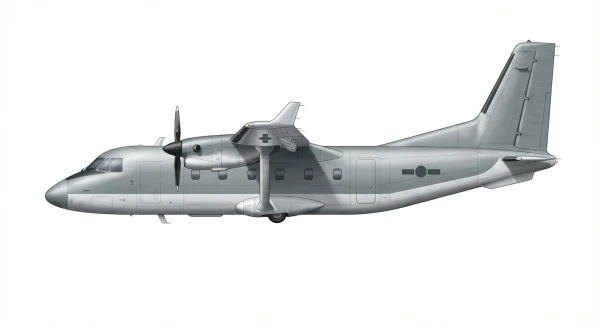
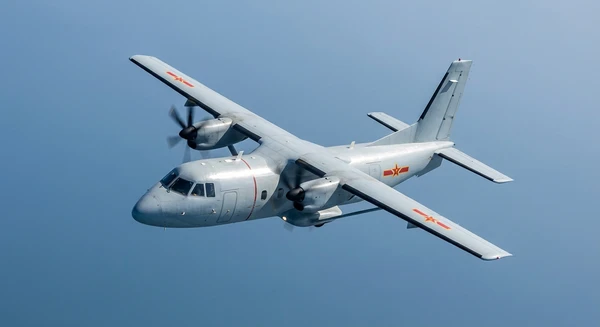
| Crew | 2 |
| Length | 18.9 m (61.9 ft) |
| Wingspan | 17.2 m (56.6 ft) |
| Height | 5.7 m (18.6 ft) |
| Wing area | 34.3 m² (368.9 sqft) |
| Empty weight | 2,840 kg (6,261 lbs) |
| Max. takeoff weight | 5,300 kg (11,684 lbs) |
| Powerplant | 2 × turboprops Pratt & Whitney Canada PT6A-27 410 kW each |
| Maximum speed | 328 km/h (204 mph) |
| Operational range | 1,340 km (833 mi) |
| Service ceiling | 7,000 m (22,966 ft) |
| Climb rate | 8.1 m/s (26.6 ft/s) |
-
 China
11
China
11
-
 Sri Lanka
9
Sri Lanka
9
-
 Kenya
8
Kenya
8
-
 Myanmar
7
Myanmar
7
-
 Zambia
7
Zambia
7
-
 Iran
6
Iran
6
-
 Pakistan
6
Pakistan
6
-
 Ethiopia
5
Ethiopia
5
-
 Eritrea
4
Eritrea
4
-
 Djibouti
2
Djibouti
2
-
 Mali
2
Mali
2
-
 Namibia
2
Namibia
2
-
 Tanzania
2
Tanzania
2
-
 Guyana
1
Guyana
1
-
 Cambodia
1
Cambodia
1
-
 Seychelles
1
Seychelles
1
Recent Events — Y-12
1 event →
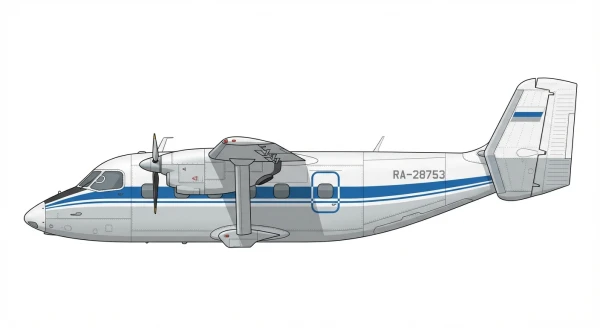
Description
The Harbin Y-12 is a twin-engine turboprop utility aircraft built by the Harbin Aircraft Industry Group (HAIG), which reorganized as Hafei Aviation Industry (HAI) in 1999. Developed from the Harbin Y-11 airframe starting in 1980, the prototype completed its first flight on 14 July 1982. Around 300 aircraft were delivered by 2023. In March 1995, the Y-12 (IV) became the first Chinese-designed and produced aircraft to receive a type certificate from the US Federal Aviation Administration (FAA).
Design
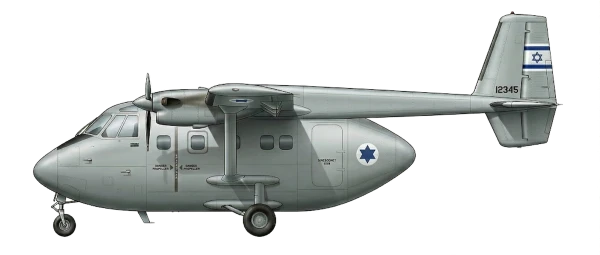
The aircraft features a high-wing configuration with a redesigned low-drag wing section using an LS(1)-0417 airfoil, a larger fuselage, and bonded rather than riveted construction. The Y-12 (II) is powered by two Pratt & Whitney Canada PT6A-27 turboprop engines driving three-bladed Hartzell constant-speed, fully-feathering, and reversible-pitch propellers. It has a maximum takeoff weight of 5,300 kg, a maximum payload of 1,700 kg, and a fuel capacity of 1,616 liters, with accommodations for up to 17 passengers and two crew members. In 2018, the Y-12 completed FAA evaluation flight tests for its automatic flight control system.
Operational History
The Y-12 is operated globally as a light commuter and utility transport. Primary military users include the People's Liberation Army Air Force—which utilizes 12 Y-12D aircraft for parachute training—alongside the air forces of Myanmar, Iran, Zambia, Mali, and Djibouti. Export customers include civil and government operators in Fiji, Nepal, Peru, and Colombia. The aircraft's operational record includes multiple fatal accidents, such as a 1997 Sri Lankan Air Force surveillance crash, a 1998 MIAT Mongolian Airlines crash that killed 28 people, and a 2006 Kenya Air Force crash. Nepal Airlines grounded its Y-12 fleet in 2020 due to operating costs and performance issues.
Variants
- Y-12 (I): This initial short takeoff and landing utility transport version is powered by two 500-shp Pratt & Whitney Canada PT6A-11 turboprops and has seating for 17 passengers.
- Y-12 (II): This version features 600-hp PT6A-27 engines, lacks leading-edge slats, and received British CAA certification in 1990.
- Y-12 (IV): This improved version features revised wingtips, an increased wingspan of 19.2 meters, a maximum takeoff weight of 5,700 kg, and achieved FAA certification in 1995.
- Y-12E: This 18-passenger variant is powered by PT6A-135A engines driving four-bladed propellers and received FAA certification in 2006.
- Y-12F: This redesigned variant features a wider fuselage, new wings, retractable landing gear, and PT6A-65B engines, receiving FAA certification in 2016 and EASA certification in 2023.
Frequently Asked Questions
What type of aircraft is the Y-12?
What is the maximum speed of the Y-12?
What is the range of the Y-12?
When did the Y-12 first fly?
How many Y-12 have been built?
Which countries operate the Y-12?
How much does a Y-12 cost?
What is the service ceiling of the Y-12?
- JUN 122026 Updated Description updated
- APR 72026 Updated Sources and cross-references refreshed