Samoa Military Forces 🇼🇸
Military Strength Overview
Geography
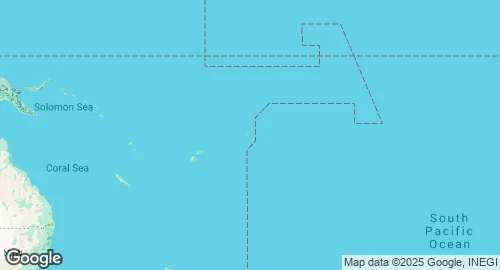
| Capital | Apia |
| Land Area | 2,821 km² |
| Coastline Length | 403 km |
National Flag

Defense Statistics & Key Metrics
| Population | 215261 (2022) |
| GDP | $832.9 million (2022) |
| GDP per capita | $3869 (2022) |
| Inflation Rate | 10.96% (2022) |
Population and Military Personnel Trends
GDP and Inflation Rate Trends
Strategic Overview in 2026
Strategic Position
Samoa maintains no standing military forces. National security and defense responsibilities are distributed between the Samoa Police Service and bilateral arrangements with regional partners. The primary legal framework for Samoan defense is the 1962 Treaty of Friendship with New Zealand. Under this treaty, New Zealand provides administrative and technical assistance and agrees to consider requests for military aid from the Samoan government. Samoa does not have a formal defense obligation to New Zealand, but the relationship facilitates cooperation on maritime surveillance and emergency response.
Geopolitically, Samoa occupies a central location in Polynesia, making its Exclusive Economic Zone (EEZ), which covers approximately 120,000 square kilometers, a priority for maritime security. Security concerns center on non-traditional threats, including illegal, unreported, and unregulated (IUU) fishing, transnational organized crime, and the security implications of climate change.
Samoa is a member of the Pacific Islands Forum (PIF) and a signatory to the Boe Declaration on Regional Security, which defines security broadly to include human, environmental, and cyber threats. In 2025, Samoa continued its participation in the Pacific Quad (comprising Australia, France, New Zealand, and the United States) for maritime surveillance operations. The country also maintains a Bilateral Law Enforcement Agreement (Shiprider Agreement) with the United States, allowing Samoan maritime officials to embark on U.S. Coast Guard and Navy vessels to exercise Samoa’s enforcement authority within its EEZ.
Military Forces
Internal and maritime security are managed by the Samoa Police Service (SPS), which functions as a multi-role paramilitary and law enforcement organization. The SPS consists of approximately 900 personnel. It operates under the Ministry of Police, Prisons, and Corrections Services.
Maritime Wing
The Maritime Wing is the primary instrument for patrolling the EEZ and conducting search and rescue (SAR) operations. Its current operational capability is centered on the Nafanua III, a Guardian-class patrol boat provided by Australia under the Pacific Maritime Security Program (PMSP). This vessel replaced the Nafanua II, which was decommissioned following a grounding incident. The Nafanua III is equipped for long-range patrol, maritime law enforcement, and disaster relief. It is maintained through technical support and training provided by the Australian Defence Force (ADF) and the Royal Australian Navy.
Specialized Units
The SPS includes specialized units that handle high-risk security tasks: - Tactical Support Unit (TSU): Provides specialized response capabilities for domestic security incidents and supports maritime operations. - Transnational Crime Unit (TCU): Works in coordination with the Pacific Transnational Crime Network (PTCN) to monitor and intercept narcotics trafficking and human smuggling. - Maritime Surveillance Center: Located in Apia, this center coordinates with regional hubs, such as the Pacific Islands Forum Fisheries Agency (FFA) Regional Fisheries Surveillance Centre in the Solomon Islands, to monitor vessel movements via satellite data and AIS tracking.
Samoa does not operate main battle tanks, armored fighting vehicles, combat aircraft, or submarines. The police are equipped with small arms for standard duties and specialized tactical operations.
Strategic Trends
Defense policy in Samoa is currently prioritized toward maritime domain awareness and regional security integration. Following the delivery of the Nafanua III, focus has shifted toward the sustainable operation of maritime assets and the training of personnel in advanced navigation and maintenance.
A primary trend in Samoan security is the expansion of "Shiprider" programs. In 2025, Samoa engaged in increased ship-boarding operations conducted from U.S. Coast Guard cutters to combat IUU fishing. This cooperation allows Samoa to project authority across its EEZ without the requirement for a large domestic naval fleet.
Cybersecurity is an emerging priority within the national security framework. The government is working with regional partners to establish a National Computer Emergency Response Team (CERT) to protect critical infrastructure and government data.
Defense spending is integrated into the police and maritime budget. There is a high reliance on foreign military financing (FMF) and aid for capital equipment. Australia remains the primary provider of maritime hardware and infrastructure, while New Zealand focuses on leadership training and disaster response planning. In 2025, security cooperation discussions also included the enhancement of wharf facilities in Apia to accommodate larger regional patrol vessels and support international disaster relief operations.
Frequently Asked Questions
Does Samoa have nuclear weapons?
Military Expenditure: SIPRI Milex. Suggest a change