Strategic Position
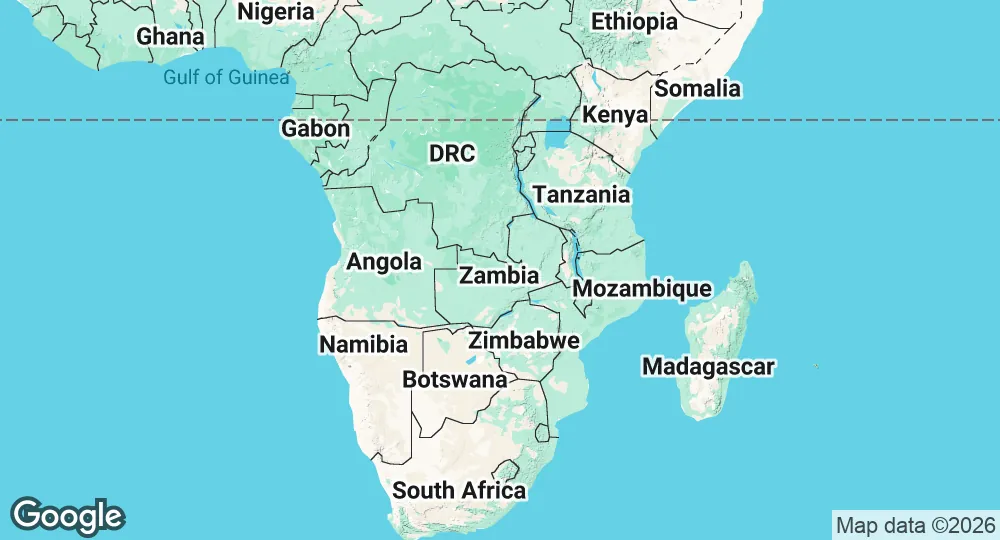
Zambia is a landlocked state in Southern Africa sharing borders with eight nations, a geography that defines its primary security concerns as border integrity and regional stability. Geopolitical priorities center on the management of spillover from the Democratic Republic of the Congo (DRC) and the threat of insurgency in northern Mozambique. Defense doctrine emphasizes non-alignment and multilateralism, with active membership in the Southern African Development Community (SADC), the African Union (AU), and the International Conference on the Great Lakes Region (ICGLR).
Strategic priorities are governed by the need to secure the "Copperbelt" region and manage refugee influxes from neighboring conflicts. In 2025, Zambia entered into bilateral security and infrastructure agreements with Mozambique to establish "one-stop" border posts, aimed at improving national security and trade fluidity. While maintaining long-standing ties with China and Russia, the Zambia Defence Force (ZDF) has increased cooperation with the United States and European partners, specifically through engagement with U.S. Africa Command (AFRICOM) on counter-terrorism training and disaster response.
Military Forces
The Zambia Defence Force (ZDF) follows a unified command structure comprising three primary branches: the Zambia Army, the Zambia Air Force (ZAF), and the Zambia National Service (ZNS). Total active personnel is approximately 16,000 to 20,000.
Zambia Army
The Army is organized into three infantry brigades (headquartered in Lusaka, Kabwe, and Ndola) and specialized units. The 64th Armored Tank Regiment operates Type 59 main battle tanks and PT-76 amphibious tanks. Reconnaissance and transport capabilities are supported by BRDM-2 armored cars, BTR-80 armored personnel carriers, and Ratel infantry fighting vehicles. Artillery units field BM-21 Grad multiple rocket launchers and D-30 howitzers. Specialized units include the 1 Commando Battalion for unconventional warfare and the 48th Marine Unit, which conducts maritime patrols on inland waterways.
Zambia Air Force (ZAF)
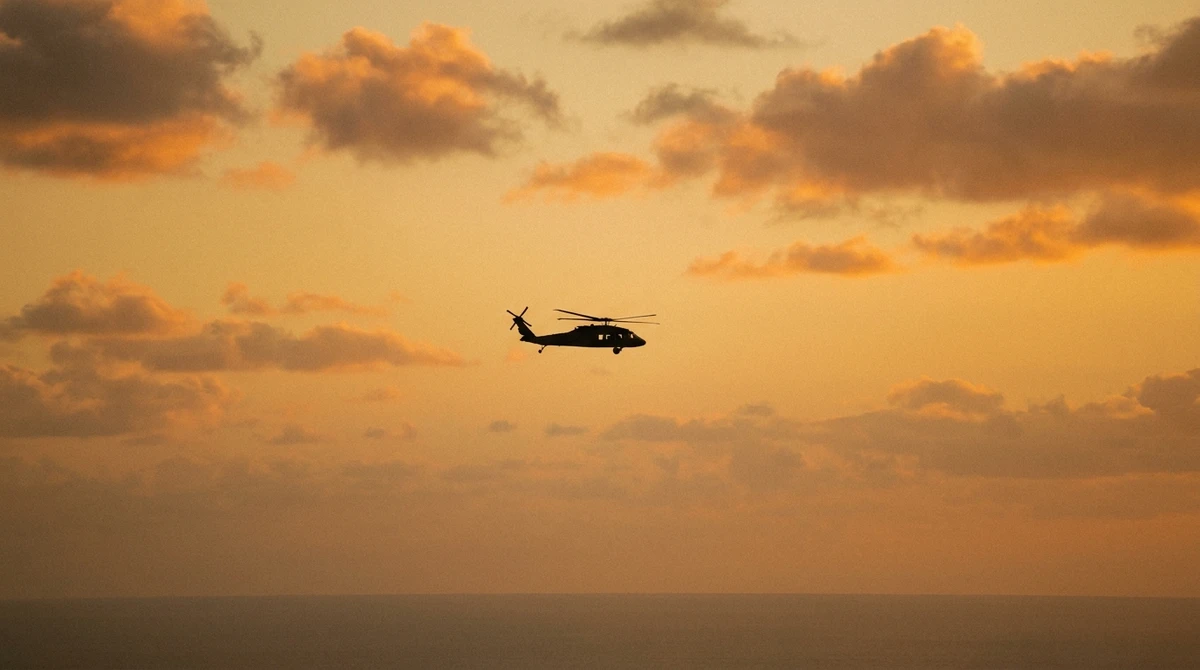
The ZAF focuses on air defense, transport, and surveillance. For combat and advanced training, the force operates Hongdu L-15 Falcon supersonic aircraft and K-8 Karakorum jet trainers. Tactical transport is provided by C-27J Spartan and MA60 aircraft. The helicopter fleet includes Mi-17 and Mi-171 Shals for heavy lift, and Bell 205, Bell 206, and Bell 212 utility models. In 2025, the ZAF initiated the acquisition of Bell 412 helicopters from the United States to enhance its medical evacuation and regional peacekeeping capabilities.
Zambia National Service (ZNS)
The ZNS is a paramilitary branch mandated to provide defense support, infrastructure development, and national food security. It functions as a developmental wing, managing large-scale agricultural projects and construction while training personnel for mobilization as a reserve force.
Defense Industry
Zambia maintains a limited domestic defense industrial base, primarily focused on maintenance, repair, and overhaul (MRO) of existing hardware. The government has prioritized the "recapitalization" of state-run defense enterprises in 2025 to reduce reliance on foreign technical support for aging platforms. While small arms ammunition and basic military apparel are produced locally, the ZDF remains heavily dependent on imports from China, Israel, and Italy for advanced systems.
Strategic Trends
A comprehensive modernization strategy was launched in 2025 to address equipment obsolescence, particularly within the armored and aerial fleets. The Zambia Army has looked toward benchmarking with regional counterparts, such as Ethiopia, to adopt cost-effective technology for upgrading legacy Soviet-era hardware.
Defense spending is estimated at approximately 1.3% to 1.5% of GDP. The 2025 national budget allocated approximately K19 billion to defense and public order, reflecting a focus on internal security and border management amidst a recovery from sovereign debt restructuring.
Procurement priorities for 2026 emphasize surveillance technology and unmanned aerial vehicles (UAVs) to monitor porous borders. Zambia remains a consistent contributor to international peacekeeping, notably deploying personnel and C-27J aircraft to the SADC Mission in Mozambique (SAMIM) and the UN mission in the Central African Republic (MINUSCA). The 2025–2029 National Border Development Strategy outlines a shift toward integrated digital border security systems to mitigate illegal migration and mineral smuggling.