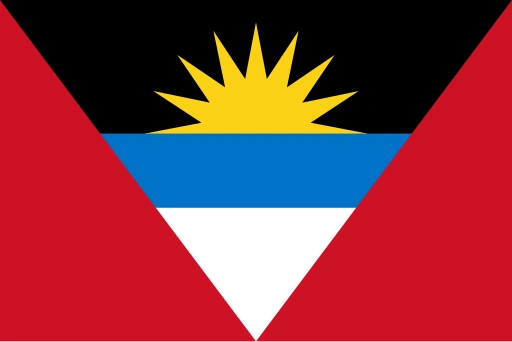
Flag of the Antigua and Barbuda
Overview
| Country | Antigua and Barbuda |
| Adopted | 1967 |
| Aspect ratio | 2:3 |
| Colors | |
| Elements | Horizontal stripes, triangle, sun |
Description
The flag features a red field with a large inverted isosceles triangle that extends from the top edge to the bottom center. Within this triangle are three horizontal bands of black, light blue, and white, with a yellow seven-pointed sun centered on the black band.
Symbolism
The seven-pointed yellow sun signifies the dawn of a new era, while the black background represents the African heritage of the population. Blue symbolizes the Caribbean Sea, and white denotes the sandy beaches that characterize the islands' geography. Red stands for the energy and dynamism of the people, and the V-shape formed by the red borders represents the ultimate victory over colonialism.
History
Following a national competition in 1966, the government selected a design created by high school art teacher Sir Wilfred Reginald Manswell. This banner was officially hoisted on February 27, 1967, to mark the achievement of associated statehood with the United Kingdom. Although the islands gained full independence in 1981, the flag remained unchanged and has served as the national symbol for over five decades. Prior to this adoption, the territory utilized the British Blue Ensign defaced with a colonial badge.