Antigua and Barbuda Military Forces
The Antigua and Barbuda ranks #159 of 169 militaries worldwide in 2026, with 240 active troops. The Air Force flies 2 aircraft. The Antigua and Barbuda has no nuclear weapons.
Armed Forces in 2026
| Domain | Strength | Composition |
|---|---|---|
| Air Force | 2 aircraft | |
| Personnel | 240 active | 75 reserve |
ATLAS Index (Aggregate Total of Land, Air and Sea strength)
Full ranking →| Pillar | Weight | Score | Basis |
|---|---|---|---|
| Manpower | 10% | 9.7 | Active, reserve & paramilitary personnel |
| Ground forces | 20% | 0.0 | ARMS inventory power: armour & artillery by type and era, attack helicopters, armament |
| Naval power | 20% | 0.0 | SEAS inventory power: hulls by type, size and era, air wing, sustainment, armament |
| Air power | 25% | 9.8 | AIRS inventory power: aircraft by type and generation, enablers, armament |
| Nuclear deterrent | 10% | 0.0 | No declared nuclear capability |
| Defense budget | 15% | 0.0 | Data unavailable |
| Availability | modifier | ground ×1.00 · naval ×1.00 · air ×1.00 | Budget per point of each force, from the branch indexes |
Country File
| Population | 94K (2025) |
| GDP | $2.3 billion (2025) |
| GDP per capita | $24,819 |
| Inflation rate | 1.37% (2025) |
| Capital | St John’s |
| Region | America |
| Land area | 442 km² |
| Coastline | 153 km |
| Currency | XCD |
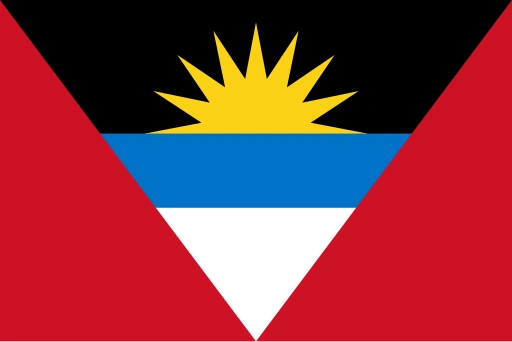
| Aspect ratio | 2:3 |
| Colors | Red, blue, yellow, white, black |
Strategic Overview in 2026
Strategic Position
Antigua and Barbuda maintains a defense posture centered on maritime domain awareness, internal security, and regional collective defense. As a member of the Regional Security System (RSS), the state adheres to a mutual defense treaty with other Eastern Caribbean nations, facilitating combined operations and intelligence sharing. Its primary security concerns involve transnational organized crime, specifically the trafficking of narcotics and illegal small arms, as well as illegal, unreported, and unregulated (IUU) fishing within its 110,000 square kilometer Exclusive Economic Zone (EEZ).
The nation’s defense doctrine emphasizes neutrality and non-alignment. Government policy explicitly opposes the hosting of foreign military installations or permanent foreign assets on national territory. Bilateral security cooperation is most active with the United States via the Caribbean Basin Security Initiative (CBSI) and United States Southern Command (SOUTHCOM), focusing on interdiction and humanitarian assistance and disaster relief (HADR). Strategic relationships also extend to the United Kingdom and China, the latter providing equipment donations and infrastructure support.
Military Forces
The Antigua and Barbuda Defence Force (ABDF) is a multi-branch organization encompassing land, maritime, and air components. It is one of the smallest standing militaries in the world, with approximately 300 active personnel and a reserve element of roughly 100.
Antigua and Barbuda Regiment The land component consists of the 1st Battalion, an infantry unit organized into line companies. Its primary roles include supporting the Royal Police Force of Antigua and Barbuda in maintaining internal order, providing disaster response, and performing ceremonial duties. The regiment is equipped with light infantry weapons, including M16 and M4 carbines, and utilizes light utility vehicles for transport.
ABDF Coast Guard The Coast Guard is the most active operational branch, tasked with patrolling maritime borders and conducting search and rescue (SAR) missions. It operates from a headquarters at Deepwater Harbour. The fleet comprises high-speed interceptors and patrol boats, including the 38-foot Swordfish interceptor commissioned in 2025. The force also utilizes Damen-built patrol vessels and Boston Whaler interceptors. Operations are increasingly supported by maritime surveillance drones.
ABDF Air Wing Established to provide aerial reconnaissance and transport, the Air Wing operates from V.C. Bird International Airport. Its inventory consists of light transport and surveillance aircraft, including the Britten-Norman BN-2B Islander and the Piper PA-31-350 Navajo Chieftain. These assets are utilized for medical evacuations, troop movements, and maritime patrol in coordination with the Coast Guard and RSS partners.
Service and Support Unit This branch provides the administrative, logistical, and engineering capabilities required to maintain ABDF operations across the islands, including the maintenance of Camp Blizzard and other facilities.
Strategic Trends
The ABDF is currently undergoing a multi-year modernization program aimed at improving surveillance and interdiction capabilities. A primary technical priority is the completion of the Coastal Radar System, with subsequent phases in 2025 and 2026 focusing on integrated maritime domain awareness.
Defense spending is projected to remain stable as a percentage of GDP, with targeted increases for security technology and personnel recruitment. In late 2025, the government announced the recruitment of additional personnel to bolster border security and support the National Joint Operations Center. Procurement priorities include the acquisition of a 65-foot offshore patrol vessel and additional surveillance aircraft to expand the Air Wing’s operational reach.
Antigua and Barbuda is scheduled to host Exercise Tradewinds 2026, a major regional security drill led by SOUTHCOM. This exercise will serve as a readiness assessment for the Commonwealth Heads of Government Meeting (CHOGM) 2026. The training focus includes mass casualty response, cybersecurity, and port security. Operational constraints remain tied to the country's small fiscal base and the logistical challenges of monitoring a porous maritime border against evolving criminal networks.
Military Expenditure: information from the Stockholm International Peace Research Institute (SIPRI) Military Expenditure Database. Last updated on 25 September 2026. Suggest a change
Frequently Asked Questions
How large is Antigua and Barbuda's military?
How does Antigua and Barbuda rank militarily in the world?
Does Antigua and Barbuda have nuclear weapons?
How many aircraft does Antigua and Barbuda's air force have?
What is Antigua and Barbuda's military personnel per capita?
- SEP 252026 Updated Population, GDP and inflation added for 2025; GDP series revised
- AUG 42026 Updated Global Military Index updated in a site-wide editorial pass
- JUL 162026 Updated Global Military Index updated in a site-wide editorial pass
- JUN 162026 Updated Economic and demographic series refreshed (3 yearly records)
- JAN 132026 Updated Description added