Flag of Germany
Overview
| Country | Germany |
| Adopted | 1949 |
| Aspect ratio | 3:5 |
| Colors | |
| Elements | Horizontal stripes |
Description
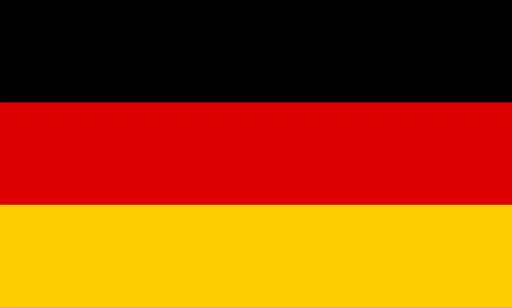
This national flag features three equal horizontal bands of black, red, and gold, arranged from top to bottom. It is constructed with a width-to-length ratio of 3:5 and lacks any additional heraldic symbols or inscriptions. The design maintains a minimalist aesthetic defined strictly by its tricolor composition.
Symbolism
The colors are historically linked to the uniforms of the Lützow Free Corps, which consisted of black coats with red facings and gold-colored brass buttons. These specific shades signify the movement toward national unity and democratic freedom, often summarized by the 19th-century slogan describing a journey from the darkness of servitude through bloody conflict to the light of liberty. Each band serves to commemorate the liberal and republican traditions that emerged during the mid-1800s.
History
The tricolor first gained prominence during the 19th-century Napoleonic Wars and was formally adopted by the Frankfurt Parliament in 1848. Following the collapse of the German Empire's black-white-red banner, the Weimar Republic reintroduced the black-red-gold design in 1919. It was officially reinstated as the national flag for the Federal Republic of Germany on May 23, 1949, and remained the sole national flag after German reunification in 1990.