Flag of Greece
Overview
| Country | Greece |
| Adopted | 1978 |
| Aspect ratio | 2:3 |
| Colors | |
| Elements | Cross, horizontal stripes |
Description
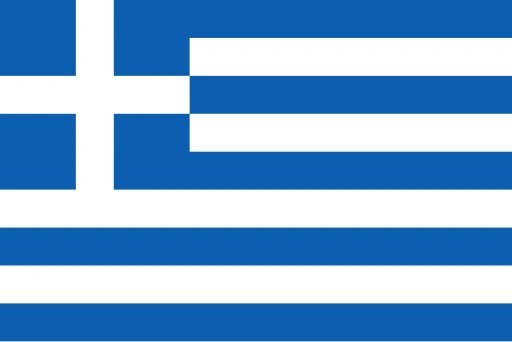
This rectangular ensign features nine horizontal stripes alternating between blue and white, beginning and ending with blue. A blue canton in the upper hoist-side corner contains a white Greek cross with equal arms. The overall proportions of the design adhere to a 2:3 aspect ratio.
Symbolism
The white cross in the canton represents Eastern Orthodox Christianity, which serves as the established religion of the nation. Common interpretations suggest the nine stripes correspond to the nine syllables of the revolutionary motto "Eleftheria i Thanatos," meaning "Freedom or Death." Blue and white are traditionally associated with the colors of the Greek sea and sky, reflecting the natural environment of the Aegean. These elements combined serve to commemorate the struggle for independence from the Ottoman Empire during the 19th century.
History
The current design was officially adopted as the sole national flag on December 22, 1978, though it had previously served as the naval ensign since 1822. During the 19th and early 20th centuries, a plain blue flag with a white cross was frequently used as the primary land flag. Following the restoration of democracy in the mid-1970s, the government replaced the darker blue version used by the military junta with the current layout. Historical iterations often varied in the specific shade of blue depending on the ruling regime or available textile dyes.