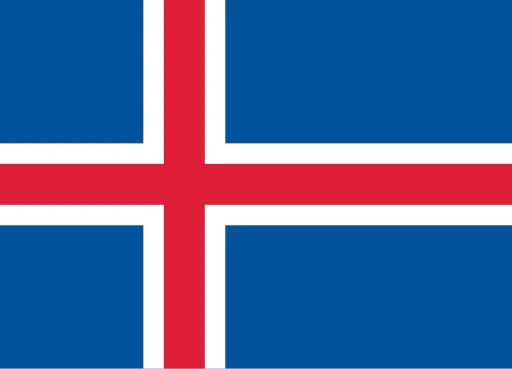
Flag of Iceland
Overview
| Country | Iceland |
| Adopted | 1944 |
| Aspect ratio | 18:25 |
| Colors | |
| Elements | Cross |
Description
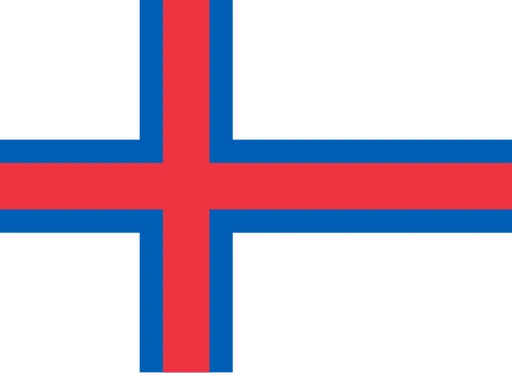
The design features a sky-blue field with a red cross bordered in white that extends to the edges. This horizontal arm of the cross is offset toward the hoist side, following the traditional Scandinavian cross pattern. The proportions of the flag are officially set at an aspect ratio of 18:25.
Symbolism
Each color in the design corresponds to a specific element of the island's natural landscape. Red signifies the volcanic fires that characterize the country's geology, while the white border represents the snow and glaciers covering the land. The blue background is intended to evoke the Atlantic Ocean and the surrounding sky. By utilizing the Nordic cross, the flag also commemorates Iceland's historical and cultural ties to other Scandinavian nations.
History
Although the current design was officially adopted by law when Iceland became a republic in 1944, it had been used as a national symbol since 1915. Prior to this, a blue flag with a white cross known as the 'Hvítbláinn' served as an unofficial banner until its similarity to the Greek flag led to the addition of the red cross. During the period of Danish rule, Icelanders utilized the Danish Dannebrog before gaining sovereignty as a kingdom in personal union with Denmark in 1918.