Strategic Position
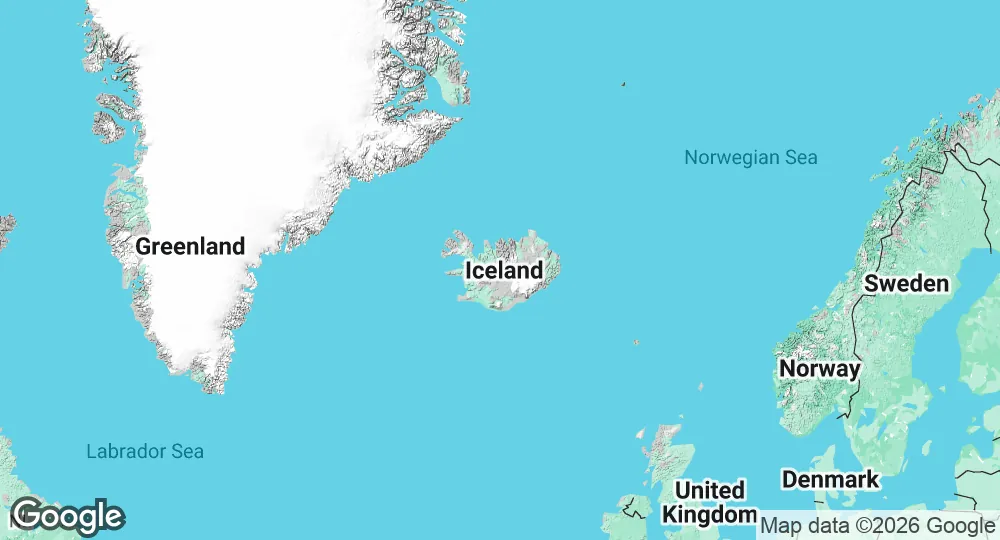
Iceland occupies a central geostructural position in the Greenland-Iceland-United Kingdom (GIUK) gap, a maritime corridor critical for monitoring trans-Atlantic transit and Arctic surface and subsurface activity. As a founding member of NATO, the country maintains its security through the 1951 Bilateral Defense Agreement with the United States and collective defense frameworks. Iceland does not maintain a standing military, instead acting as a host nation for allied forces and providing surveillance infrastructure.
Primary security concerns in 2025 and 2026 center on the militarization of the Arctic and the security of undersea telecommunications and energy infrastructure. The National Security Strategy for 2024–2028 emphasizes the protection of these subsea assets and the maintenance of situational awareness in the North Atlantic. Iceland participates in the Nordic Defence Cooperation (NORDEFCO), the Joint Expeditionary Force (JEF), and the Northern Group. In 2024, Iceland signed a long-term security agreement with Ukraine (2024–2028) to provide economic and defense-related support, including the transport of military equipment.
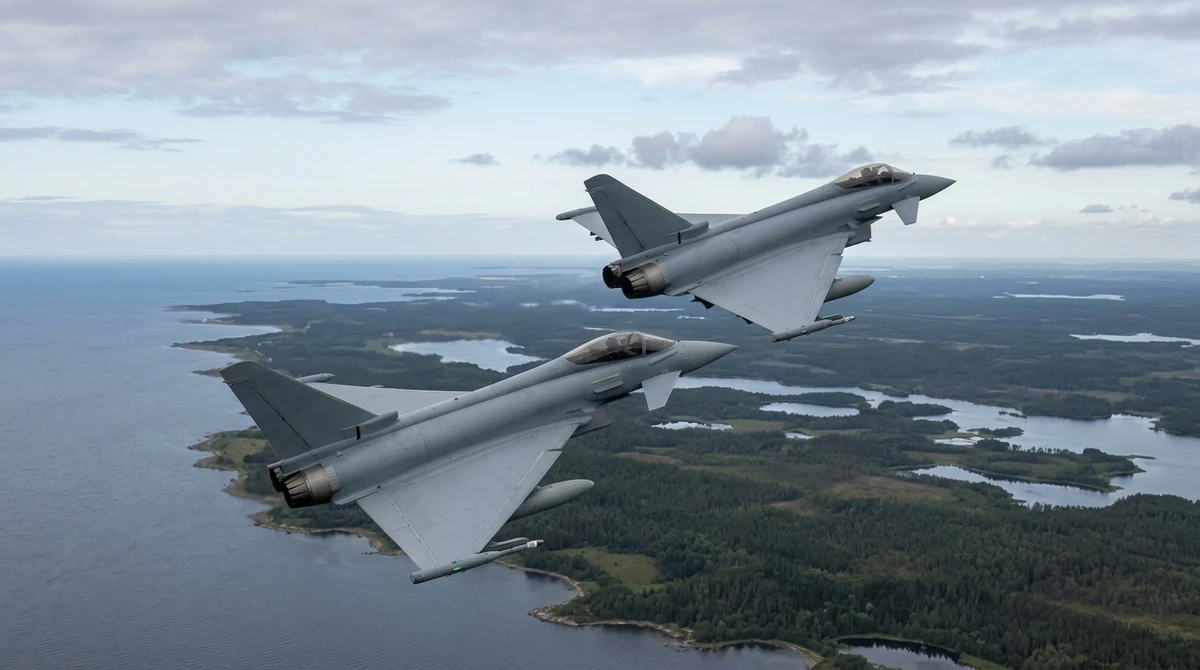
The country hosts the NATO Iceland Air Policing (IAPC) mission at Keflavík Air Base, where allied fighter detachments rotate to provide Quick Reaction Alert (QRA) capabilities. In February 2025, the Finnish Air Force conducted its first rotation in this mission since joining NATO, deploying F/A-18 Hornet fighters.
Military Forces
Iceland's security and defense tasks are primarily executed by the Icelandic Coast Guard (Landhelgisgæsla Íslands), which operates under the Ministry of Justice but maintains a Defense Division for military-related duties.
Personnel
The Icelandic Coast Guard employs approximately 250 personnel. Additional civilian security expertise is provided by the Iceland Crisis Response Unit (ICRU), which deploys to international peacekeeping missions. Domestic tactical response and counter-terrorism tasks are assigned to the Special Unit of the National Commissioner of the Icelandic Police (Víkingasveitin).
Naval and Aerial Assets
-
Offshore Patrol Vessels (OPVs): The Coast Guard operates a fleet of OPVs, including the Þór (Thor) and Týr-class vessels, equipped for maritime surveillance, search and rescue, and enforcement.
-
Fixed-Wing Aircraft: One Bombardier Dash 8 Q300 is maintained for maritime domain awareness and electronic surveillance.
-
Helicopters: A fleet of three Airbus H225 Super Puma helicopters is used for maritime and inland response. In 2025, the government signed a seven-year lease extension to maintain this rotary-wing capability through 2032.
Infrastructure and Surveillance
Iceland operates the NATO Radar System, part of the NATO Integrated Air and Missile Defense System (NATINADS). This includes four ground-based radar stations located at Miðnesheiði, Bolafjall, Gunnolfsvík, and Stokksnes. Keflavík Air Base serves as the primary hub for allied maritime patrol aircraft, such as the P-8A Poseidon, and rotational fighter detachments.
Strategic Trends
The 2025–2026 defense posture is characterized by a focused increase in defense-related spending and infrastructure modernization. Following the 2025 NATO Summit in The Hague, Iceland reaffirmed its commitment to reaching a 1.5% of GDP spending target for defense and resilience by 2035. Historically, direct defense spending has been approximately 0.14% of GDP.
Modernization and Infrastructure
-
Keflavík Air Base: Multi-year renovation projects continue through 2026, including the upgrade of fleet operations support facilities to accommodate increased rotations of allied maritime patrol and carrier-based aircraft. These projects include new administrative spaces and transient billeting to support surge operations.
-
Cyber Defense: In alignment with the 2025 National Security Report, the government is prioritizing the development of cyber defense capabilities and digital sovereignty to counter state-sponsored espionage and hybrid threats.
-
Arctic Cooperation: Integration with Nordic allies has deepened following the NATO membership of Finland and Sweden, with Iceland serving as a coordination point for Arctic surveillance and anti-submarine warfare (ASW) exercises such as Dynamic Mongoose.
Constraints
Iceland's primary constraint remains its lack of organic combat personnel, necessitating total reliance on allied rapid-reaction forces for territorial defense. Current budget trends reflect a transition toward closing the funding gap in civil preparedness and host-nation support capabilities required by NATO's 2025 capability targets.