Flag of Mongolia
Overview
| Country | Mongolia |
| Adopted | 1992 |
| Aspect ratio | 1:2 |
| Colors |
Description
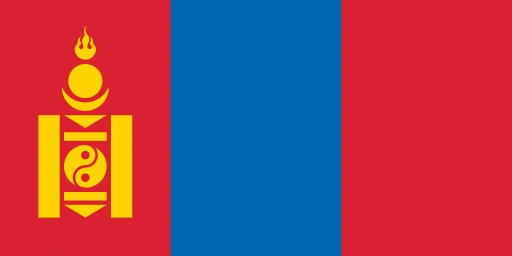
Three vertical bands of equal width are arranged in a red-blue-red sequence. A yellow Soyombo symbol is centered vertically within the hoist-side red stripe. This geometric emblem consists of a flame, sun, moon, triangles, rectangles, and a circular element.
Symbolism
The central blue stripe represents the 'Eternal Blue Sky,' a traditional Mongolian symbol of constancy and divinity. Red stripes symbolize the nation's progress and prosperity, as well as the ability to endure harsh environments. Within the yellow Soyombo, the flame represents growth and wealth, while the sun and moon icons signify the eternal life of the Mongolian state. The two vertical bars on the edges of the emblem represent a fortress, symbolizing strength and unity.
History
Adopted on February 12, 1992, the current flag coincided with the ratification of the new Constitution of Mongolia. This design is a modification of the 1945 flag used by the Mongolian People's Republic, specifically removing the socialist five-pointed star from the top of the Soyombo. Earlier versions from the 1911 independence era and the 1924 revolutionary period also utilized the Soyombo as a central national motif. The 1992 update served to distance the nation's iconography from its previous communist alignment.