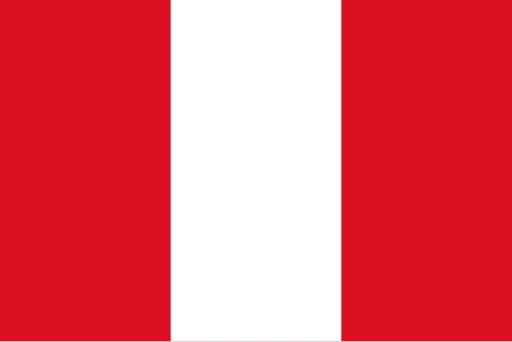
Flag of Peru
Overview
| Country | Peru |
| Adopted | 1825 |
| Aspect ratio | 2:3 |
| Colors | |
| Elements | Vertical stripes, coat of arms |
Description
The national flag consists of three equal vertical bands of red on the hoist and fly sides with a white band in the center. Within the white stripe sits the Peruvian coat of arms, which is composed of a shield divided into three distinct sections. This shield is bordered by a green wreath and topped with a civic crown of oak leaves.
Symbolism
The red color commemorates the blood of patriots who died during the struggle for independence, while white represents peace and bravery. On the coat of arms, the vicuña represents the nation's fauna, the cinchona tree represents the flora, and the cornucopia signifies the country's mineral resources. These three elements together celebrate the natural abundance and historical legacy of the Peruvian state.
History
General José de San Martín created the first version of the flag in 1820 with a diagonal layout, which was later modified to horizontal stripes in 1822. The current vertical orientation was formally established by a law passed on February 25, 1825, during the administration of Simón Bolívar. Although the version with the coat of arms is the state flag, a variant known as the 'National Flag' without the shield is used for general purposes.