GlobalMilitary.net Open-source military intelligence Updated daily
America ยท Lima

Peru Military Forces

Open-source order of battle for 2026: 81,000 active troops, 255 aircraft, 77 warships, 1,024 ground vehicles.

World rank #49 Military index 38.7/100
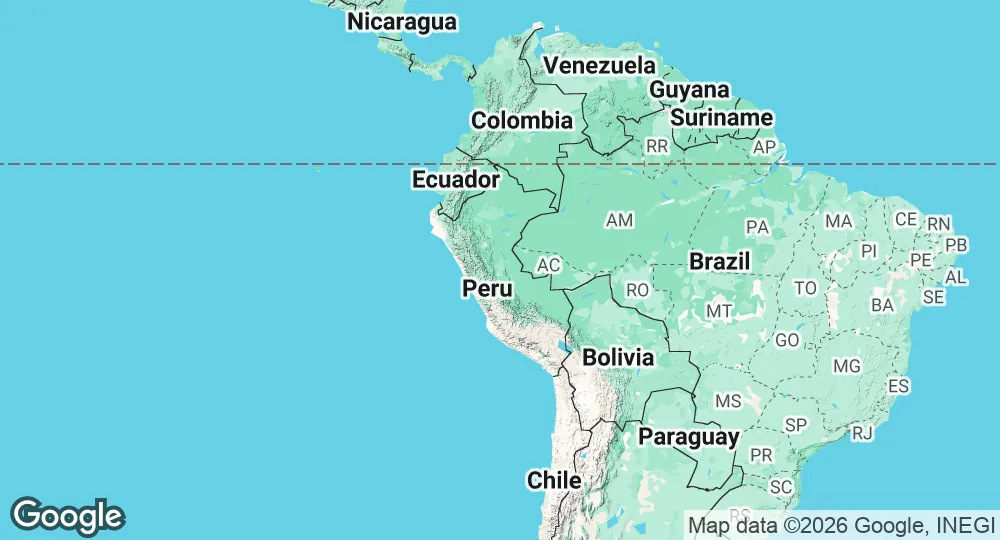
Map of Peru Flag of Peru
Active troops
81K
Reserve troops
188K
Defense budget
$2.3B2024
Share of GDP
0.8%
Population
34.2M2024

Armed Forces in 2026

Domain Strength Composition
Air Force 255 aircraft 42 combat 106 helicopters 8 air bases +19 on order
Peruvian Navy 77 warships 13 major combatants 5 submarines
Ground Forces 1,024 vehicles 240 main battle tanks
Personnel 81,000 active 188,000 reserve 77,000 paramilitary

ARMS Index (Aggregate Rating of Military Strength)

Full ranking โ†’
Score & Pillar Breakdown World #49
38.7/ 100
Peru ranks #49 of 175 in the ARMS Index (Aggregate Rating of Military Strength) with a score of 38.7/100. The ARMS Index scores Peru's overall capability on a 0โ€“100 scale from verifiable data across six pillars: manpower, ground forces, naval power, air power, nuclear deterrent and defense budget, with a readiness modifier derived from budget per soldier.
Pillar Weight Score Basis
Manpower 15% 72.3 Active, reserve & paramilitary personnel
Ground forces 20% 50.4 Tanks, armor & artillery weighted by type
Naval power 20% 47.1 Weighted by hull type: carrier tiers, nuclear vs conventional submarines
Air power 25% 42.2 Weighted by aircraft type and fleet age
Nuclear deterrent 10% 0.0 No declared nuclear capability
Defense budget 10% 40.0 Annual spending, purchasing-power adjusted
Readiness modifier ×0.98 Budget per soldier: proxy for training, maintenance & technology

Country File

Defense Statistics & Key Metrics
Population34.2M (2024)
GDP$289.2 billion (2024)
GDP per capita$8,452
Military budget$2.3B (2024)
Share of GDP0.8% (2024)
Military spending per capita$68 (2024)
Inflation rate2.01% (2024)
Military Budget History
2020 โ€” $2.4B, 1.20% of GDP $2.4B 2020 2021 โ€” $2.5B, 1.10% of GDP $2.5B 2021 2022 โ€” $2.7B, 1.10% of GDP $2.7B 2022 2023 โ€” $2.7B, 1.00% of GDP $2.7B 2023 2024 โ€” $2.3B, 0.80% of GDP $2.3B 2024
Budget (US$) Share of GDP (0-2%)
Share of GDP (line): CIA World Factbook (public domain). Budget in US$ (bars): that share applied to World Bank GDP (CC BY 4.0). Estimates.
Geography
CapitalLima
RegionAmerica
Land area1,279,996 kmยฒ
Coastline2,414 km
Land borders5,536 km
Bordering countries5
CurrencyPEN
National Flag Adopted 1825
Flag of Peru
Aspect ratio2:3
ColorsRed, white
Compare this Country
๐Ÿ‡ต๐Ÿ‡ช Peru vs

Strategic Overview in 2026

Strategic Position

Peruโ€™s defense posture is defined by a shift from traditional border deterrence toward addressing internal security threats and expanding regional industrial partnerships. The primary security concerns involve the "VRAEM" (Valley of the Apurรญmac, Ene, and Mantaro Rivers), where remnants of the Shining Path insurgency operate alongside cocaine production networks. Secondary concerns include the rise of transnational criminal organizations, such as the Tren de Aragua, and the expansion of illegal gold mining in the Amazon region, which has led to the formation of specialized "Amazon Protection Brigades."

In terms of international alignment, Peru has significantly deepened its security relationship with the United States. In late 2025, the U.S. government notified Congress of its intention to designate Peru as a Major Non-NATO Ally (MNNA). This status facilitates enhanced access to surplus defense articles and joint training exercises, such as the Resolute Sentinel series. Additionally, Peru has established a comprehensive strategic partnership with South Korea, focusing on naval construction, aircraft parts manufacturing, and armored vehicle procurement. Relations with neighboring Chile and Ecuador remain stable under established treaty frameworks, though maintaining a credible military balance remains a long-term doctrinal priority.

Military Forces

The Peruvian Armed Forces (Fuerzas Armadas del Perรบ) are organized under the Ministry of Defense, with the Joint Command overseeing the Army, Navy, and Air Force. Total active personnel are approximately 120,000, supported by a reserve force of 60,000 and the Peruvian National Police, which maintains a paramilitary capability of approximately 140,000 for counter-insurgency and internal security roles.

Peruvian Army (Ejรฉrcito del Perรบ): With approximately 90,000 active troops, the army is transitioning its mechanized forces. The core armor remains the T-55 main battle tank, which is slated for replacement. Recent procurement includes the K808 "White Tiger" 8x8 wheeled armored vehicles from South Korea to enhance mobility in the Andean and coastal regions. The artillery branch operates multiple launch rocket systems (MLRS), including legacy Chinese Norinco units and recently acquired Israeli PULS precision rocket systems. Infantry units are transitioning to the domestically assembled Arad-7 assault rifle.

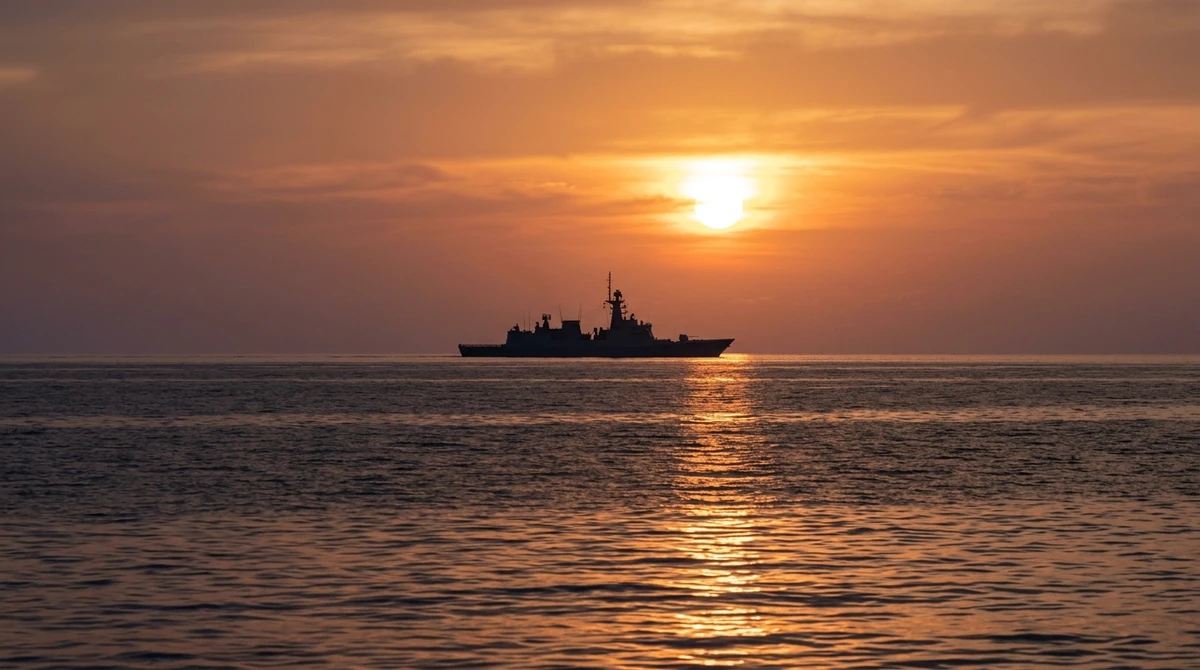
Peruvian Navy (Marina de Guerra del Perรบ): The navy maintains a fleet of Lupo-class (Carvajal) frigates and Type 209 diesel-electric submarines. A major naval modernization program is underway in partnership with HD Hyundai Heavy Industries to build six multirole frigates and three offshore patrol vessels (OPVs). The navy also operates "BAP Pisco" and "BAP Paita," large landing platform dock (LPD) vessels used for amphibious operations and disaster relief.

Peruvian Air Force (Fuerza Aรฉrea del Perรบ): The combat fleet is undergoing its most significant overhaul in three decades. The air force currently operates Mirage 2000 and Su-25 aircraft, while its MiG-29 fleet has reached the end of its operational life. In 2025, the government moved to finalize a $3.5 billion acquisition of 24 multirole fighter jets, with the Lockheed Martin F-16 Block 70 and Saab Gripen E/F as the primary contenders. Transport capabilities are supported by C-27J Spartan and KC-130H Hercules aircraft.

Defense Industry

Peruโ€™s defense industry is centered on three state-owned entities that prioritize technology transfer and domestic production to reduce reliance on imports.

  • SIMA (Servicio Industrial de la Marina): The naval shipyard has entered a multi-year co-production agreement with South Koreaโ€™s HD Hyundai Heavy Industries. This program involves building multirole frigates, OPVs, and auxiliary ships at the Callao shipyard, creating a regional hub for naval construction.

  • SEMAN (Servicio de Mantenimiento): The aeronautical branch has evolved from aircraft maintenance to parts manufacturing. In 2025, SEMAN became a certified supplier for Korea Aerospace Industries (KAI), producing over 250 structural components for the FA-50 light combat aircraft.

  • FAME (Fรกbrica de Armas y Municiones del Ejรฉrcito): Focuses on small arms and ammunition. It operates an assembly line for the Arad-7 rifle under license from Israel Weapon Industries (IWI) and collaborates with international partners on the assembly of 8x8 armored vehicles.

Strategic Trends

The 2025 defense budget was set at approximately $3.42 billion, reflecting a 2.8% increase from the previous year and representing about 1.2% to 1.5% of GDP. This funding is primarily allocated to the "Strategic Reset" modernization program, which aims to replace nearly all frontline combat platforms by 2030.

Current procurement priorities include the acquisition of 24 next-generation multirole fighters, additional 8x8 armored carriers, and the expansion of the naval fleet. A significant constraint facing the military is the logistical complexity of maintaining a diverse inventory of legacy Soviet, French, and newer Western/Asian equipment. To mitigate this, the military is standardizing around NATO-compatible systems. Future force structure shifts involve the decentralization of commands to better respond to illegal economies in the Amazon and the VRAEM.

Population, GDP, Inflation and Personnel: World Bank.
Military Expenditure: CIA World Factbook. Last updated on 4 August 2026. Suggest a change

Peruvian Defense Manufacturing

Designed in Peru
Naval Shipbuilding 1 class
PR 72 Missile corvette

Frequently Asked Questions

How large is Peru's military?
Peru has 81,000 active military personnel with an additional 188,000 in reserve. This includes army, navy, and air force service members.
What is Peru's defense budget?
Peru's annual defense budget is approximately $2.3 billion. This covers personnel costs, equipment procurement, operations, and maintenance of military forces.
How does Peru rank militarily in the world?
Peru ranks #49 globally on the ARMS Index with a score of 38.7 out of 100. This composite index measures military capability across manpower, ground forces, naval power, air power, nuclear deterrent, and defense budget, adjusted for equipment quality and readiness.
Does Peru have nuclear weapons?
No, Peru does not possess nuclear weapons and is a non-nuclear weapon state.
How many aircraft does Peru's air force have?
Peru operates 255 military aircraft including 42 combat aircraft. The fleet includes fighters, transport planes, helicopters, and training aircraft.
How large is Peru's navy?
Peru's navy operates 77 vessels including 5 submarines. The fleet includes surface combatants, support ships, and coastal patrol craft.
How many tanks does Peru have?
Peru operates approximately 240 main battle tanks. This figure includes both active inventory and reserve stocks available for mobilization.
What percentage of GDP does Peru spend on defense?
Peru spends approximately 0.8% of its GDP on defense.
What is Peru's military personnel per capita?
Peru has approximately 2.4 active military personnel per 1,000 citizens. This ratio reflects the country's military manpower relative to its population of 34,217,848.
Does Peru have submarines?
Yes, Peru operates 5 submarines. The submarine fleet may include nuclear-powered attack submarines, ballistic missile submarines, and conventional diesel-electric boats depending on the country's naval doctrine.
Does Peru have paramilitary forces?
Yes, Peru maintains 77,000 paramilitary personnel. These forces typically include gendarmerie, border guards, coast guard, and internal security troops that supplement regular military capabilities.
Latest Data Updates
  1. AUG 42026 Updated Global Military Index updated in a site-wide editorial pass
  2. JUL 272026 Updated Global Military Index updated
  3. JUL 242026 Updated Global Military Index updated
  4. JUL 162026 Updated Global Military Index updated in a site-wide editorial pass
  5. JUL 12026 Updated Rank insignia and ranks overview added
  6. JUN 162026 Updated Yearly statistics, military spending and 2 more fields updated
  7. JAN 172026 Updated Main battle tank count and Global Military Index updated