Flag of Portugal
Overview
| Country | Portugal |
| Adopted | 1911 |
| Aspect ratio | 2:3 |
| Colors | |
| Elements | Vertical stripes, coat of arms |
Description
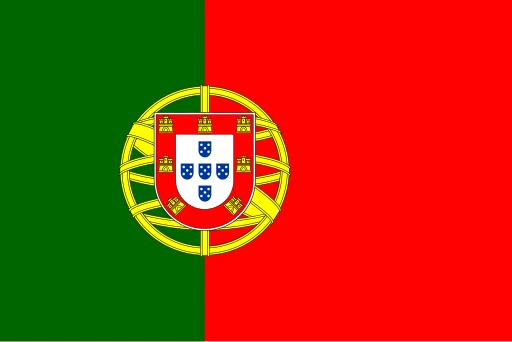
The flag features a rectangular field divided vertically into two unequal stripes of green and red, with the green section occupying two-fifths of the width on the hoist side. Positioned over the boundary of the two colors is the national coat of arms, which incorporates an armillary sphere and a traditional Portuguese shield.
Symbolism
Red signifies the blood of those who have died for the nation, while green represents hope for the future. The armillary sphere is a navigational tool that commemorates Portugal's prominent role in the Age of Discovery and its maritime expansion. Within the shield, the five blue escutcheons represent the five Moorish kings defeated by Afonso Henriques at the Battle of Ourique, and the seven gold castles symbolize the fortresses conquered during the Reconquista.
History
Adopted on June 19, 1911, this design replaced the blue and white flag of the constitutional monarchy following the republican revolution of 1910. A special commission including artist Columbano Bordalo Pinheiro developed the new color scheme to distance the republic from the previous regime. While the layout was a radical change, the central heraldic elements have evolved from symbols used by Portuguese monarchs since the foundation of the kingdom in the 12th century.