Flag of Russia
Overview
| Country | Russia |
| Adopted | 1993 |
| Aspect ratio | 2:3 |
| Colors | |
| Elements | Horizontal stripes |
Description
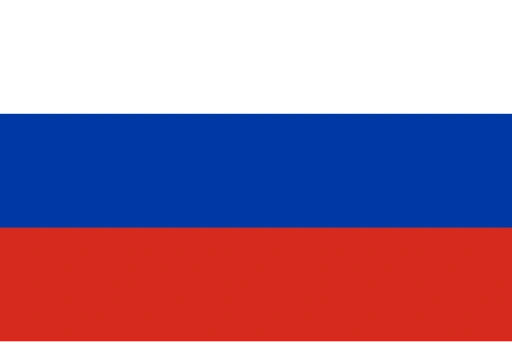
This national ensign consists of three equal horizontal bands arranged from top to bottom. A white stripe occupies the upper section, followed by a blue stripe in the center and a red stripe at the base. The rectangular field maintains a width-to-length ratio of 2:3 and contains no additional emblems or charges.
Symbolism
While no official government interpretation of the colors exists, traditional associations attribute specific virtues to each horizontal band. White is frequently cited as representing nobility, purity, and peace, while the blue stripe signifies loyalty, faith, and constancy. Red serves as a symbol of courage, generosity, and the historical sacrifices made by the Russian people. Historically, some interpretations also linked the colors to the three branches of the East Slavic people: White Russians, Little Russians, and Great Russians.
History
Originally introduced as a merchant ensign by Peter the Great in the late 17th century, the tricolor became the official national flag during the reign of Nicholas II in 1896. Following the 1917 Revolution, the Soviet Union replaced it with various red banners featuring the hammer and sickle. The current design was reinstated on August 22, 1991, during the collapse of the USSR, and its specific 2:3 proportions were formally codified by presidential decree in 1993.