Dolphin-class
Summary
| Origin country | 🇮🇱 Israel |
| Category | Submarine |
| Subtype | Diesel-electric submarine |
| Manufacturer | Howaldtswerke-Deutsche Werft |
| Year commissioned | 1999 |
| Approx. unit cost | $1000 million |
| Units |
BNS Dolphin BNS Penguin BNS Timi BNS Tuna INS Dolphin INS Drakon INS Leviathan INS Rahav INS Tanin INS Tkuma |
Operators
Technical specifications
| Displacement | 1640 tons |
| Displacement submerged | 1900 tons |
| Range | 8000 km at 8 knots |
| Endurance | 30 |
| Crew | 45 members |
| Width | 6.8 m (22.3 ft) |
| Length | 57.3 m (188.0 ft) |
| Max. depth | 350 m (1148.3 ft) |
| Propulsion | Diesel-electric, 3 diesels, 1 shaft, 4,243 shp (3,164 kW); Dolphin 2 class: air-independent HDW Fuel Cell System |
| Armament |
|
| Maximum speed | 11 knots |
| Max. speed submerged | 20 knots |
Description
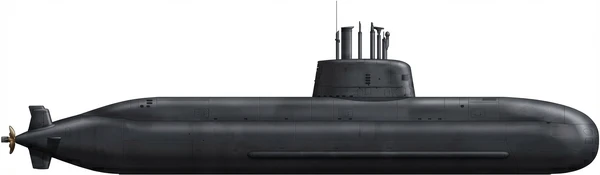
The Dolphin class was developed for the Israeli Navy and constructed by Howaldtswerke-Deutsche Werft in Germany to replace the Gal class. The project was initiated in 1989 and, after a brief cancellation in 1990, was restarted with subsidies from the German government. The first batch, Dolphin-I, entered service between 1999 and 2000. A second batch, Dolphin-II, incorporates air-independent propulsion and began commissioning in 2014.
The design is a modified and enlarged version of the German 209-class. Dolphin-II vessels are longer than the initial batch and utilize a fuel cell system for increased underwater endurance. The hull is constructed from nonmagnetic materials to minimize detection by magnetometers and naval mines. Design features include a prismatic hull cross-section and smooth transitions to the sail to reduce the vessel's signature. The submarines are equipped with a wet and dry compartment for special operations and can accommodate an external special forces hangar. The vessel Drakon features an enlarged sail, which is assessed to potentially house vertical launch system silos or specialized compartments for unmanned underwater vehicles and intelligence-gathering equipment.
The class is equipped with two different diameters of torpedo tubes. The larger tubes are designed to deploy mines, swimmer delivery vehicles, or cruise missiles. Armament includes wire-guided torpedoes and Popeye Turbo submarine-launched cruise missiles. These missiles are reported to provide a sea-based second-strike capability. The combat system manages sensor integration, fire control, and navigation, utilizing both active and passive sonar suites.
Operated by the Shayetet 7 flotilla, the class is primarily based in the Mediterranean. The vessels have also conducted operations in the Red Sea and the Persian Gulf, transiting the Suez Canal in 2009 and 2020. Service history includes a reported 2013 missile strike against anti-ship missile systems in Latakia, Syria, and reported activity off the coast of Sudan in 2011. Personnel with dual citizenship are required to renounce their non-Israeli citizenship to serve in the submarine fleet. The original Dolphin-I submarines are scheduled for replacement by the Dakar class starting in 2031.