Resolution-class
Summary
| Origin country | 🇬🇧 United Kingdom |
| Category | Submarine |
| Subtype | Ballistic missile submarine |
| Manufacturer | Vickers Shipbuilding Ltd |
| Year commissioned | 1967 |
| Units | Resolution, Repulse, Renown, Revenge |
Operators
Technical specifications
| Displacement | 7600 tons |
| Displacement submerged | 8500 tons |
| Range | Unlimited, except by food supplies |
| Crew | 143 members |
| Width | 10.1 m (33.1 ft) |
| Length | 130.0 m (426.5 ft) |
| Max. depth | 275 m (902.2 ft) |
| Propulsion | 1 × Vickers/Rolls-Royce PWR1 pressurised-water nuclear reactor, 27,500 shp (20.5 MW); Propeller |
| Armament |
|
| Maximum speed | 20 knots |
| Max. speed submerged | 25 knots |
Description
The Resolution class was developed for the Royal Navy to serve as the launch platform for the United Kingdom’s Polaris programme. Following the cancellation of the American Skybolt missile project in 1962, the British government reached an agreement with the United States to acquire the Polaris system. This transition shifted the British nuclear deterrent from the Royal Air Force's V-bomber fleet to the Royal Navy. Vickers Armstrong and Cammell Laird constructed four vessels between 1964 and 1968. A planned fifth unit was cancelled in 1965.
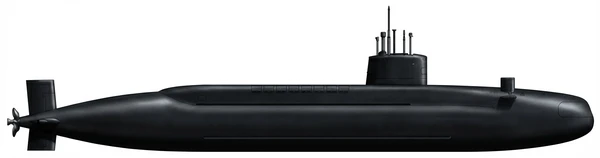
The design was a modification of the Valiant-class fleet submarine, featuring an American-designed missile compartment integrated between the fin and the nuclear reactor. The bow and stern sections were constructed separately before being joined to the missile section. Propulsion was provided by a Rolls-Royce pressurised water reactor and English Electric turbines. Technical features included an automated hovering system, raft-mounted propulsion machinery, a machinery loading hatch, and standardised hull valves. Armament consisted of Polaris missiles and bow-mounted torpedo tubes for Tigerfish wire-guided homing torpedoes. Each submarine operated with a dual-crew system to facilitate continuous patrol cycles.
The class entered service in 1967. Resolution conducted the first test firing of a Polaris missile at the USAF Eastern Test Range in February 1968 and commenced the first operational patrol in June of that year. The four boats—Resolution, Repulse, Renown, and Revenge—formed the 10th Submarine Squadron and were based at HM Naval Base Clyde. During the 1980s, the vessels underwent conversion to carry the Polaris A3TK missile, which utilized the British-developed Chevaline maneuvering re-entry vehicle system. The class provided the United Kingdom's nuclear deterrent until the mid-1990s. Retirement took place between 1992 and 1996 as the Vanguard class replaced the design. All four vessels were subsequently moved to Rosyth dockyard for storage pending final dismantling.