Trafalgar-class
Summary
| Origin country | 🇬🇧 United Kingdom |
| Category | Submarine |
| Subtype | Nuclear-powered fleet submarines |
| Manufacturer | Vickers Shipbuilding and Engineering |
| Year commissioned | 1983 |
| Approx. unit cost | $573 million |
| Units | Trafalgar, Turbulent, Tireless, Torbay, Trenchant, Talent, Triumph |
Operators
Technical specifications
| Displacement | 4800 tons |
| Displacement submerged | 5300 tons |
| Range | Unlimited, except by food supplies |
| Crew | 130 members |
| Width | 9.8 m (32.2 ft) |
| Length | 85.4 m (280.2 ft) |
| Max. depth | 300 m (984.3 ft) |
| Propulsion | 1 × Rolls-Royce PWR1 nuclear reactor, 2 × GEC steam turbines, 2 × WH Allen turbo generators (3.2 MW), 2 × Paxman diesel generators (2.1 MW), 1 × pump jet propulsor, 1 × motor for emergency drive, 1 × auxiliary retractable prop |
| Armament |
|
| Maximum speed | 20 knots |
| Max. speed submerged | 32 knots |
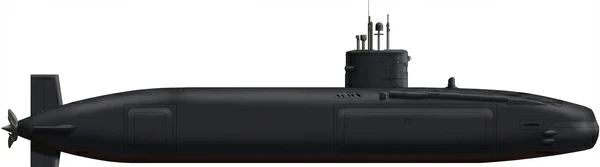
Description
The Trafalgar class is a series of nuclear-powered fleet submarines (SSNs) operated by the Royal Navy. Designed in the 1970s as a refinement of the preceding Swiftsure class, the vessels were built by Vickers Shipbuilding and Engineering at Barrow-in-Furness. The lead boat entered service in 1983, and the final vessel of the class was completed in 1991.
The design utilizes the internal layout and reactor type of the Swiftsure class but incorporates features to reduce acoustic signatures. These include anechoic tiles applied to the hull to absorb sonar pings and the implementation of pumpjet propulsion on all vessels except the lead boat. The submarines are equipped with strengthened fins and retractable hydroplanes for surfacing through thick ice. Sensor and communication systems include the Sonar 2076 suite on four vessels and a communications package upgrade integrated from 2014. The internal steering system utilizes a column design originally used in Wellington bombers.
Operational deployments included land-attack roles in Afghanistan, Iraq, and Libya. In 2001, HMS Trafalgar conducted the first Royal Navy submarine-launched cruise missile strikes during Operation Veritas. HMS Turbulent launched 30 missiles during the 2003 invasion of Iraq, and HMS Triumph conducted strikes against air-defense installations in 2011. HMS Triumph also recorded a 41,000-mile submerged transit to Australia in 1993 without forward support.
The class experienced technical issues during its service life, including a steam leak in 1998 and reactor cooling circuit cracks in 2000, the latter requiring inspections and modifications across the fleet. A 2013 regulatory report identified further technical problems associated with the age of the reactor systems. In the late 1980s, the Canadian government evaluated the class for a potential purchase of 10 to 12 vessels, though the plan was abandoned in 1989. The Royal Navy began retiring the class in 2009, with the Astute class serving as the successor.