Type 094-class (Jin)
Summary
| Origin country | 🇨🇳 China |
| Category | Submarine |
| Subtype | Ballistic missile submarine |
| Manufacturer | Bohai Shipyard |
| Year commissioned | 2007 |
| Approx. unit cost | $750 million |
| Units |
411 Long March 11 412 Long March 12 413 Long March 13 414 Long March 14 420 Long March 20 421 Long March 21 |
Operators
Technical specifications
| Displacement | 8000 tons |
| Displacement submerged | 11000 tons |
| Range | Unlimited, except by food supplies |
| Crew | 140 members |
| Width | 13.0 m (42.7 ft) |
| Length | 135.0 m (442.9 ft) |
| Max. depth | 400 m (1312.3 ft) |
| Propulsion | Nuclear, 1 shaft |
| Armament |
|
| Maximum speed | 20 knots |
| Max. speed submerged | 30 knots |
Description
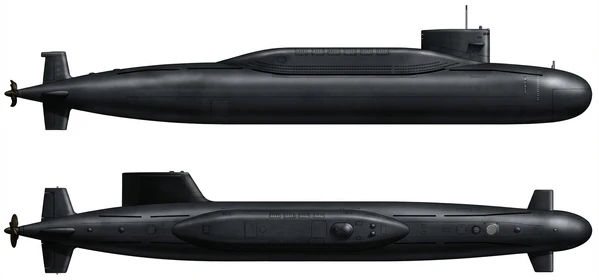
The Type 094, designated by NATO as the Jin class, is a nuclear-powered ballistic missile submarine operated by the People's Liberation Army Navy. Designed by Zhang Jinlin and built at the Bohai Shipyard in Huludao, the class succeeds the Type 092 and precedes the Type 096 currently under development. The design is likely based on the Type 093 nuclear-powered attack submarine.
The Type 094A variant features a modified sail incorporating design elements from a modified Type 093. Acoustic assessments of the class vary; a 2004 report by a Chinese researcher compared the acoustic signature to the Los Angeles-class submarine, while a 2009 report from the United States Office of Naval Intelligence characterized the vessel as noisier than Soviet ballistic missile submarines from the late 1970s.
The first vessel of the class was commissioned in 2007. Six units were in commission by 2020, with the class beginning nuclear deterrence patrols in December 2015. The United States Department of Defense identifies the Type 094 as China’s first sea-based nuclear deterrent. Early deployments utilized JL-2 missiles with ranges sufficient to reach Alaska from Chinese coastal waters. By late 2022, the fleet was rearmed with JL-3 missiles, which allow for strikes on the continental United States from the South China Sea. Active vessels include those commissioned between 2007 and 2021, such as the Changzheng 20 and Changzheng 21.