Air Wing of the Armed Forces of Malta
Key facts
| Official Name | Air Wing of the Armed Forces of Malta |
| Local Name | Forza tal-Ajru tar-Rumanija ta' Malta |
| Country | 🇲🇹 Malta |
| World rank | #127 |
| Active aircraft | 7 as of 2026 |
| Aircraft on order | 0 |
| Roundel |
|

Global Air Force Index
| 💥 Strategic Bombers | 0 | Nuclear-capable strike aircraft (highest weight) |
| ✈️ Combat Aircraft | 0 | Fighters, multirole & attack aircraft |
| 🚁 Helicopters | 3 | Attack, transport & utility rotorcraft |
| 🛫 Transport | 1 | Strategic & tactical airlift |
| 📊 Total Active | 7 | All aircraft types |
Methodology: Square root scaled index weighted by aircraft combat capability. Strategic bombers score highest due to nuclear strike capability.
Aircraft by type in 2026
| Aircraft type | Active | |
|---|---|---|
 Helicopter
|
3 | |
 Special
|
3 | |
 Transport
|
1 | |
Origin countries of aircraft
| Country | Active Aircraft | |
|---|---|---|
| 🇬🇧 United Kingdom | 4 | |
| 🇮🇹 Italy | 3 | |
| 🇺🇸 United States | 3 | |
Evolution of Maltese Air Force fleet
Overview
The air component of the Armed Forces of Malta (AFM) is the Air Wing, a non-combat force primarily structured for maritime security and support roles. Its strategic doctrine is shaped by Malta's position as a southern border for the European Union, prioritizing maritime patrol, border control, and search and rescue (SAR) operations. The Air Wing does not operate any combat aircraft and its roles are strictly in support of the AFM's Maritime Squadron and various government departments. It provides capabilities for medical evacuation, VIP transport, and reconnaissance.
The Air Wing is organized into a Headquarters for command and control, an Operations Squadron that flies the aircraft, and a Support Squadron for maintenance. All elements are based at Malta International Airport. The Operations Squadron is divided into fixed-wing and rotary-wing flights. The Air Wing's operations are integrated with the wider AFM structure, which consists of a headquarters and several land and sea-based regiments. The Italian Air Force assists the Air Wing by stationing two of its own AB-212 helicopters in Malta to support SAR missions.
The Air Wing has acquired two Beechcraft B200 King Air maritime patrol aircraft, which were specifically fitted for Malta's surveillance and border control needs. A significant upgrade to its rotary-wing component was the delivery of two Leonardo AW139 helicopters, which replaced older models and increased its operational capabilities for maritime missions.
Full inventory in 2026
Armed Forces of Malta - Air Wing
| Aircraft Type | Model | Origin Country | Model Year | Active | 𝚫 YoY | Ordered | ||
|---|---|---|---|---|---|---|---|---|
| Helicopter |
AW139 | 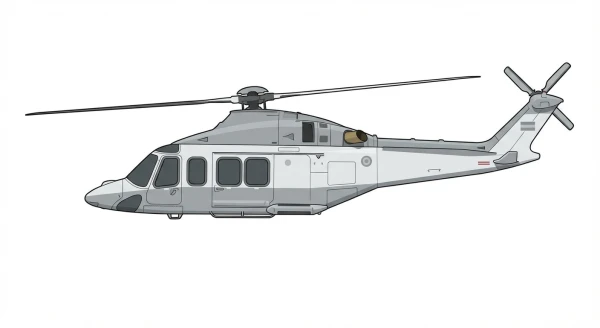 |
🇬🇧 🇮🇹 | 2003 | 3 | 0 |
0 |
|
| Transport |
BN-2 | 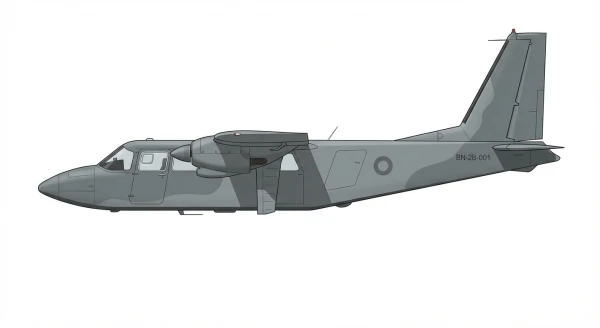 |
🇬🇧 | 1965 | 1 | 0 |
0 |
|
| Special |
King Air 200/250 | 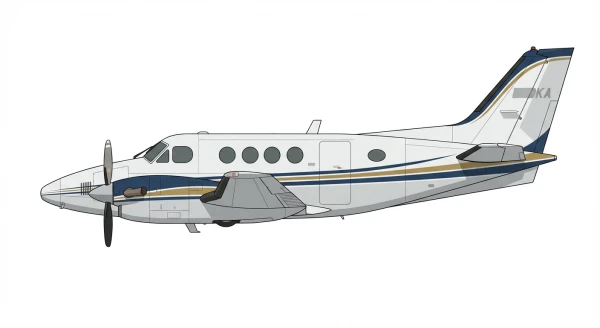 |
🇺🇸 | 1964 | 3 | 0 |
0 |
Frequently Asked Questions
How many aircraft does Malta have?
How does Malta's air force rank globally?
How many military helicopters does Malta have?
What is the Air Force Index of Malta?
Where does Malta get its military aircraft from?
Last updated on 1 January 2026. Suggest a change