Pope Field
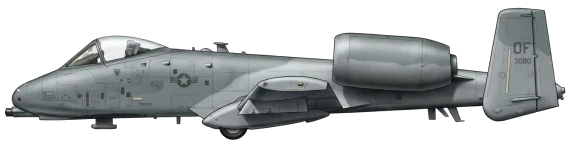
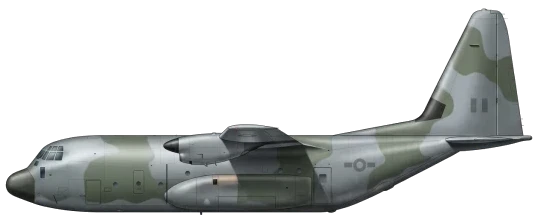
Pope Field (ICAO KPOB) is an active military air base in North Carolina, United States, operated by the US Air Force. It has 2 runways (longest 2,896 m). Home to the 43rd Air Mobility Operations Group, the 18th Air Support Operations Group, the 427th Special Operations Squadron, the 21st Special Tactics Squadron and 3 other units, flying A-10 Thunderbolt II, C-130 Hercules.
Facility Details
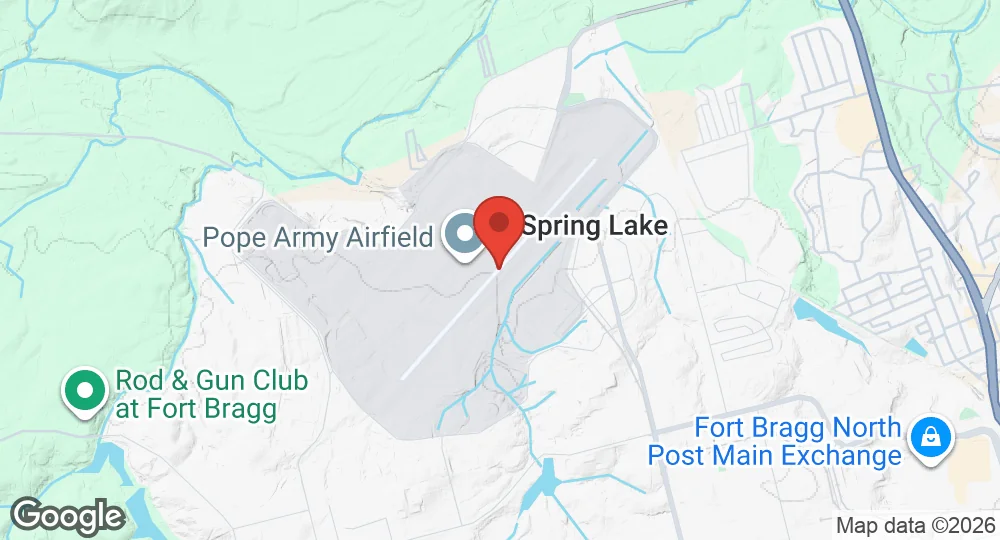
35.1708°N, 79.0144°W · 66 m elevation
| Operating Country | 🇺🇸 United States |
| Location | 🇺🇸 United States |
| Status | Active |
| Usage | Military only |
| Year built | 1919 |
| Operating Organization | US Air Force |
| Units |
43rd Air Mobility Operations Group18th Air Support Operations Group427th Special Operations Squadron21st Special Tactics Squadron24th Special Tactics Squadron352nd Special Warfare Training Squadron / Combat Control School43rd Airlift Wing
|
| Elevation | 66 m (217 ft) |
| IATA code | POB |
| ICAO code | KPOB |
| Runways |
05/23 · 2,896 m (9,501 ft) · Porous European MixAssault Strip · 914 m (2,999 ft) · Asphalt
|
| Website | www.pope.af.mil/ |
 18th Air Support Operations Group
 427th Special Operations Squadron
 21st Special Tactics Squadron
 24th Special Tactics Squadron
Description
Pope Field is located 12 miles northwest of Fayetteville, North Carolina, in Spring Lake. It is part of the Fort Bragg military complex. Established by the War Department in 1919, the installation is named for First Lieutenant Harley Halbert Pope. Originally utilized for terrain mapping and artillery spotting, the field expanded into a troop carrier training site during World War II. It operated as Pope Air Force Base from 1947 until 2011, when real property accountability was transferred to the U.S. Army and the installation was redesignated Pope Field.
The U.S. Army Fort Bragg Garrison serves as the host organization, providing airfield support, security, and facility maintenance. The 43rd Air Mobility Operations Group (AMOG) is the primary U.S. Air Force tenant. The group performs en route operations support, including mission command and control, aircrew management, aircraft maintenance, and fueling. The 43rd AMOG also coordinates deployment operations for the 82nd Airborne Division's Immediate Response Force. Additional resident units include the 18th Air Support Operations Group, the 21st and 24th Special Tactics Squadrons, the 724th Special Tactics Group, and the 427th Special Operations Squadron. The Air Force Combat Control School also operates from the field.
Infrastructure includes the Pope Air Force Base Historic District and Hangars 4 and 5, which are listed on the National Register of Historic Places. The airfield lighting systems and runway surfaces were replaced in 2021. The facility supports squadrons of C-130 transport aircraft and various short takeoff and landing (STOL) aircraft. Operational capabilities at the field include aircraft loading, supply management, air traffic control, and aircraft landing systems maintenance.
- AUG 142026 Updated Based aircraft recorded: A-10 Thunderbolt II, C-130 Hercules
- AUG 132026 Updated Runway designations, surfaces and lengths recorded
- APR 112026 Updated Description updated in a site-wide editorial pass
- JAN 122026 Updated Sources and cross-references refreshed
- JUL 12025 Updated Airbase data reviewed and updated