GEC-Marconi Phoenix
British reconnaissance unmanned aerial vehicle, developed in the late 20th century, used for all-weather real-time surveillance and artillery spotting by the British Army. Key figures: top speed 166 km/h, service ceiling 2,800 m, max takeoff weight 175 kg.
| Wingspan | 5.6 m (18.4 ft) |
| Max. takeoff weight | 175 kg (386 lbs) |
| Powerplant | 1 × Weslake Aero Engines WAE 342 19 kW each |
| Maximum speed | 166 km/h (103 mph) |
| Endurance | 5 hours |
| Service ceiling | 2,800 m (9,186 ft) |
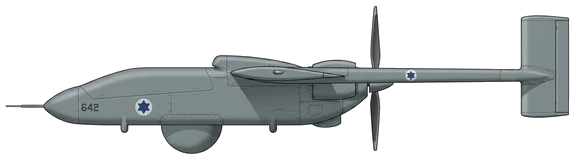
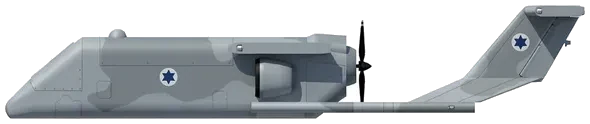
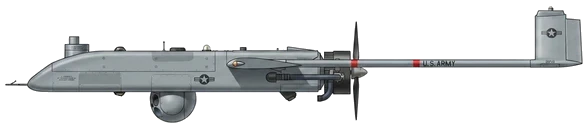
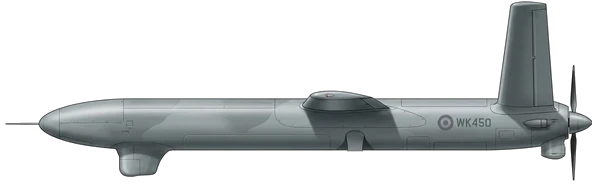
Description
The BAE Systems Phoenix (originally GEC-Marconi Phoenix) is a twin-boom, all-weather, real-time surveillance Unmanned Air Vehicle (UAV) operated by the British Army's Royal Artillery. Developed following Project Phoenix—a late 1970s study to replace the AN/USD501 Midge after the cancellation of the Westland MRUASTAS—the Phoenix was the third generation of UAV in British Army service. The aircraft conducted its first flight in 1986. Due to development delays, its planned 1989 entry into service was postponed until 1999.
Design
Constructed from Kevlar and other plastics, the Phoenix features a tractor configuration with a front-mounted propeller powered by a Weslake Aero Engines WAE 342 piston engine. To prevent the propeller from obstructing the sensors, the primary payload—an infrared imager—is housed in a pod slung beneath the fuselage. The UAV has a wingspan of 5.6 meters, a gross weight of 175 kg, and a payload capacity of 50 kg. It has a maximum speed of 166 km/h, a service ceiling of 2,800 meters, and an endurance of up to five hours.
The Phoenix is launched from a truck-mounted zero-length rail, a system originally designed for the US Army Aquilla UAV. Recovery is achieved via parachute, with the aircraft landing on its back on a crushable impact-absorbing hump. A Phoenix system can launch a UAV within one hour of arriving at a site, with a second launch possible eight minutes later. Up to two UAVs can be controlled by a single Ground Control Station (GCS), which receives real-time imagery and communicates with ground artillery through the Battlefield Artillery Target Engagement System (BATES).
Operational History
The Phoenix was operated by the 32nd Regiment Royal Artillery and the 39th Regiment Royal Artillery. It saw operational deployment with the Kosovo Force (KFOR) and during Operation Telic in Iraq. In Iraq, the Phoenix was utilized for artillery spotting, where it experienced high attrition rates, including instances where airframes were kept on station past recovery limits to maintain target tracking. The aircraft flew its final operational sortie in May 2006 and was formally retired on 20 March 2008, succeeded by the Watchkeeper WK450 system.
Frequently Asked Questions
What type of aircraft is the GEC-Marconi Phoenix?
What is the maximum speed of the GEC-Marconi Phoenix?
When did the GEC-Marconi Phoenix first fly?
Which countries operate the GEC-Marconi Phoenix?
What is the service ceiling of the GEC-Marconi Phoenix?
- JUL 272026 Updated Name updated
- JUL 62026 Created Page created: Phoenix