American Samoa Military Forces 🇦🇸
Military Strength Overview
Geography
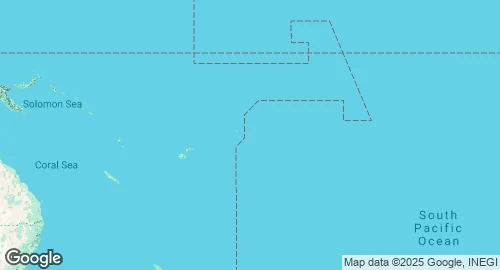
| Capital | Pago Pago |
| Land Area | 199 km² |
| Coastline Length | 116 km |
National Flag
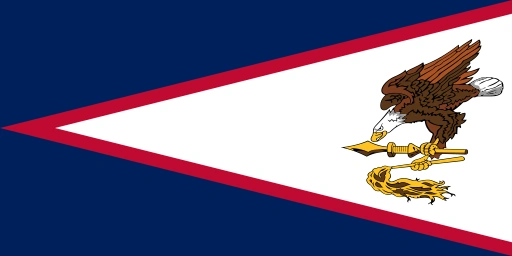
Defense Statistics & Key Metrics
| Population | 49225 (2021) |
| GDP | $750.0 million (2021) |
| GDP per capita | $15236 (2021) |
Population and Military Personnel Trends
GDP and Inflation Rate Trends
Strategic Overview in 2026
Strategic Position
American Samoa is an unincorporated, unorganized territory of the United States located in the South Pacific, approximately halfway between Hawaii and New Zealand. Its defense is the sovereign responsibility of the United States government under the jurisdiction of the Department of Defense (DoD). The territory serves as a southern operational node within the broader U.S. Indo-Pacific Command (USINDOPACOM) area of responsibility.
The primary security concerns for the territory center on maritime domain awareness, including the protection of the Exclusive Economic Zone (EEZ) against illegal, unreported, and unregulated (IUU) fishing, and the maintenance of open sea lines of communication. In the context of 2025 regional dynamics, American Samoa is positioned as a secondary logistics and communications point supporting U.S. activities in Oceania and providing a counter-weight to expanding regional influence from external powers.
The territory is not a party to international alliances or treaties in its own right, as its foreign affairs are managed by Washington. However, it is integrated into U.S. bilateral defense agreements and regional security initiatives, such as the Pacific Islands Forum (where it holds observer status) and the South Pacific Commission.
Military Forces
American Samoa does not maintain a standing domestic military force or a separate paramilitary organization. All military personnel and assets stationed in the territory belong to the U.S. Armed Forces.
Command Structure and Personnel The U.S. Army Reserve maintains the most significant permanent military presence. Command and control are exercised through the 9th Mission Support Command (MSC), headquartered in Honolulu, Hawaii. American Samoa has consistently recorded the highest per capita enlistment rate of any U.S. state or territory. As of 2026, the active-duty and reserve population consists of several hundred personnel assigned to local units, supplemented by a large number of veterans and residents serving in the U.S. mainland or overseas deployments.
Army Reserve The primary unit stationed in the territory is the 100th Battalion, 442nd Infantry Regiment, which maintains a presence at the Konelio Pele U.S. Army Reserve Center in Tafuna. This unit is an infantry battalion capable of air-mobile and light infantry operations. Support elements include the 127th Chaplain Detachment and the 411th Engineer Battalion (Forward). These units provide capabilities in disaster response, civil engineering, and tactical infantry support.
Coast Guard The U.S. Coast Guard (USCG) operates under District 14 and maintains a Marine Safety Detachment (MSD) in Pago Pago. The USCG presence focuses on maritime law enforcement, search and rescue, and environmental protection. While no large cutters are permanently homeported in Pago Pago as of 2026, the port frequently hosts visiting Sentinel-class Fast Response Cutters (FRCs) and Juniper-class seagoing buoy tenders for regional patrols and refueling.
Facilities The territory's primary military infrastructure is centered on the Pago Pago Harbor, one of the deepest natural deepwater harbors in the South Pacific. The harbor provides docking and refueling facilities for U.S. Navy and Coast Guard vessels. The Pago Pago International Airport (Tafuna) serves as a transit point for military airlift operations, capable of supporting C-17 Globemaster III and C-130 Hercules transport aircraft.
Strategic Trends
Defense posture in American Samoa focuses on infrastructure resilience and expanded maritime security cooperation. Under the 2025–2026 Pacific Partnership initiatives, the DoD has prioritized the modernization of dual-use infrastructure, including improvements to the Pago Pago wharf and fuel storage facilities to support increased naval traffic.
A primary constraint facing the military presence is the vulnerability of coastal infrastructure to climate-related events and sea-level rise. Current planning focuses on hardening the Tafuna military complex and the harbor's logistical nodes to ensure operational continuity during natural disasters.
There is an ongoing shift toward integrating American Samoan units into larger regional exercises, such as the biennial Rim of the Pacific (RIMPAC) and various Pacific Pathways rotations. These engagements are designed to enhance interoperability between U.S. reserve forces and the defense forces of neighboring Pacific Island nations, such as Samoa, Tonga, and Fiji. Additionally, the U.S. Coast Guard has increased the frequency of "shiprider" agreements in the region, allowing local maritime law enforcement officers to deploy on U.S. vessels to monitor the territory's EEZ.
Frequently Asked Questions
Does American Samoa have nuclear weapons?
Military Expenditure: SIPRI Milex. Suggest a change