Guinea-Bissau Military Forces 🇬🇼
Military Strength Overview
| 🪖 Active Troops | 4,450 personnels |
Global Military Index
| 🪖 Manpower (15%) | 52.1 | Active, reserve & paramilitary: 4450 effective |
| 🛡️ Ground Firepower (20%) | 23.1 | Main battle tanks: 10 |
| ⚓ Naval Power (20%) | 0.0 | Weighted by ship type: carriers, submarines, destroyers... |
| ✈️ Air Power (25%) | 0.0 | Weighted by aircraft type: combat, bombers, helicopters... |
| ☢️ Nuclear Deterrent (10%) | 0.0 | No declared nuclear capability |
| 💰 Defense Budget (10%) | 21.8 | $25M annual military spending |
Methodology: Log-scaled composite index using SIPRI, IISS, and GMNET data. Each pillar is normalized to 0-100, then weighted by strategic importance.
Geography
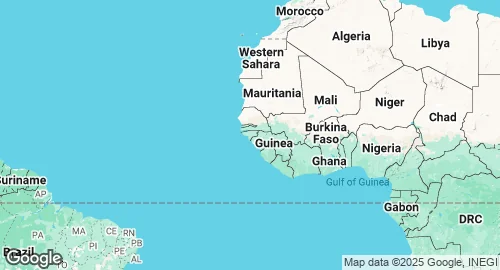
| Capital | Bissau |
| Land Area | 28,120 km² |
| Coastline Length | 350 km |
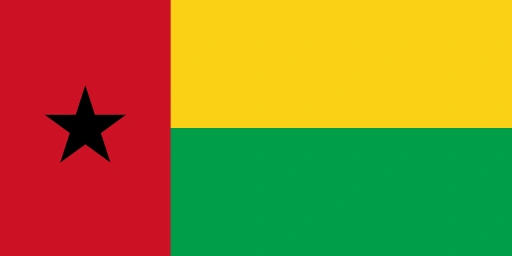
National Flag
Defense Statistics & Key Metrics
| Population | 2.2 million (2023) |
| GDP | $2.0 billion (2023) |
| GDP per capita | $951 (2023) |
| Military Budget | $25.3 million (2023) |
| Share of GDP in Milex | 1.2% (2023) |
| Share of Govt Expenditures | 5.8% (2023) |
| Military spends per capita | $12 (2023) |
| Inflation Rate | 9.39% (2022) |
| Military Personnel | 4,000 (2020) |
Guinea-Bissau Military Budget History
Population and Military Personnel Trends
GDP and Inflation Rate Trends
Strategic Overview in 2026
Strategic Position
Guinea-Bissau occupies a coastal position in West Africa, bordered by Senegal to the north and Guinea to the south and east. Its primary security concerns center on internal political stability and the management of transnational organized crime, specifically narcotrafficking. The country’s Bijagós archipelago and fragmented coastline are utilized as transit points for South American narcotics destined for European markets.
Following a military takeover on November 26, 2025, the country is governed by the High Military Command for the Restoration of National Security and Public Order. As of early 2026, Guinea-Bissau is suspended from the Economic Community of West African States (ECOWAS) and the African Union (AU) pending the restoration of constitutional order. Prior to this suspension, the military collaborated with regional partners through the ECOWAS Stabilization Support Mission in Guinea-Bissau (ESSMGB), which maintained a presence in the capital to secure state institutions and support security sector reform.
Defense doctrine is primarily oriented toward internal security, border control, and regime protection. The military maintains a close security relationship with Senegal, influenced by the long-standing Casamance conflict along their shared border.
Military Forces
The Revolutionary People's Armed Forces (Forças Armadas Revolucionárias do Povo - FARP) consist of an Army, Navy, and Air Force, supplemented by paramilitary elements. Total active personnel are approximately 4,500, with an additional 1,500 in reserve. Paramilitary forces, including the National Guard and police units, account for approximately 1,000 personnel.
The Army is the dominant branch and maintains a presence in the capital, Bissau, and regional military zones. Its inventory consists largely of legacy Soviet-era equipment. The armored fleet includes T-34 and PT-76 light tanks, though their operational status is limited. Armored transport is provided by BTR-40, BTR-60, and BTR-152 wheeled personnel carriers, along with BRDM-2 amphibious scout cars. Artillery capabilities are restricted to towed systems such as the D-44 85mm gun and various mortar types. Air defense is maintained through towed ZU-23-2 and ZPU-series anti-aircraft guns.
The Navy operates as a coastal surveillance force with a personnel strength of approximately 500. Its primary task is the protection of the Exclusive Economic Zone (EEZ) and counter-trafficking operations. The fleet consists of a small number of patrol craft and rigid-hulled inflatable boats (RHIBs) donated by international partners.
The Air Force maintains a nominal strength of approximately 500 personnel. It lacks combat aircraft and primarily operates a limited number of light utility and transport aircraft, including Cessna models and legacy Mi-8 helicopters. Operational readiness is frequently constrained by a lack of spare parts and specialized maintenance personnel.
Strategic Trends
The primary trend in 2026 is the implementation of a 12-month transitional framework established by the Political Charter of Transition in December 2025. This charter created a 65-seat National Transitional Council to exercise legislative power and a Transitional Government led by a prime minister, though the High Military Command remains the supreme political authority. The military justifies its continued intervention by citing the need to dismantle criminal networks and prevent civil conflict stemming from contested electoral results.
Defense spending is approximately 1.5% of GDP, totaling an estimated $25 million. Procurement is not a priority due to fiscal constraints and international sanctions; the military relies almost exclusively on donations and bilateral assistance from partners such as Portugal, China, and France for basic equipment and training.
Long-term strategic objectives include security sector reform (SSR) intended to professionalize the officer corps and reduce military interference in civilian governance. However, these programs face significant constraints due to the recurrent cycle of coups and the high degree of politicization within the command structure. Operational priorities for 2026 focus on maintaining the curfew and border closures mandated by the transitional authority.
Frequently Asked Questions
How large is Guinea-Bissau's military?
What is Guinea-Bissau's defense budget?
How does Guinea-Bissau rank militarily in the world?
Does Guinea-Bissau have nuclear weapons?
How many tanks does Guinea-Bissau have?
What percentage of GDP does Guinea-Bissau spend on defense?
What is Guinea-Bissau's military personnel per capita?
Military Expenditure: SIPRI Milex. Suggest a change