Strategic Position
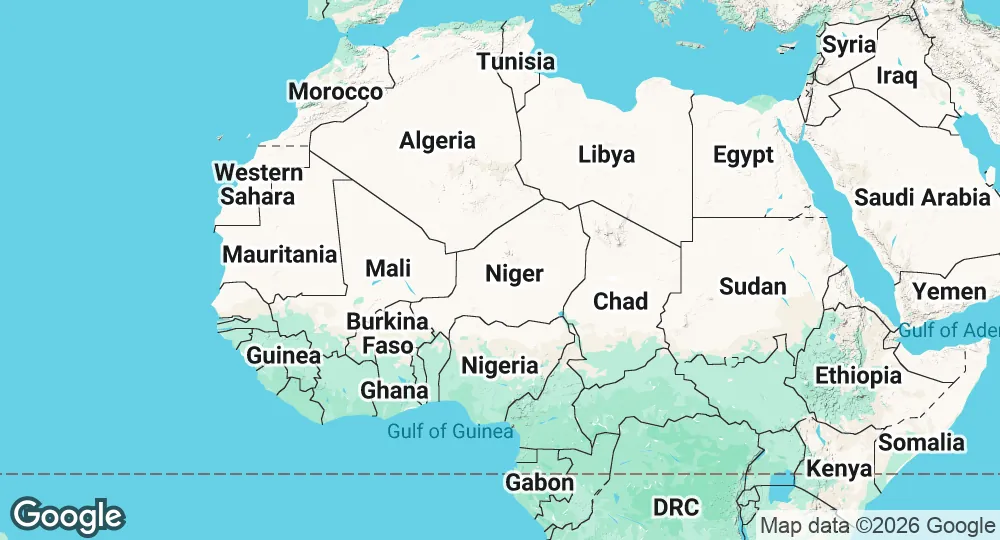
Niger is a landlocked state in the Sahel region, bordering Mali, Burkina Faso, Libya, Algeria, Nigeria, Benin, and Chad. Its defense doctrine centers on counter-insurgency and the preservation of territorial integrity against non-state armed groups, including Jama’at Nusrat al-Islam wal-Muslimin (JNIM), the Islamic State in the Greater Sahara (ISGS), and Boko Haram.
In 2024, Niger formalized its withdrawal from the Economic Community of West African States (ECOWAS) and transitioned into the Alliance of Sahel States (AES), a confederation with Mali and Burkina Faso. This mutual defense pact, established by the Liptako-Gourma Charter, stipulates that an attack on one member constitutes an aggression against all. In December 2025, the AES launched the Unified Force of the Alliance of Sahel States (FU-AES), a joint military body headquartered in Niamey designed to coordinate air and ground operations across the tri-border region.
Niger has restructured its bilateral security relationships, ending long-term defense agreements with France and the United States. This shift resulted in the 2024 withdrawal of French forces and the closure of U.S. Air Base 201 in Agadez. Consequently, Niger has increased military cooperation with Russia and Turkey, focusing on equipment procurement and training. In 2025, Niger signed a satellite services agreement with Russia’s Roscosmos for telecommunications and border surveillance.
Military Forces
The Nigerien Armed Forces (Forces Armées Nigériennes or FAN) are organized into the Army and the Air Force under the Ministry of National Defense. Paramilitary organizations include the National Gendarmerie, the National Guard, and the National Police. As of 2025, active military personnel is approximately 35,000, following a recruitment program intended to reach a force of 50,000.
Army
The Army is the primary branch for counter-insurgency operations. It utilizes a variety of wheeled armored vehicles rather than heavy main battle tanks, suited for the desert and scrubland terrain. Its inventory includes French-manufactured VBL and Bastion armored vehicles, Chinese WZ-551 armored personnel carriers, and Turkish Nurol Makina Ejder Yalçın mine-resistant ambush-protected (MRAP) vehicles. Light reconnaissance is conducted using Panhard AML-90 and AML-60 armored cars.
Air Force
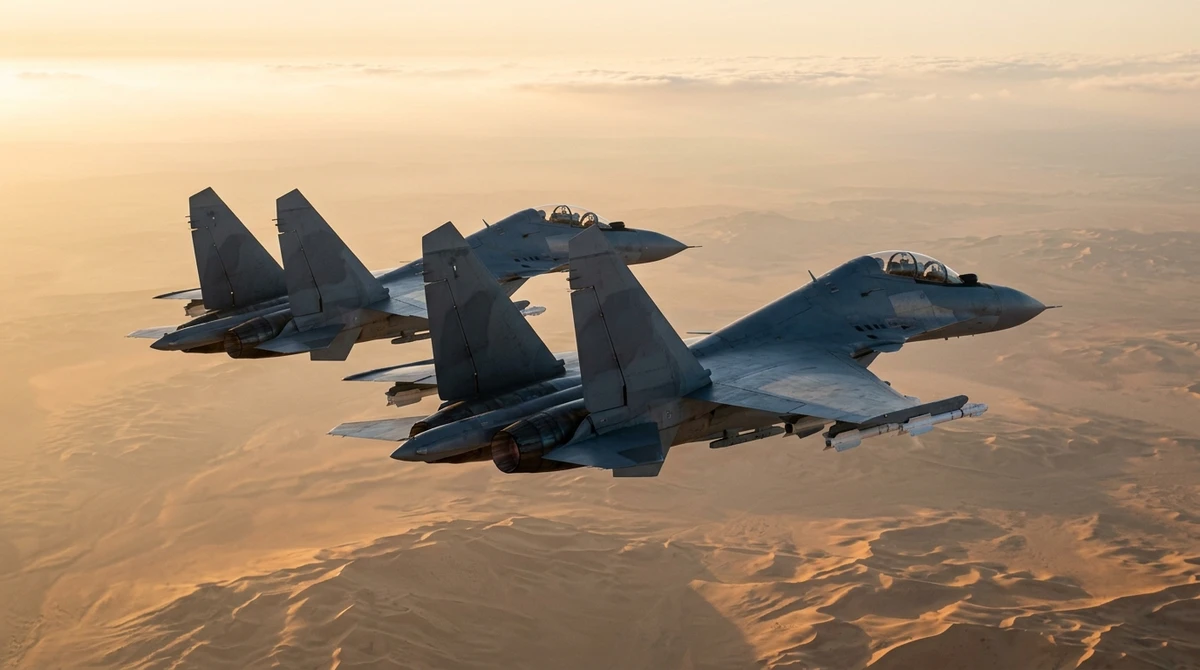
The Air Force (Armée de l'Air du Niger) focuses on ground attack and aerial reconnaissance. It operates Su-25 Frogfoot attack aircraft and Mi-24/35 attack helicopters for close air support. Fixed-wing assets include C-130 Hercules and Beechcraft King Air for transport and logistics. The force has integrated unmanned aerial systems (UAS), specifically the Turkish-made Bayraktar TB2, and received TAI Hürkuş turboprop trainers configured for light attack.
Special Operations
Specialized capabilities include the Special Operations Command, which coordinates elite intervention units trained for high-mobility strikes and hostage recovery. These units are frequently deployed in the Tillabéri and Diffa regions to combat insurgent incursions.
Strategic Trends
Military procurement has moved away from Western suppliers in favor of Turkish and Russian hardware. While Niger signed a Military Financial Cooperation Agreement with Turkey in 2025 to facilitate equipment and training, it suspended specific intelligence and telephone interception cooperation with both Russia and Turkey in mid-2025, citing performance issues with provided hardware.
The defense budget accounts for approximately 15% to 20% of national government expenditures, representing one of the highest sectoral allocations. Spending is focused on personnel expansion and the operationalization of the FU-AES joint battalion, which comprises roughly 5,000 troops drawn from the three confederation states.
The primary constraint facing the military is the requirement to manage multi-front insurgencies while transitioning between logistical systems. The shift from Western-standard maintenance to Russian and Turkish support frameworks has created temporary technical challenges for aircraft and armored vehicle readiness. Future force structure plans prioritize the decentralization of command through nine "Defense Zones" to improve response times in remote border areas.