El Salvador Military Forces
El Salvador ranks #104 of 170 militaries worldwide in 2026, with 24,500 active troops. The Air Force flies 53 aircraft, including 6 combat aircraft; the Navy operates 29 warships. El Salvador has no nuclear weapons.
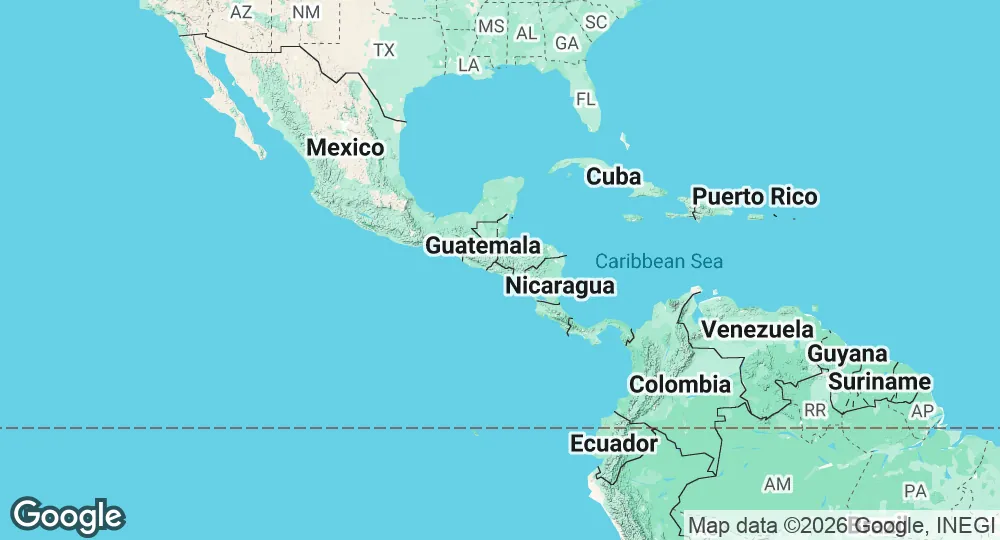
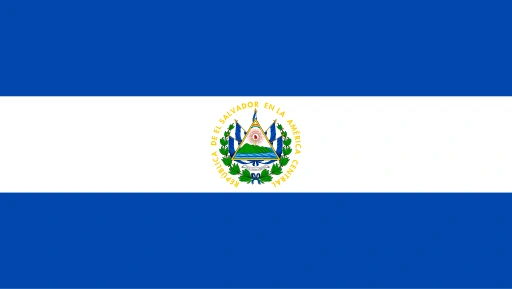
Armed Forces in 2026
| Domain | Strength | Composition |
|---|---|---|
| Air Force of El Salvador | 53 aircraft | 6 combat 25 helicopters 1 air bases |
| Navy of El Salvador | 29 warships | |
| Personnel | 24,500 active | 9,900 reserve 17,000 paramilitary |
ATLAS Index (Aggregate Total of Land, Air and Sea strength)
Full ranking →| Pillar | Weight | Score | Basis |
|---|---|---|---|
| Manpower | 10% | 31.0 | Active, reserve & paramilitary personnel |
| Ground forces | 20% | 0.0 | ARMS inventory power: armour & artillery by type and era, attack helicopters, armament |
| Naval power | 20% | 22.3 | SEAS inventory power: hulls by type, size and era, air wing, sustainment, armament |
| Air power | 25% | 17.0 | AIRS inventory power: aircraft by type and generation, enablers, armament |
| Nuclear deterrent | 10% | 0.0 | No declared nuclear capability |
| Defense budget | 15% | 14.7 | Annual spending, purchasing-power adjusted |
| Availability | modifier | ground ×0.84 · naval ×0.80 · air ×0.90 | Budget per point of each force, from the branch indexes |
Country File
| Population | 6.3M (2024) |
| GDP | $35.4 billion (2024) |
| GDP per capita | $5,580 |
| Military budget | $424M (2024) |
| Share of GDP | 1.2% (2024) |
| Military spending per capita | $67 (2024) |
| Inflation rate | 0.85% (2024) |
| Capital | San Salvador |
| Region | America |
| Land area | 20,721 km² |
| Coastline | 307 km |
| Land borders | 545 km |
| Bordering countries | 2 |
| Currency | SVC |
Strategic Overview in 2026
Strategic Position
The primary security concern for El Salvador is domestic, centered on the suppression of transnational criminal organizations and gang structures, specifically Mara Salvatrucha (MS-13) and the 18th Street gang. Defense doctrine is currently governed by the Territorial Control Plan (Plan Control Territorial), which integrates military personnel into domestic policing and urban security operations. Since the implementation of a national state of exception, the armed forces have transitioned from a traditional external defense posture to a gendarmerie-style role, maintaining a continuous presence in urban centers and rural territories to provide support to the National Civil Police (PNC).
Externally, El Salvador maintains a long-standing maritime dispute with Honduras and Nicaragua regarding sovereignty over the Gulf of Fonseca and its associated islands. While recent tensions have been managed through diplomatic channels, the region remains a focus for naval patrolling. El Salvador is a member of the Organization of American States (OAS) and a signatory to the Inter-American Treaty of Reciprocal Assistance (Rio Treaty). Bilateral defense cooperation is centered on the United States, which provides support for counter-narcotics operations, intelligence sharing, and human rights training. In 2025, El Salvador also pursued expanded defense cooperation with Turkey to explore hardware acquisition and training.
Military Forces
The Armed Forces of El Salvador (Fuerza Armada de El Salvador - FAES) are organized into three primary branches: the Army, the Air Force, and the Navy, all reporting to the Ministry of National Defense. Under the current expansion program, active-duty personnel numbers have increased to approximately 30,000, with a stated government objective to reach a force of 40,000 by the end of 2026. The military also maintains a reserve force of approximately 10,000 personnel.
Army (Ejército)
The Army is the largest branch and is structured into six military zones, each hosting infantry brigades. Specialized units include the Special Forces Command (CEAT), which comprises paratrooper and mountain commandos.
-
Armor and Mobility: The Army operates a fleet of light armored vehicles, including AML-90 reconnaissance vehicles and UR-416 armored personnel carriers. Mobility has been updated through the acquisition of Mexican-manufactured Hurricane 4x4 tactical vehicles and Israeli-designed SandCat armored vehicles.
-
Infantry Weapons: Small arms have undergone a standardization process. The force operates M4A1 carbines, delivered in 2025, alongside IWI Arad and Galil ACE assault rifles.
Air Force (Fuerza Aérea)
The Air Force is primarily configured for close air support and transport.
-
Fixed-Wing: The combat fleet consists of A-37 Dragonfly light attack aircraft. Transport requirements are met by Cessna 208 Caravan and O-2 Skymaster aircraft.
-
Rotary-Wing: The helicopter fleet includes UH-1H Iroquois for utility and transport, as well as MD 500 Defender helicopters configured for light attack and reconnaissance.
Navy (Fuerza Naval)
The Navy focuses on coastal defense and maritime interdiction. It includes the Marine Corps (Batallón de Infantería de Marina).
- Vessels: The fleet consists of coastal patrol boats and interceptors. Notable assets include Metal Shark Defiant-class patrol boats (such as the PM-15) and various small response craft used for counter-narcotics missions in the Pacific and the Gulf of Fonseca.
Strategic Trends
The 2026 General State Budget proposes an allocation of $1,037.2 million for the combined Security and Defense sector. This funding level supports the continued expansion of personnel and the modernization of technical capabilities. Procurement priorities have shifted toward infantry equipment and surveillance technology rather than conventional heavy weaponry. In 2025, the military received new shipments of M4A1 carbines and individual protective gear to replace aging Cold War-era stocks.
Modernization efforts are increasingly focused on Phase 3 of the Territorial Control Plan, which emphasizes the integration of drones, night-vision equipment, and centralized communications systems. The primary constraint facing the military is the sustainability of its rapid personnel growth, as remunerations and operational maintenance for the expanded force consume a high percentage of the defense budget. Additionally, the military's deep integration into domestic law enforcement tasks has resulted in a force structure that is specialized for urban patrolling and small-unit tactics, reducing its capacity for conventional, large-scale interstate warfare. Future procurement is expected to focus on upgrading the aging Air Force fleet and enhancing naval radar coverage for the country's Exclusive Economic Zone.
Military Expenditure: CIA World Factbook. Last updated on 4 August 2026. Suggest a change
Frequently Asked Questions
How large is El Salvador's military?
What is El Salvador's defense budget?
How does El Salvador rank militarily in the world?
Does El Salvador have nuclear weapons?
How many aircraft does El Salvador's air force have?
How large is El Salvador's navy?
What percentage of GDP does El Salvador spend on defense?
What is El Salvador's military personnel per capita?
Does El Salvador have paramilitary forces?
- AUG 42026 Updated Global Military Index updated in a site-wide editorial pass
- AUG 32026 Updated Global Military Index updated
- JUL 242026 Updated Global Military Index updated
- JUL 162026 Updated Global Military Index updated in a site-wide editorial pass
- JUN 162026 Updated Yearly statistics, military spending and military spending share of GDP updated
- JAN 132026 Updated Description added