UH-1 Iroquois "Huey"
American utility helicopter, essential in the Vietnam War, extensively employed for medevac, transport, and combat operations. Key figures: top speed 222 km/h, range 510 km, service ceiling 5,910 m, max takeoff weight 4,309 kg, unit price $1.3M, built 16,000. In service with 41 air forces as of 2026 — Turkey (172), Japan (114), Greece (102) and 38 others.
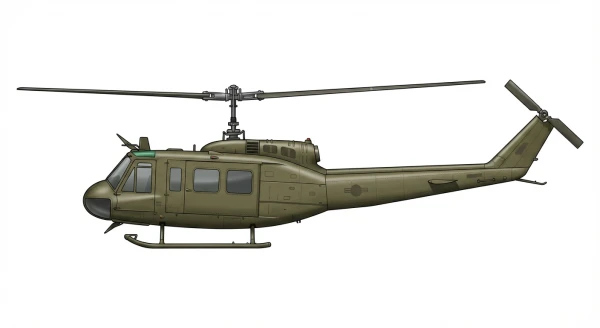
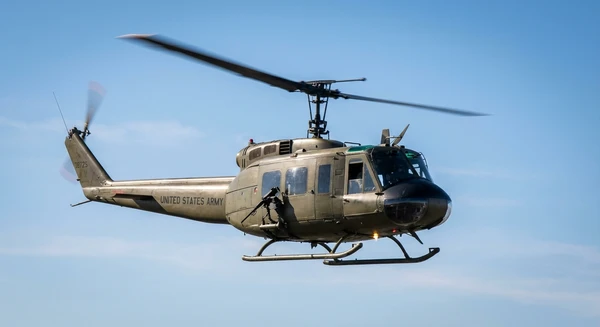
| Crew | 2 |
| Length | 12.7 m (41.8 ft) |
| Wingspan | 14.6 m (48.0 ft) |
| Height | 4.5 m (14.7 ft) |
| Empty weight | 2,087 kg (4,601 lbs) |
| Max. takeoff weight | 4,309 kg (9,500 lbs) |
| Powerplant | 1 × turboshaft Lycoming T53-L-11A 820 kW each |
| Maximum speed | 222 km/h (138 mph) |
| Operational range | 510 km (317 mi) |
| Service ceiling | 5,910 m (19,390 ft) |
| Climb rate | 8.9 m/s (29.2 ft/s) |
-
 Turkey
172
Turkey
172
-
 Japan
114
Japan
114
-
 Greece
102
Greece
102
-
 Colombia
86
Colombia
86
-
 Argentina
50
Argentina
50
-
 Tunisia
37
Tunisia
37
-
 Italy
34
Italy
34
-
 Philippines
30
Philippines
30
-
 Lebanon
28
Lebanon
28
-
 United States
28
United States
28
-
 Iraq
15
Iraq
15
-
 Dominican Republic
14
Dominican Republic
14
-
 Georgia
12
Georgia
12
-
 Paraguay
12
Paraguay
12
-
 Zambia
12
Zambia
12
-
 Bolivia
11
Bolivia
11
-
 Morocco
11
Morocco
11
-
 Indonesia
10
Indonesia
10
-
 El Salvador
10
El Salvador
10
-
 Chile
8
Chile
8
-
 Ethiopia
8
Ethiopia
8
-
 Guatemala
8
Guatemala
8
-
 Thailand
8
Thailand
8
-
 Panama
7
Panama
7
- 🇧🇦 Bosnia and Herzegovina 5
-
 Honduras
5
Honduras
5
-
 Kenya
5
Kenya
5
-
 Uganda
5
Uganda
5
-
 Yemen
4
Yemen
4
-
 Albania
3
Albania
3
- 🇨🇩 Congo Democratic Republic 3
-
 Uruguay
3
Uruguay
3
-
 Myanmar
2
Myanmar
2
-
 Nigeria
2
Nigeria
2
-
 Sudan
2
Sudan
2
- 🇸🇿 Eswatini 2
-
 Burkina Faso
1
Burkina Faso
1
- 🇧🇿 Belize 1
-
 Kazakhstan
1
Kazakhstan
1
-
 Mexico
1
Mexico
1
-
 Pakistan
1
Pakistan
1
Recent Events — UH-1 Iroquois "Huey"
9 events →

Description
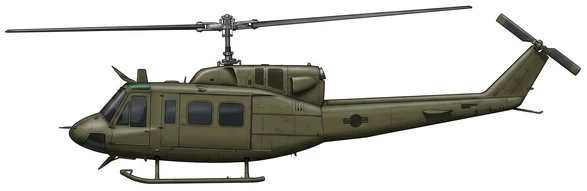
The UH-1 Huey, officially known as the Bell UH-1 Iroquois, is an American utility military helicopter that originated in the late 1950s. It was developed by Bell Helicopter to meet a United States Army's 1952 requirement for a medical evacuation and utility helicopter. The first prototype, designated the XH-40, flew on October 20, 1956. The design was later finalized into the UH-1 production model, with the first unit delivered in 1959.
The Huey became an iconic symbol of the Vietnam War, as it was extensively used for various roles, including troop transport, medevac, and gunship configurations. Its adaptability and versatility made it a workhorse during the conflict. Over 7,000 of these helicopters saw service in Vietnam.
Development
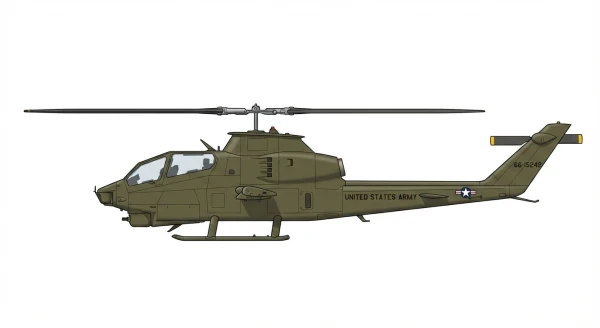
The UH-1 was the first turbine-powered helicopter produced for the United States military, and more than 16,000 have been produced worldwide. It was also the basis for various other models and variants, like the AH-1 Cobra attack helicopter and the enlarged Bell 214. Despite its age, it continues to serve in various capacities in many countries' military and civilian agencies.
Design
The UH-1 Huey features a single, twin-blade main rotor and a tail rotor, a configuration that became a defining characteristic of many subsequent helicopter designs. Its airframe is constructed primarily from metal, making it robust and capable of withstanding challenging conditions. The original design used a single Lycoming T53 turboshaft engine, which offered a good balance between power and efficiency. Over the years, engine upgrades have improved its performance and capabilities.
The cabin is spacious and modular, allowing for quick reconfiguration depending on mission requirements. This versatility has enabled the Huey to serve in a wide variety of roles, from troop and cargo transport to medical evacuation. It typically has a crew of two—pilot and co-pilot—but in some variants and missions, additional crew members like gunners or medics may be onboard. The cockpit is designed for good visibility, a crucial feature for pilots navigating through diverse operational scenarios.
The Huey has the capability to carry external loads, adding to its utility as a cargo transport. Despite its relatively simple design, the Huey's durability, adaptability, and straightforward maintenance requirements have made it one of the most successful and enduring helicopters in aviation history.
Armament
In terms of armament, it has seen various configurations that enable it to carry a range of weapons, depending on its intended role. In its gunship or attack configurations, commonly known as the UH-1B/C/M models, the Huey can be equipped with a variety of machine guns, grenade launchers, and rockets.
-
Machine Guns: The most commonly used machine guns are the 7.62mm M60 and the .50 caliber M2 Browning. These can be mounted on either side of the aircraft and are typically operated by door gunners.
-
Rockets: It can also carry 2.75-inch (70 mm) rockets in launchers, usually mounted on pylons on either side of the fuselage. These rockets can carry various types of warheads, from anti-personnel to anti-tank.
-
Grenade Launchers: Some versions come equipped with 40mm grenade launchers, which can be effective for suppression and clearing enemy positions.
-
Miniguns: Some gunship variants are equipped with GAU-17/A miniguns, providing a higher rate of fire.
The UH-1's weapon systems are generally manually aimed and are not as sophisticated as those found in dedicated attack helicopters like the AH-64 Apache. Nonetheless, they offer substantial firepower and have been effectively used in a variety of mission profiles, including close air support, convoy escort, and suppression of enemy air defenses.
The armament is not exclusive to attack configurations; even in utility or medevac roles, Hueys often carried at least some armament to provide defensive capabilities.
Operational History
The UH-1 Huey's operational history is extensive, most notably marked by its critical role in the Vietnam War. In that conflict, it became a ubiquitous symbol of U.S. military involvement, serving in various capacities from troop transport and medical evacuation to direct combat roles as gunships. The helicopter was vital in the execution of the new concept of "air mobility," allowing troops to be rapidly deployed and extracted in difficult terrain, effectively changing the dynamics of ground warfare. Over 7,000 Hueys were deployed in Vietnam, and they flew approximately 7 million sorties during the course of the war.
Post-Vietnam, the Huey continued to serve in various capacities both within the United States and abroad. It has seen action in numerous other conflicts, including the invasion of Grenada in 1983, Operation Desert Storm in 1991, and various peacekeeping missions in the Balkans during the 1990s. Hueys were also used in search and rescue operations, disaster relief, and humanitarian missions. In the United States, they are commonly used by the National Guard and have been employed for domestic missions, including disaster relief during events like Hurricane Katrina.
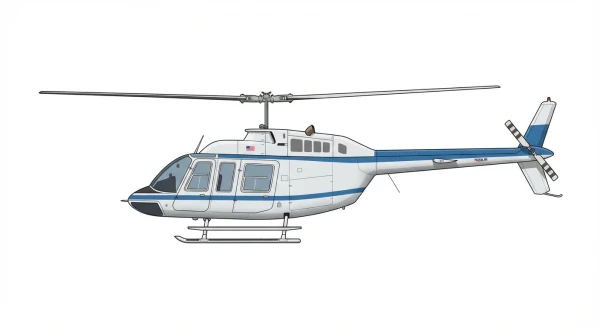
Internationally, the UH-1 has been exported to more than 60 countries and has seen action in a variety of conflicts and operations globally, including anti-insurgency operations, drug interdiction, and peacekeeping missions.
Variants
-
UH-1A: The initial production model, primarily used for utility and medevac roles, equipped with a 770-shaft-horsepower Lycoming T53-L-1A engine.
-
UH-1B: An early gunship variant with improved engine power and the capability to carry more armaments. It featured a 960-shaft-horsepower T53-L-5 engine and was one of the first to serve in Vietnam as a gunship.
-
UH-1C: Developed specifically for air support, this variant had improved engine power and modified rotor blades for better performance. It often served as a gunship and could carry a significant amount of ordnance.
-
UH-1D: A stretched-fuselage version with greater capacity, capable of carrying up to 12 troops. It was powered by a 1,100-shaft-horsepower T53-L-11 engine and saw extensive use in Vietnam for troop transport and medevac missions.
-
UH-1E: A variant specifically tailored for the U.S. Marine Corps, similar to the UH-1C but with avionics that were compatible with Marine Corps requirements.
-
UH-1F: This version was equipped with the General Electric T58-GE-3 engine and primarily used by the U.S. Air Force for support roles, including missile site support.
-
UH-1H: An upgrade of the UH-1D, featuring a 1,400-shaft-horsepower T53-L-13 engine. It was the most produced variant and served in a variety of roles, from troop transport to gunship.
-
UH-1M: A UH-1C upgrade, equipped with a more powerful engine and improved sights for the gunship role.
-
UH-1N Twin Huey: The twin-engine development (civil Bell 212), used by the U.S. Navy, Marine Corps and Air Force — covered in detail on its own page.
-
UH-1Y Venom: A significant twin-engine upgrade of the UH-1N with new engines, a four-blade rotor system and modern avionics, currently in use by the U.S. Marine Corps — covered in detail on its own page.
Even though it has been largely replaced by more modern helicopters in the U.S. military, such as the UH-60 Black Hawk, the Huey's durable design means it continues to serve in various roles worldwide, both in military and civilian capacities. Some are still in service with reserve and second-line units, as well as in law enforcement agencies and other civilian organizations.
Frequently Asked Questions
What type of aircraft is the UH-1 Iroquois "Huey"?
What is the maximum speed of the UH-1 Iroquois "Huey"?
What is the range of the UH-1 Iroquois "Huey"?
When did the UH-1 Iroquois "Huey" first fly?
How many UH-1 Iroquois "Huey" have been built?
Which countries operate the UH-1 Iroquois "Huey"?
How much does a UH-1 Iroquois "Huey" cost?
What is the service ceiling of the UH-1 Iroquois "Huey"?
- AUG 52026 Updated Powerplant updated in a site-wide editorial pass
- JUL 242026 Updated Description updated
- JUL 232026 Updated Sources and cross-references refreshed
- JUN 302026 Updated Description updated
- APR 72026 Updated Sources and cross-references refreshed
- OCT 222023 Updated Specifications and description reviewed