Sōryū-class
Summary
| Origin country | 🇯🇵 Japan |
| Category | Submarine |
| Subtype | Attack submarine |
| Manufacturer | Mitsubishi Heavy Industries |
| Year commissioned | 2009 |
| Approx. unit cost | $540 million |
| Unit | JS Sōryū, JS Unryū, JS Hakuryū, JS Kenryū, JS Zuiryū, JS Kokuryū, JS Jinryū, JS Sekiryū, JS Seiryū, JS Shōryū, JS Ōryū, JS Tōryū |
Operators
Technical specifications
| Displacement | 2900 tons |
| Displacement submerged | 4200 tons |
| Range | 6100 km at 6 knots |
| Crew | 65 members |
| Width | 9.1 m (29.9 ft) |
| Length | 84.0 m (275.6 ft) |
| Propulsion | 1-shaft 2× Kawasaki 12V 25/25 SB-type diesel engines, 4× Kawasaki Kockums V4-275R Stirling engines (3,900 hp surfaced, 8,000 hp submerged) |
| Armament |
|
| Maximum speed | 13 knots |
| Max. speed submerged | 20 knots |
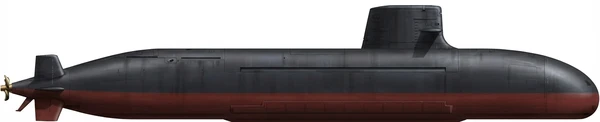
Description
The Sōryū class is a series of diesel-electric attack submarines operated by the Japan Maritime Self-Defense Force (JMSDF). Developed as an evolution of the preceding Oyashio class, construction took place between 2005 and 2019 at Mitsubishi Heavy Industries and Kawasaki Shipbuilding Corporation. The class entered service in 2009. With the introduction of these vessels, the JMSDF transitioned its naming convention from ocean currents to mythological creatures; Sōryū translates to "blue dragon."
The design is distinguished from the Oyashio class by an X-shaped stern configuration of diving planes and rudders. The Sōryū class is the first Japanese submarine class to incorporate air-independent propulsion (AIP). The first ten vessels utilize Stirling engines license-built by Kawasaki Heavy Industries to extend submerged endurance. The final two vessels of the class, Ōryū and Tōryū, replaced the Stirling engines and lead-acid batteries with lithium-ion batteries. This modification increased electrical storage capacity by utilizing hull space formerly occupied by AIP machinery to house additional batteries. The sensor suite consists of the ZPS-6F surface search radar and the ZQQ-7 sonar suite. Later units received the ZQQ-7B sonar variant, updated satellite communication devices, and new torpedo countermeasures.
Twelve submarines were completed and remain in active service, stationed at the Kure and Yokosuka naval bases. Operational history includes international deployments, such as visits by Hakuryū to Pearl Harbor and Guam in 2013. In 2023, the JMSDF began commissioning the successor Taigei class. The Sōryū design was offered to Australia for its submarine replacement program, and several other nations, including India, Indonesia, and the Netherlands, expressed interest in the class, though no export sales were concluded.