GlobalMilitary.net Open-source military intelligence Updated daily
Asia ยท Tokyo

Japan Military Forces

Open-source order of battle for 2026: 247,000 active troops, 1,397 aircraft, 158 warships, 4,516 ground vehicles.

World rank #8 Military index 61.3/100
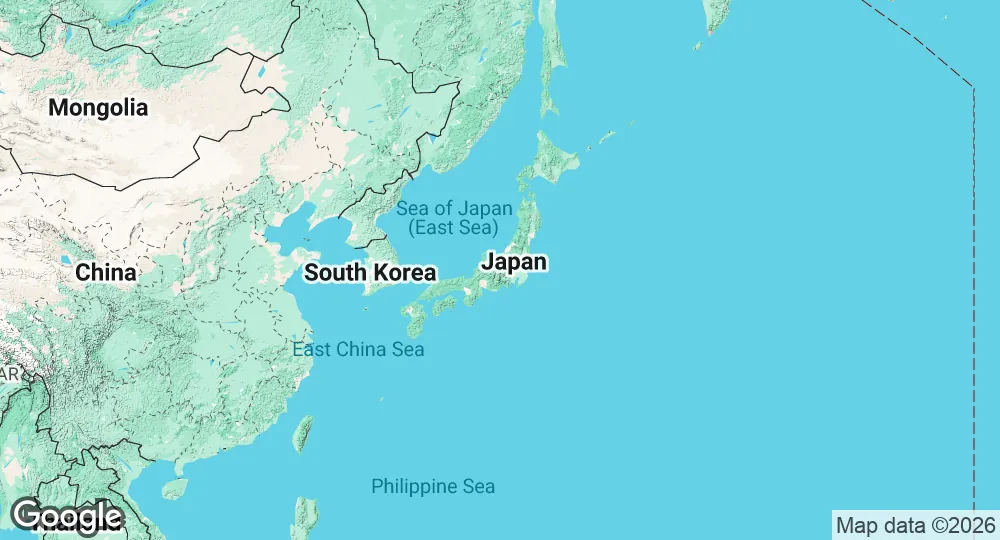
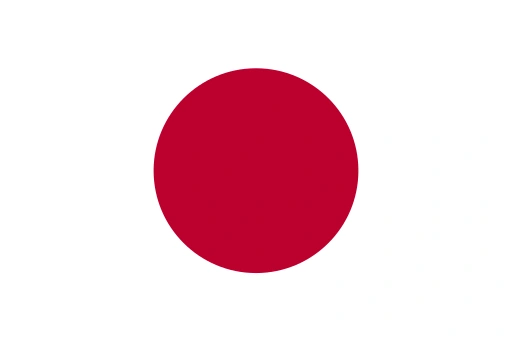
Map of Japan Flag of Japan
Active troops
247K
Reserve troops
55K
Defense budget
$56B2024
Share of GDP
1.4%
Population
124M2024

Armed Forces in 2026

Domain Strength Composition
Japan Air Self-Defense Force 1,397 aircraft 331 combat 533 helicopters 40 air bases +353 on order
Japan Maritime Self-Defense Force 158 warships 75 major combatants 2 carriers 23 submarines 6 naval bases
Ground Forces 4,516 vehicles 521 main battle tanks
Personnel 247,000 active 55,900 reserve 14,700 paramilitary

Global Military Index

Full ranking โ†’
Score & Pillar Breakdown World #8
61.3/ 100
The Global Military Index scores Japan's overall capability on a 0โ€“100 scale from verifiable data across six pillars: manpower, ground forces, naval power, air power, nuclear deterrent and defense budget, with a readiness modifier derived from budget per soldier.
Pillar Weight Score Basis
Manpower 15% 75.6 Active, reserve & paramilitary personnel
Ground forces 20% 62.4 Tanks, armor & artillery weighted by type
Naval power 20% 77.1 Weighted by hull type: carrier tiers, nuclear vs conventional submarines
Air power 25% 67.3 Weighted by aircraft type and fleet age
Nuclear deterrent 10% 0.0 No declared nuclear capability
Defense budget 10% 70.5 Annual spending, purchasing-power adjusted
Readiness modifier ×1.12 Budget per soldier: proxy for training, maintenance & technology

Country File

Defense Statistics & Key Metrics
Population124M (2024)
GDP$4.0 trillion (2024)
GDP per capita$32,487
Military budget$56B (2024)
Share of GDP1.4% (2024)
Military spending per capita$455 (2024)
Inflation rate2.74% (2024)
Military Budget History CIA World Factbook
2020 โ€” $51B, 1.00% of GDP $51B 2020 2021 โ€” $50B, 1.00% of GDP $50B 2021 2022 โ€” $47B, 1.10% of GDP $47B 2022 2023 โ€” $51B, 1.20% of GDP $51B 2023 2024 โ€” $56B, 1.40% of GDP $56B 2024
Budget (US$) Share of GDP (0-2%)
Geography
CapitalTokyo
RegionAsia
Land area364,546 kmยฒ
Coastline29,751 km
CurrencyJPY
National Flag Adopted 1999
Flag of Japan
Aspect ratio2:3
ColorsRed, white
Compare this Country
๐Ÿ‡ฏ๐Ÿ‡ต Japan vs

Strategic Overview in 2026

Strategic Position

Japanโ€™s defense posture is shaped by a deteriorating security environment in Northeast Asia, characterized by the military expansion of China, North Korean ballistic missile development, and Russian military activity near the northern territories. The primary geopolitical concern remains the potential for a regional contingency in the Taiwan Strait or the East China Sea, which has prompted a shift from a "passive" defense doctrine toward a "proactive" deterrence model.

The cornerstone of Japan's security remains the bilateral alliance with the United States, which facilitates integrated command structures and the basing of U.S. forces in the region. Japan has recently expanded its network of security partnerships through Reciprocal Access Agreements (RAA) with Australia and the United Kingdom, intended to streamline joint training and personnel exchanges. Japan is also a participant in the Quadrilateral Security Dialogue (Quad) and has increased cooperation with European partners on defense technology and maritime security. Current doctrine emphasizes the acquisition of "counter-strike" capabilitiesโ€”specifically the ability to strike enemy bases to deter incoming missile attacksโ€”marking a significant departure from previous interpretations of its post-war pacifist constitution.

Military Forces

The Japan Self-Defense Forces (JSDF) are organized into three primary branches under the Ministry of Defense: the Ground (JGSDF), Maritime (JMSDF), and Air (JASDF). In 2025, Japan established the Japan Joint Operations Command (JJOC) to centralize operational control across all branches and improve synchronization with U.S. forces.

Japan Ground Self-Defense Force (JGSDF): The JGSDF focuses on island defense, particularly in the Nansei island chain. It operates a fleet of main battle tanks, including the Type 10 and Type 90, alongside Type 16 Maneuver Combat Vehicles (MCV) designed for rapid air-deployment. Artillery units are transitioning to prioritize long-range "stand-off" missiles to deny maritime access to adversaries. Personnel levels are approximately 150,000 active members, though recruitment remains a challenge due to demographic trends.

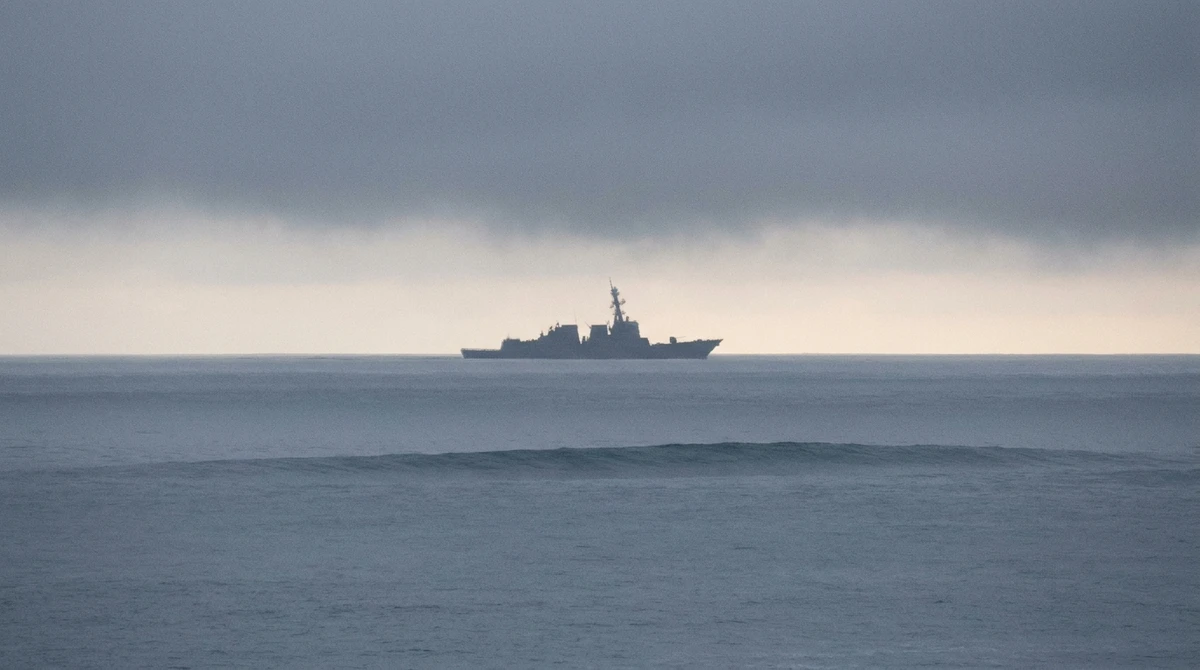
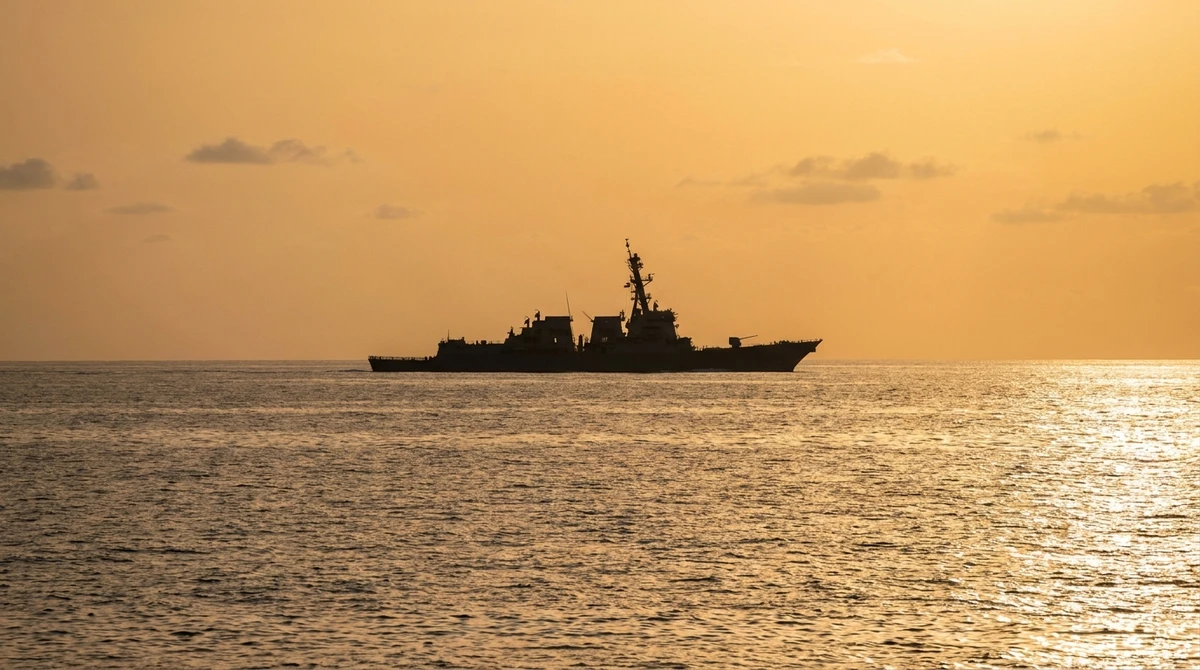
Japan Maritime Self-Defense Force (JMSDF): The JMSDF maintains one of the region's most capable naval forces, centered on Aegis-equipped destroyers such as the Maya and Kongo classes. The fleet includes Izumo-class multipurpose destroyers, which have undergone modifications in 2025 to operate F-35B Lightning II aircraft, effectively serving as light carriers. Its submarine fleet consists of the Taigei and Soryu classes, utilizing lithium-ion battery technology for extended endurance.

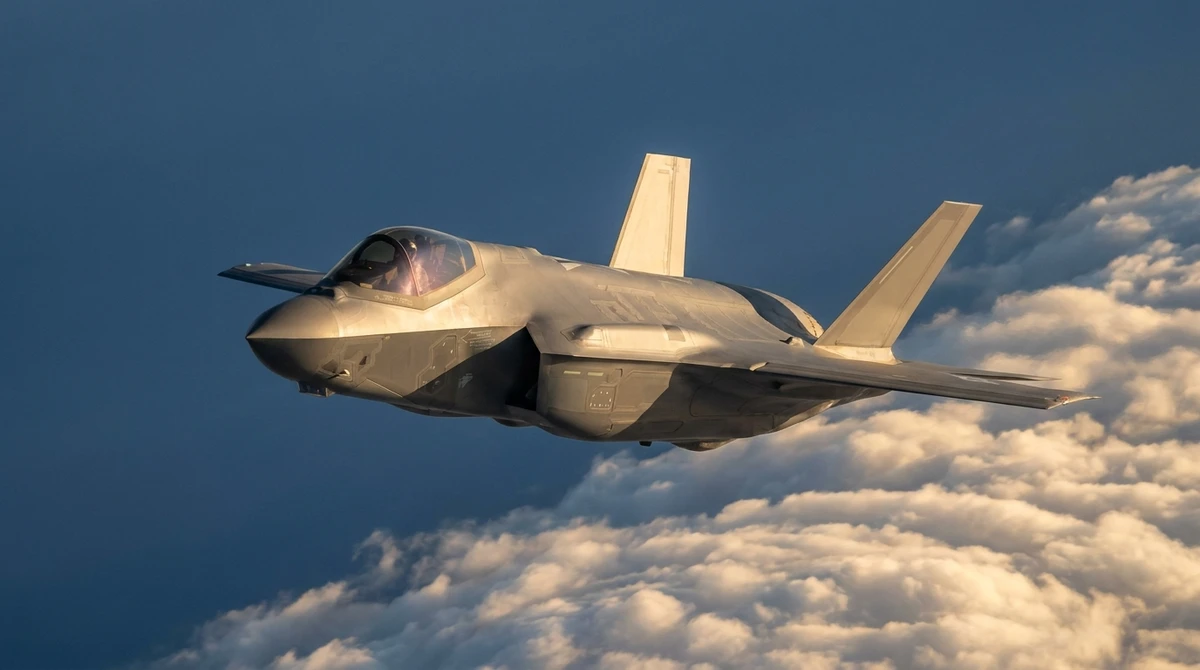
Japan Air Self-Defense Force (JASDF): Undergoing a transition to the "Aerospace Self-Defense Force" to reflect growing space domain responsibilities, the JASDF operates a fleet of F-35A and F-15J fighters. The domestic F-2 fighter remains in service but is slated for eventual replacement. The force also maintains E-767 and E-2D airborne early warning and control (AEW&C) aircraft and a dedicated Space Operations Group.

Specialized Capabilities: Japan has expanded its Cyber Defense Command to protect military networks and critical infrastructure. The JSDF also fields specialized amphibious units, such as the Amphibious Rapid Deployment Brigade (ARDB), modeled after the U.S. Marine Corps for island-recapture missions.

Defense Industry

Japan possesses a sophisticated domestic defense industrial base, dominated by large conglomerates such as Mitsubishi Heavy Industries (MHI), Kawasaki Heavy Industries (KHI), and IHI Corporation. These firms produce a wide range of indigenous equipment, including the Taigei-class submarines, Type 10 tanks, and Mitsubishi F-2 fighters.

The industry is currently transitioning toward greater international collaboration. A primary effort is the Global Combat Air Programme (GCAP), a co-development project with the United Kingdom and Italy to produce a sixth-generation fighter jet by 2035. Recent revisions to the Three Principles on Transfer of Defense Equipment and Technology have authorized the export of lethal equipment under specific conditions, allowing the industry to integrate more deeply into global defense supply chains. Despite high domestic capability, Japan remains a significant importer of U.S. technology, particularly for Aegis combat systems and F-35 airframes.

Strategic Trends

Defense spending in Japan is trending toward a target of 2% of GDP, with the 2026 budget reaching approximately 9 trillion yen. This funding is prioritized for "sustainability and resiliency," including the fortification of military bases and the expansion of ammunition stockpiles.

Procurement priorities focus on counter-strike capabilities, including the acquisition of U.S.-made Tomahawk cruise missiles and the domestic development of upgraded Type 12 surface-to-ship missiles with extended ranges. Japan is also investing in hypersonic weapons and the "SHIELD" littoral defense system, which utilizes a network of unmanned aerial, surface, and underwater vehicles for surveillance and combat.

The military faces severe constraints from Japan's shrinking and aging population, resulting in persistent personnel shortfalls. To address this, the JSDF is increasingly adopting automated systems and unmanned platforms to reduce manpower requirements. Strategic command reforms in 2025 and 2026 focus on enhancing interoperability with the U.S. Indo-Pacific Command to ensure a unified response to regional threats.
Japanese Defense Manufacturing

Designed in Japan
Naval Shipbuilding 30 classes
Hatsuyuki General-purpose destroyerSลryลซ Attack submarineOyashio Attack submarineMogami Stealth frigateMurasame General-purpose destroyerAsagiri General-purpose destroyerHarushio Diesel-electric submarineAbukuma Destroyer escortHayabusa Patrol boatPHM PG 01 Patrol Hydrofoil Missile vesselYamagumo DestroyerTakanami General-purpose destroyerAkizuki DestroyerKongo Guided-missile destroyerTaigei Attack submarineMiura Tank landing shipOsumi Tank landing shipTachikaze Guided-missile destroyerAsahi DestroyerAtago Guided-missile destroyerHaruna DestroyerHatakaze Guided-missile destroyerHyuga ASW carrierIzumo Helicopter-carrying destroyerMashลซ Fast combat support shipMaya Guided-missile destroyerShirane DestroyerYubari Destroyer escortIshikari Destroyer escortUpgraded Mogami Frigate
Military Vehicles 6 models
Komatsu LAV Armoured scout carType 74 Medium Main Battle TankType 61 Medium Main Battle TankType 16 MCV 8ร—8 Armored Fighting VehicleMitsubishi Type 90 Heavy Main Battle TankType 10 Main battle tank
Missile Systems 9 systems
TAM-1 Anti-TankSAM-1 Surface-to-AirAAM-4 Air-to-AirAAM-5 Air-to-AirASM-1 (Type 80) Anti-ShipASM-2 (Type 93) Anti-ShipASM-3 Anti-ShipSAM-2 Surface-to-AirType 12 Anti-Ship
Firearms 4 models
Howa Type 20 Assault rifleNTK-62 Machine gunType 64 Assault rifleType 89 Assault rifle

In the News

All news โ†’
Illustration
AUG 6, 2026

The Trump-Class Battleship Would Be Twice the Size of Any Cruiser or Destroyer in Service

The Congressional Budget Office costed the U.S. Navy's proposed Trump-class battleship at roughly 35,000 tons. GlobalMilitary.net inventory data shows the largest cruiser or destroyer in service anywhere displaces 15,907 tons, and only 14 hulls worldwide exceed 11,000.

๐Ÿ‡จ๐Ÿ‡ณ ๐Ÿ‡ฏ๐Ÿ‡ต ๐Ÿ‡ฐ๐Ÿ‡ท ๐Ÿ‡ท๐Ÿ‡บ ๐Ÿ‡บ๐Ÿ‡ธ
Illustration
JUL 25, 2026

2,402 F-35s on Order Against 1,041 in Service, GlobalMilitary.net Data Shows

Twenty countries have 2,402 F-35 Lightning IIs on order against 1,041 already delivered to 13 operators, an order book more than ten times the size of the next-largest fighter program.

๐Ÿ‡จ๐Ÿ‡ฆ ๐Ÿ‡จ๐Ÿ‡ญ ๐Ÿ‡จ๐Ÿ‡ฟ ๐Ÿ‡ฉ๐Ÿ‡ช ๐Ÿ‡ซ๐Ÿ‡ฎ ๐Ÿ‡ฎ๐Ÿ‡น ๐Ÿ‡ฏ๐Ÿ‡ต ๐Ÿ‡ท๐Ÿ‡ด ๐Ÿ‡บ๐Ÿ‡ธ
Illustration
JUL 9, 2026

UK, Italy and Japan Award ยฃ4.6 Billion GCAP Development Contract to Edgewing

The trinational GCAP Agency on July 3 awarded a ยฃ4.6 billion ($6.1 billion), 18-month contract to Edgewing, the BAE Systems-Leonardo-JAIEC joint venture, to complete concept work and begin detailed design of the sixth-generation fighter targeted for service entry in 2035.

๐Ÿ‡ฌ๐Ÿ‡ง ๐Ÿ‡ฎ๐Ÿ‡น ๐Ÿ‡ฏ๐Ÿ‡ต

Frequently Asked Questions

How large is Japan's military?
Japan has 247,000 active military personnel with an additional 55,900 in reserve. This includes army, navy, and air force service members.
What is Japan's defense budget?
Japan's annual defense budget is approximately $56.4 billion. This covers personnel costs, equipment procurement, operations, and maintenance of military forces.
How does Japan rank militarily in the world?
Japan ranks #8 globally on the Global Military Index with a score of 61.3 out of 100. This composite index measures military capability across manpower, ground forces, naval power, air power, nuclear deterrent, and defense budget, adjusted for equipment quality and readiness.
Does Japan have nuclear weapons?
No, Japan does not possess nuclear weapons and is a non-nuclear weapon state.
How many aircraft does Japan's air force have?
Japan operates 1,397 military aircraft including 331 combat aircraft. The fleet includes fighters, transport planes, helicopters, and training aircraft.
How large is Japan's navy?
Japan's navy operates 158 vessels including 23 submarines and 2 aircraft carrier(s). The fleet includes surface combatants, support ships, and coastal patrol craft.
How many tanks does Japan have?
Japan operates approximately 521 main battle tanks. This figure includes both active inventory and reserve stocks available for mobilization.
What percentage of GDP does Japan spend on defense?
Japan spends approximately 1.4% of its GDP on defense.
What is Japan's military personnel per capita?
Japan has approximately 2.0 active military personnel per 1,000 citizens. This ratio reflects the country's military manpower relative to its population of 123,975,371.
Does Japan have submarines?
Yes, Japan operates 23 submarines. The submarine fleet may include nuclear-powered attack submarines, ballistic missile submarines, and conventional diesel-electric boats depending on the country's naval doctrine.
Does Japan have aircraft carriers?
Yes, Japan operates 2 aircraft carrier(s). Aircraft carriers provide significant power projection capability and serve as mobile air bases for naval aviation operations worldwide.
Does Japan have paramilitary forces?
Yes, Japan maintains 14,700 paramilitary personnel. These forces typically include gendarmerie, border guards, coast guard, and internal security troops that supplement regular military capabilities.
Population, GDP, Inflation and Personnel: World Bank.
Military Expenditure: CIA World Factbook. Last updated on 4 August 2026. Suggest a change
Latest Data Updates
  1. AUG 42026 Updated Global Military Index updated in a site-wide editorial pass
  2. AUG 32026 Updated Global Military Index updated
  3. JUL 272026 Updated Global Military Index updated
  4. JUL 162026 Updated Global Military Index updated in a site-wide editorial pass
  5. JUN 302026 Updated Rank insignia updated (51 entries)
  6. JUN 162026 Updated Yearly statistics, military spending and 2 more fields updated
  7. JAN 172026 Updated Main battle tank count and Global Military Index updated