Lincoln Air National Guard Base
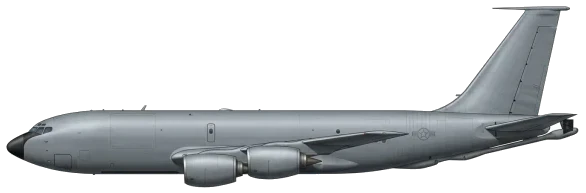
Lincoln Air National Guard Base (ICAO KLNK) is an active joint civil-military airfield in Nebraska, United States, operated by the US Air National Guard. It has 3 runways (longest 3,932 m). Home to the 155th Air Refueling Wing, flying KC-135 Stratotanker.
Facility Details
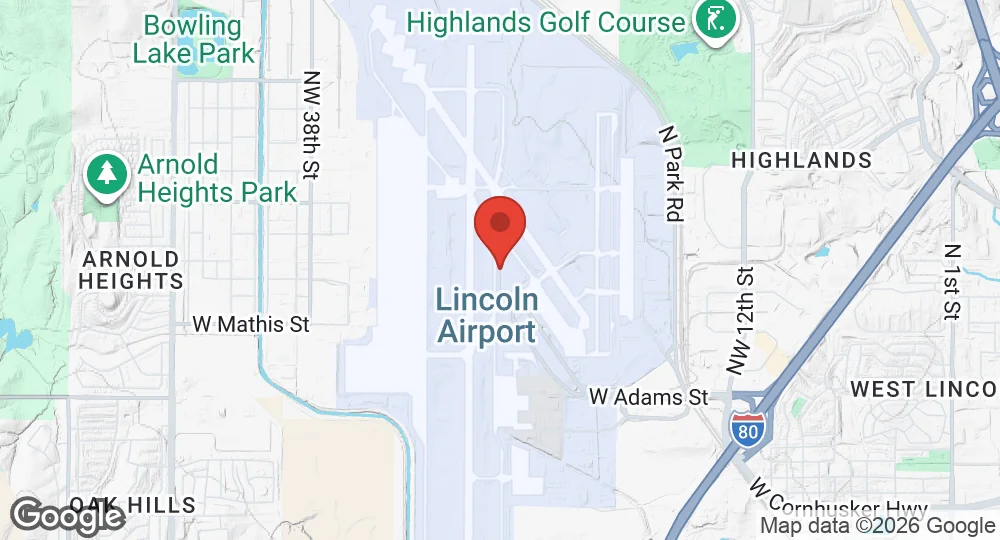
40.8511°N, 96.7592°W · 372 m elevation
| Operating Country | 🇺🇸 United States |
| Location | 🇺🇸 United States |
| Status | Active |
| Usage | Dual |
| Year built | 1922 |
| Operating Organization | US Air National Guard |
| Units |
155th Air Refueling Wing
|
| Elevation | 372 m (1,220 ft) |
| IATA code | LNK |
| ICAO code | KLNK |
| Runways |
18/36 · 3,932 m (12,900 ft) · Asphalt/Concrete14/32 · 2,636 m (8,648 ft) · Asphalt/Concrete17/35 · 1,768 m (5,801 ft) · Asphalt/Concrete
|
| Website | www.lincolnairport.com/ |
 155th Air Refueling Wing
Description
Lincoln Air National Guard Base is located five miles northwest of downtown Lincoln, Nebraska. The site originated as a municipal airport in the early 1920s before being designated as Lincoln Army Air Field in 1939. During World War II, the field functioned as a civilian contract flight school for basic cadet training under the United States Army Air Corps. The military installation closed in December 1945.
In 1946, the Nebraska Air National Guard established the 173rd Fighter Squadron at the airfield, operating P-51 Mustangs and later F-80C Shooting Star jets. The United States Navy also established Naval Air Station Lincoln at the facility, hosting Patrol Squadron 762 and P-2 Neptune aircraft. In 1952, the United States Air Force activated Lincoln Air Force Base as a Strategic Air Command (SAC) installation. During this tenure, the base supported wings of Boeing B-47 Stratojet bombers and KC-97 Stratofreighter tankers. By 1962, the base also hosted SM-65 Atlas intercontinental ballistic missiles. The Air Force deactivated the SAC installation in 1966.
The base is currently operated by the Nebraska Air National Guard’s 155th Air Refueling Wing, an Air Mobility Command-gained unit. The wing operates KC-135R Stratotanker aircraft from facilities located on the southeast side of the airfield. The installation also hosts multiple Nebraska Army National Guard units and the 155th Security Forces Squadron.
Infrastructure at the base includes runways capable of supporting heavy military aircraft such as the C-5 Galaxy and the Boeing E-4. The primary runway was formerly designated as an emergency landing site for the Space Shuttle. The installation provides support for aircraft and crews from the 55th Wing at Offutt Air Force Base, including the E-4B National Emergency Airborne Command Post. Portions of the original Strategic Air Command infrastructure remain in use, including large hangars and alert pads. The military tarmac is a restricted area separated from civil aviation operations.
- AUG 142026 Updated Based aircraft recorded: KC-135 Stratotanker
- AUG 132026 Updated Runway designations, surfaces and lengths recorded
- APR 112026 Updated Description updated in a site-wide editorial pass
- JAN 122026 Updated Sources and cross-references refreshed
- JUL 12025 Updated Airbase data reviewed and updated