NCSIST Albatross
Taiwanese medium unmanned aerial vehicle, developed in the early 2000s, deployed for military surveillance, reconnaissance, and civilian applications. Key figures: range 180 km, service ceiling 4,000 m, max takeoff weight 317 kg, unit price $2M, built 32. In service with 1 air force as of 2026 — Taiwan (26).
| Length | 5.3 m (17.4 ft) |
| Wingspan | 8.6 m (28.2 ft) |
| Max. takeoff weight | 317 kg (699 lbs) |
| Operational range | 180 km (112 mi) |
| Endurance | 12 hours |
| Service ceiling | 4,000 m (13,123 ft) |
- Air-to-Air Sky Sword
- Rocket Pod 2.75in rockets
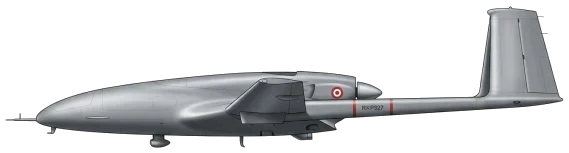
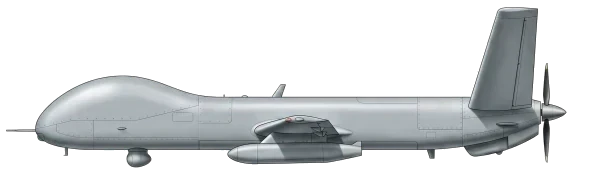
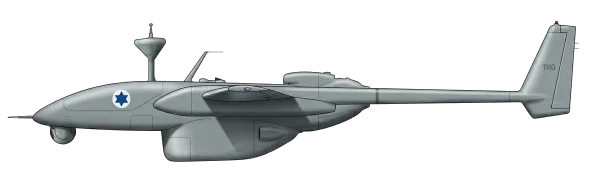
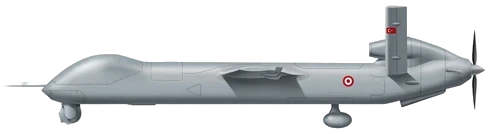
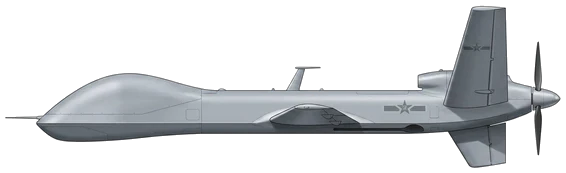
Description
The NCSIST Albatross, also known as the Chung Shyang II or "Sharp Kite," is a medium unmanned aerial vehicle (UAV) developed by Taiwan's National Chung-Shan Institute of Science and Technology (NCSIST). NCSIST began researching UAVs in 2002, leading to the Chung Shyang I and subsequently the Chung Shyang II. A prototype of the Albatross was publicly unveiled at the Taipei Aerospace & Defense Technology Exhibition in August 2005.
Design
The Albatross I features a length of 5.3 meters, a wingspan of 8.6 meters, and a gross weight of 317 kilograms. It is configured with an electro-optical payload for day and night operations, enabling it to conduct surveillance, reconnaissance, target acquisition, artillery spotting, battle damage assessment, and communications relay. The aircraft has a service ceiling of 4,000 meters, a maximum range of 180 kilometers, and an endurance of approximately 12 hours.
Armament
While military officials have not commented on whether the baseline Albatross I can carry weapons, the larger Albatross II variant is designed with offensive capabilities. The Albatross II is compatible with Sky Sword missiles, 2.75-inch rockets, and Mighty Hornet I loitering munitions.
Operational History
The Republic of China Army originally operated a fleet of 32 Albatross UAVs in 2014 before transferring them to the Naval Fleet Command in 2017. The Republic of China Navy conducted its first public fly-over demonstration with the aircraft during a 2019 military exercise in Pingtung. Following a crash in 2019, NCSIST implemented fleet-wide upgrades, completing modifications on 26 aircraft by May 2020. The Albatross has been involved in nine recorded crashes since 2012, including incidents in 2012, 2013, 2016, a January 2018 crash off Taitung due to suspected mechanical failure, and a May 2021 incident where operators intentionally ditched an anomalous aircraft off Taitung County. The Albatross is currently operated by the Republic of China Navy and Malaysia.
Variants
-
Albatross I: The baseline reconnaissance UAV features an 8.6-meter wingspan, a 180-kilometer range, a 12-hour endurance, and an electro-optical sensor payload.
-
Albatross II: Developed in partnership with GEOSAT Aerospace & Technology, this enlarged variant features a synthetic aperture radar, artificial intelligence-enabled tracking, a 16-hour loitering time, and compatibility with Sky Sword missiles, 2.75-inch rockets, and Mighty Hornet I loitering munitions.
Frequently Asked Questions
What type of aircraft is the NCSIST Albatross?
What is the range of the NCSIST Albatross?
How many NCSIST Albatross have been built?
Which countries operate the NCSIST Albatross?
How much does a NCSIST Albatross cost?
What is the service ceiling of the NCSIST Albatross?
- AUG 202026 Updated Unit price filled (2.0 $M, estimate) for the UAV inventory weighting.
- JUL 272026 Updated Name updated
- JUL 62026 Created Page created: Albatross