AQM-34 Lightning Bug
American jet-powered reconnaissance drone, developed in the early 1960s, extensively deployed during the Vietnam War for photographic and electronic intelligence gathering. Key figures: range 1,900 km, service ceiling 20,000 m, unit price $0.16M.
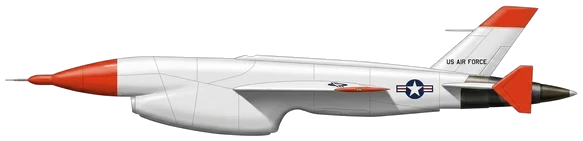
| Length | 8.8 m (28.9 ft) |
| Wingspan | 4 m (13.1 ft) |
| Powerplant | 1 × Continental J69-T-41A 871 kgf each |
| Operational range | 1,900 km (1,181 mi) |
| Endurance | 8 hours |
| Service ceiling | 20,000 m (65,617 ft) |
- Anti-Radiation AGM-45 Shrike
- Air-to-Surface AGM-65 Maverick
- Guided Bomb Rockwell HOBOS

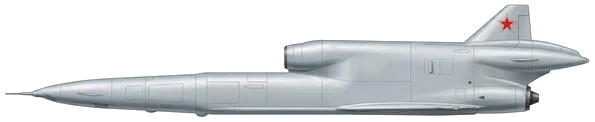
Description
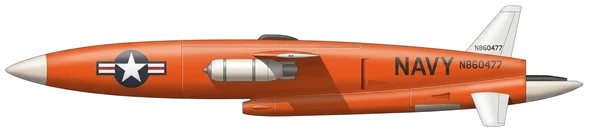
The Ryan Model 147 Lightning Bug (later designated AQM-34) is a jet-powered reconnaissance unmanned aerial vehicle developed by Ryan Aeronautical from the Ryan Firebee target drone. Initiated under the U.S. Air Force "Fire Fly" project in 1962, the first Model 147A flew in April 1962. The aircraft has no landing gear; it was either air-launched from a Lockheed DC-130 carrier aircraft or launched from the ground or ships using a solid rocket booster. Recovery was achieved via a deployable parachute, frequently retrieved in mid-air by recovery helicopters. To reduce its radar cross-section, early models incorporated wire screens over the engine intake, non-conductive paint, and radar-absorbent material pads. Later variants used a system that injected chlorosulfonic acid into the exhaust to eliminate contrails. Propulsion was provided by Continental J69 or Teledyne CAE J100 turbojet engines.
Design
Sensor payloads varied by mission and included U-2 cameras, television cameras, infrared strobes for night photography, and signals intelligence (SIGINT) packages designed to detect S-75 Dvina radar guidance signals. Navigation avionics evolved from simple timer-programmer systems to Doppler radar navigation, LORAN radio location, and digital flight control systems. While primarily unarmed reconnaissance platforms, some variants carried wing pylons for AN/ALE-2 chaff dispensers or propaganda leaflet canisters. The experimental BGM-34 series, evaluated in the 1970s but not adopted for production, was capable of carrying AGM-45 Shrike, AGM-65 Maverick, and Rockwell HOBOS guided weapons.
Operational History
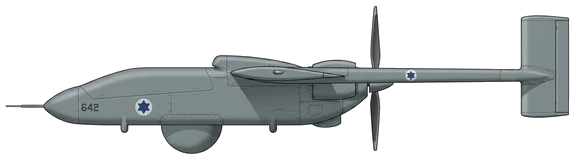
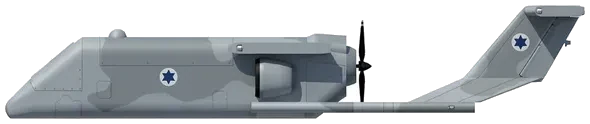
The Lightning Bug flew 3,435 operational sorties between 1964 and 1975. Deployments began in August 1964 with overflights of southern China and North Vietnam to monitor military activity. Missions spanned high and low-altitude photo-reconnaissance, electronic intelligence (ELINT), decoys, and radar jamming. During Operation Linebacker II in 1972, the U.S. Air Force relied on low-altitude AQM-34L/M drones for bomb damage assessment. Overall, 578 drones were lost during operations. Export customers included Israel, which operated ground-launched Model 124I "Mabat" drones during and after the 1973 Yom Kippur War. China reverse-engineered recovered wrecks to produce the Wu Zhen-5 (WZ-5) UAV.
Variants
- Model 147A: The initial reconnaissance variant modified from the Firebee target drone, featuring a stretched fuselage and a U-2 camera payload.
- Model 147H (AQM-34N): An optimized third-generation high-altitude variant with a 9.8-meter wingspan, radar warning receivers, and electronic countermeasures.
- Model 147SC (AQM-34L): A low-altitude reconnaissance variant featuring a Doppler radar navigation system that flew nearly half of all program missions.
- Model 147TE (AQM-34Q Combat Dawn): A high-altitude signals intelligence drone that cruised outside hostile airspace and relayed intercepted data to ground stations.
- BGM-34: A series of tactical strike and defense suppression development platforms tested in the 1970s with precision-guided air-to-surface munitions.
Frequently Asked Questions
What type of aircraft is the AQM-34 Lightning Bug?
What is the range of the AQM-34 Lightning Bug?
When did the AQM-34 Lightning Bug first fly?
Which countries operate the AQM-34 Lightning Bug?
How much does a AQM-34 Lightning Bug cost?
What is the service ceiling of the AQM-34 Lightning Bug?
- JUL 62026 Created Page created: AQM-34 Lightning Bug