Harfang
Israeli-designed medium-altitude, long-endurance reconnaissance unmanned aerial vehicle, introduced in the late 2000s and operated by the French and Moroccan militaries. Key figures: range 1,000 km, service ceiling 7,620 m, max takeoff weight 1,250 kg, unit price $9.5M, built 3. In service with 1 air force as of 2026 — Morocco (3).
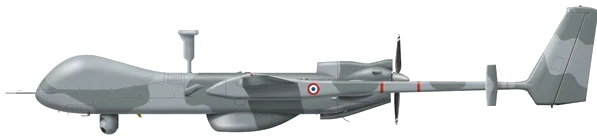
| Length | 9.3 m (30.5 ft) |
| Wingspan | 16.6 m (54.5 ft) |
| Empty weight | 657 kg (1,448 lbs) |
| Max. takeoff weight | 1,250 kg (2,756 lbs) |
| Powerplant | 1 × Rotax 914F 86 kW each |
| Operational range | 1,000 km (621 mi) |
| Endurance | 24 hours |
| Service ceiling | 7,620 m (25,000 ft) |
Description
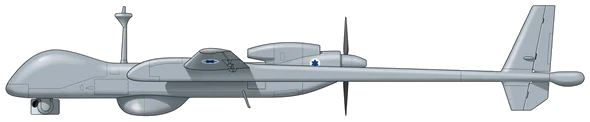
The EADS Harfang, designated as the Système intérimaire de drone MALE (SIDM) in French service, is a medium-altitude, long-endurance unmanned aerial vehicle. Derived from the Israel Aerospace Industries (IAI) Heron, the aircraft was built by IAI's Malat division with customizations to meet French Air Force requirements, specifically regarding its satellite communication systems. A prototype conducted its first trials flight on September 9, 2006, from Istres-Le Tubé Air Base. The French Air Force ordered three aircraft and two ground control stations, which entered service in June 2008 with the Drone Experimentation Squadron 1/330 Adour.
Design
The Harfang features a flapped high wing with an anti-icing system and a twin boom tail with two vertical surfaces. It is powered by a rear-mounted, 86 kW (115 hp) Rotax 914F turbo-charged, horizontally-opposed four-cylinder engine driving a two-bladed constant-speed pusher propeller. The aircraft has an empty weight of 657 kg and a maximum takeoff weight of 1,250 kg. It can carry a 250 kg payload, achieve a service ceiling of 7,620 m, and operate for up to 24 hours. The sensor suite is housed in a gyro-stabilized sphere under the forward fuselage, containing optronic and infrared sensors, a laser designator and rangefinder, and a synthetic aperture radar with mobile target indication. Avionics include an inertial measurement unit with GPS recalibration and a differential GPS for automated takeoff and landing. The system is operated from a four-module ground control station utilizing line-of-sight links up to 200 km, as well as satellite communications for extended range. The aircraft lacks electromagnetic sensors, and its operations are limited by icing or high humidity.
Operational History
In 2007, the Harfang provided security during the papal visit to Lourdes. The French Air Force deployed three Harfangs to Bagram Airfield, Afghanistan, in February 2009; one aircraft was damaged in a crash during this deployment. The system was deployed during the 2011 Libyan conflict, and later flew 2,000 operational hours in Mali during Operation Serval in 2013. Harfangs performed homeland security missions in France during 2016. The French Air Force retired the type in early 2018. In 2020, the three retired Harfang UAVs were delivered to Morocco, which had purchased them in 2014 for $48 million.
Variants
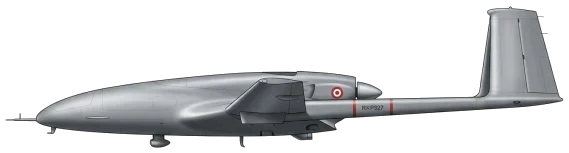
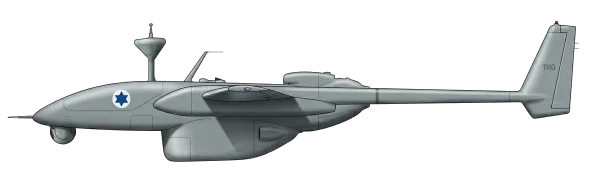
- Eagle 0: This is the prototype variant that made its first flight in 1998.
- Eagle 1: This is the initial production version, which made its first flight on June 2, 2003, in Israel.
- Eagle MPR: This is the naval version of the Eagle 1.
- Eagle 2: This is a larger version of the Eagle 1 powered by a Pratt & Whitney PT6 turbopropeller.
Frequently Asked Questions
What type of aircraft is the Harfang?
What is the range of the Harfang?
When did the Harfang first fly?
How many Harfang have been built?
Which countries operate the Harfang?
How much does a Harfang cost?
What is the service ceiling of the Harfang?
- AUG 202026 Updated Unit price filled (9.5 $M, estimate) for the UAV inventory weighting.
- JUL 232026 Updated Sources and cross-references refreshed
- JUL 62026 Created Page created: Harfang