OV-1 Mohawk
American twin-turboprop armed military observation and battlefield surveillance aircraft, developed in the late 1950s and operated from short, unimproved runways in support of ground forces. Key figures: top speed 491 km/h, range 1,519 km, service ceiling 7,600 m, max takeoff weight 8,214 kg, built 380.
| Crew | 2 |
| Length | 12.5 m (41.0 ft) |
| Wingspan | 14.6 m (48.0 ft) |
| Height | 3.9 m (12.7 ft) |
| Wing area | 33 m² (355.2 sqft) |
| Empty weight | 5,468 kg (12,055 lbs) |
| Max. takeoff weight | 8,214 kg (18,109 lbs) |
| Powerplant | 2 × Lycoming T53-L-701 1,000 kW each |
| Maximum speed | 491 km/h (305 mph) |
| Operational range | 1,519 km (944 mi) |
| Endurance | 4 hours |
| Service ceiling | 7,600 m (24,934 ft) |
| Climb rate | 17.61 m/s (57.8 ft/s) |
- [Gun Pod] XM14 .50 in. caliber gun pod
- [Rocket Pod] M159 unguided rocket pod
- [Unguided Bomb] Bombs
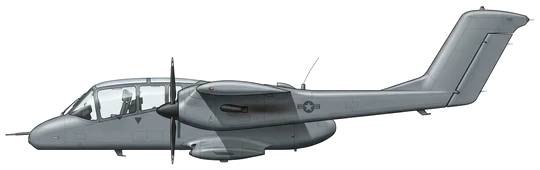
Description
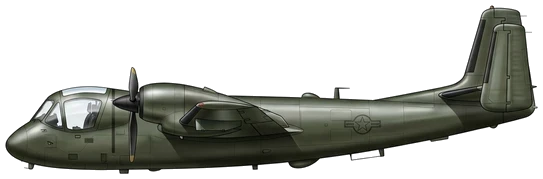
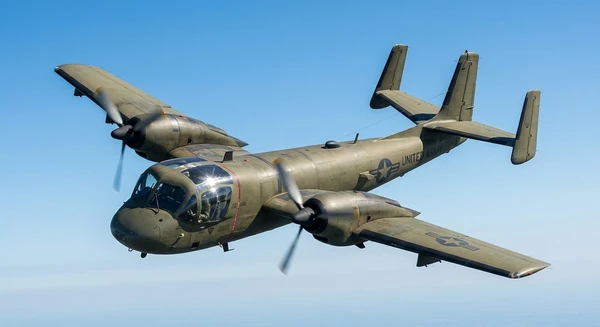
The Grumman OV-1 Mohawk is an American twin-turboprop military observation and attack aircraft designed for battlefield surveillance, light strike, and tactical transport. Originating from a 1956 joint U.S. Army-Marine Corps requirement to replace the Cessna L-19 Bird Dog, Grumman’s G-134 design won the competition in 1957. The Marines withdrew in September 1957, but the Army continued development. The prototype first flew on April 14, 1959, and production began in October 1959. Approximately 380 airframes were manufactured, with production ending in December 1970.
Design
The Mohawk features a twin-engine configuration with side-by-side seating for two crew members, equipped with ejection seats. Designed for short, unimproved runways, the aircraft utilized Lycoming T53-L-701 turboprops on later variants. Sensor systems included cameras, infrared detectors, and Side-Looking Airborne Radar (SLAR). The SLAR system mapped terrain and tracked moving targets through foliage. On the OV-1D, interchangeable mission pallets allowed crews to switch between infrared and SLAR configurations in one hour. Wingspans varied, with the OV-1A and C using a 42-foot span, while the B and D variants used a 48-foot span.
Armament
Underwing pylons supported ordnance and cargo pods for emergency ground resupply. Armed variants carried XM14 .50-caliber (12.7 mm) gun pods and M159 unguided rocket pods.
Operational History
The U.S. Army deployed the OV-1 to Germany in 1961 and began patrolling the Korean Demilitarized Zone in 1963. During the Vietnam War, the 23rd Special Warfare Aviation Detachment deployed to South Vietnam in 1962. By 1968, five surveillance companies operated in Southeast Asia, losing 65 Mohawks to accidents and ground fire during the conflict. In 1968, Captain Ken Lee shot down a MiG-17 using XM14 gun pods and M159 rocket pods. The Army National Guard operated 53 Mohawks starting in 1972, and the type served in Operation Desert Storm. The U.S. Army retired the Mohawk from Europe in 1992, and from South Korea and domestic service in 1996. Internationally, the Argentine Army Aviation operated 23 OV-1s from the 1990s until retirement in 2015.
Variants
- OV-1A: This daylight observation variant featured a 42-foot wingspan, with 64 aircraft built.
- OV-1B: This side-looking airborne radar variant featured a 48-foot wingspan, with 101 built.
- OV-1C: This infrared reconnaissance variant utilized a 42-foot wingspan, with 169 built.
- OV-1D: This consolidated sensor variant featured interchangeable mission pallets for SLAR or infrared systems, a 48-foot wingspan, and T53-L-701 engines.
- JOV-1A: This variant consisted of 59 converted OV-1A and OV-1C airframes fitted with armament.
Frequently Asked Questions
What type of aircraft is the OV-1 Mohawk?
What is the maximum speed of the OV-1 Mohawk?
What is the range of the OV-1 Mohawk?
When did the OV-1 Mohawk first fly?
How many OV-1 Mohawk have been built?
Which countries operate the OV-1 Mohawk?
What is the service ceiling of the OV-1 Mohawk?
- JUL 232026 Updated Sources and cross-references refreshed
- JUN 302026 Created Page created: OV-1 Mohawk