RUAG Ranger
Swiss-Israeli tactical reconnaissance UAV, developed in the late 20th century, used for military reconnaissance and civilian search and rescue. Key figures: top speed 220 km/h, range 100 km, service ceiling 4,500 m, max takeoff weight 285 kg, built 40. In service with 1 air force as of 2026 — Finland (10).
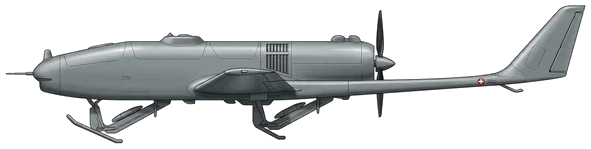
| Length | 4.6 m (15.1 ft) |
| Wingspan | 5.7 m (18.7 ft) |
| Height | 1.1 m (3.7 ft) |
| Max. takeoff weight | 285 kg (628 lbs) |
| Powerplant | 1 × 2 cylinder 2 stroke 31 kW each |
| Maximum speed | 220 km/h (137 mph) |
| Operational range | 100 km (62 mi) |
| Endurance | 9 hours |
| Service ceiling | 4,500 m (14,764 ft) |
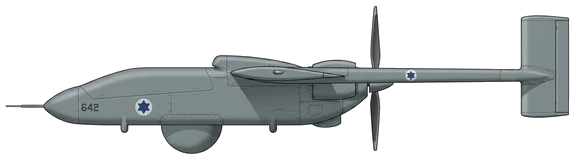
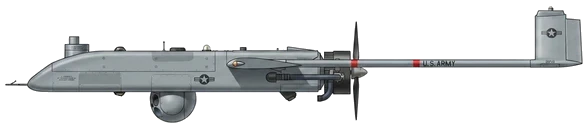
Description
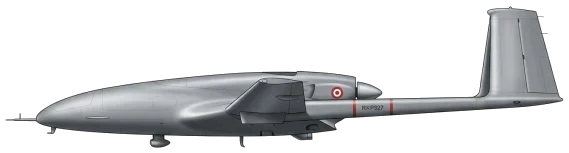
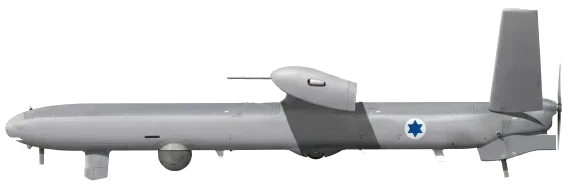
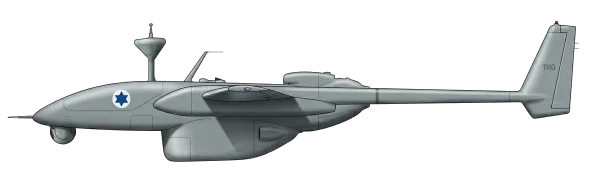
The RANGER is a tactical unmanned aerial vehicle (UAV) developed as a joint venture between Swiss aerospace company RUAG Aviation and Israel Aerospace Industries (IAI). Its design is derived from the IAI Scout UAV system. The aircraft features a skid-based landing system for operations on grass, concrete runways, snow, or ice, and it is launched using a compact hydraulic catapult. The RANGER is certified for flight in civilian airspace and over populated areas. It has a length of 4.61 m, a height of 1.13 m, a wingspan of 5.71 m, and a maximum take-off weight of 285 kg. Powered by a two-cylinder, two-stroke 31.5 kW engine, the UAV has a maximum speed of 220 km/h, a service ceiling of 4,500 m, a range of 100 km, and an endurance of up to nine hours. It carries a 45 kg modular payload. Its sensors operate at reconnaissance altitudes between 1,000 and 3,000 m, providing live data transmission. Under visibility conditions of 10 km, the daytime TV sensor detects a main battle tank at ranges between 2.7 and 8.5 km, while the nighttime infrared sensor detects the same target at ranges between 2.4 and 5.8 km.
The Swiss Air Force ordered 28 RANGER drones under the Armament Programme 1995 for CHF 350 million, with deliveries starting in June 1999. The procurement comprised four complete systems. Each system contained seven UAVs, two electro-hydraulic catapults, two mobile ground control stations (one equipped with an automatic landing system), two mobile data receiving stations, and a logistics set. Operated by the 7th Unmanned Aerial Vehicle Squadron at Emmen Air Base, the Swiss fleet was designated ADS-95. Swiss police also utilized these aircraft for reconnaissance, search, and rescue operations. The final flight of a Swiss Air Force ADS-95 occurred on 27 November 2017, and the fleet was phased out for replacement by six Elbit Hermes 900 systems. The Finnish Defence Forces also operated the RANGER, with 12 drones deployed by the Finnish Army. A prototype of the UAV is displayed at the Flieger-Flab-Museum in Dübendorf.
Variants
- ADS-90: An earlier variant of the UAV system operated by the Swiss Air Force from 1988 to 1999.
- ADS-95: The designation for the RANGER variant that entered service with the Swiss Air Force in 1999.
Frequently Asked Questions
What type of aircraft is the RUAG Ranger?
What is the maximum speed of the RUAG Ranger?
What is the range of the RUAG Ranger?
How many RUAG Ranger have been built?
Which countries operate the RUAG Ranger?
What is the service ceiling of the RUAG Ranger?
- JUL 272026 Updated Name updated
- JUL 232026 Updated Sources and cross-references refreshed
- JUL 62026 Created Page created: Ranger