Hermes 900
Israeli larger MALE drone, widely used around the world for reconnaissance. Key figures: top speed 220 km/h, range 1,000 km, service ceiling 9,100 m, max takeoff weight 1,400 kg, unit price $6.8M, built 200. In service with 9 air forces as of 2026 — Philippines (8), Morocco (4), Switzerland (3) and 6 others.
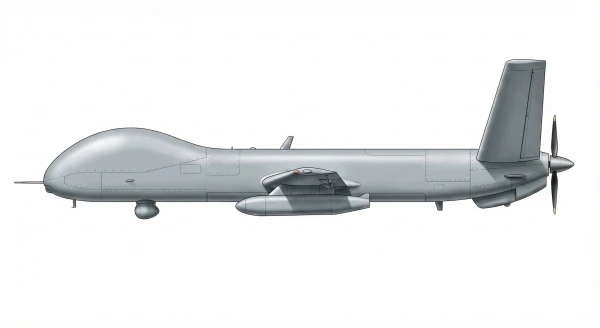
| Length | 8.3 m (27.2 ft) |
| Wingspan | 15 m (49.2 ft) |
| Empty weight | 950 kg (2,094 lbs) |
| Max. takeoff weight | 1,400 kg (3,086 lbs) |
| Powerplant | 1 × Rotax 916, 160 kW 160 kW each |
| Maximum speed | 220 km/h (137 mph) |
| Operational range | 1,000 km (621 mi) |
| Endurance | 36 hours |
| Service ceiling | 9,100 m (29,856 ft) |
Recent Events — Hermes 900
8 events →-
MAR 102026
 Israel
Shot down at Borujerd in Lorestan province.
Shot down
Israel
Shot down at Borujerd in Lorestan province.
Shot down
-
MAR 62026
Israel
Shot down over Isfahan by IRGC Aerospace Force; the engagement and wreckage were filmed.
Shot down
-
MAR 32026
Israel
Shot down in Margoon County, Fars province; wreckage published on social media.
Shot down
-
MAR 32026
Israel
Armed Hermes 900 serial 923 brought down largely intact and examined by Iranian engineers.
Shot down
-
MAR 32026
Israel
Shot down at Khomeynishahr; the shootdown and wreckage were filmed.
Shot down
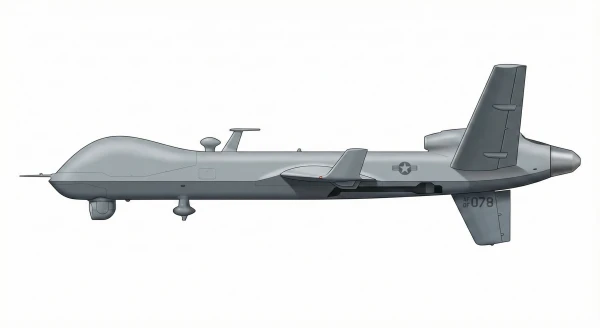

Description
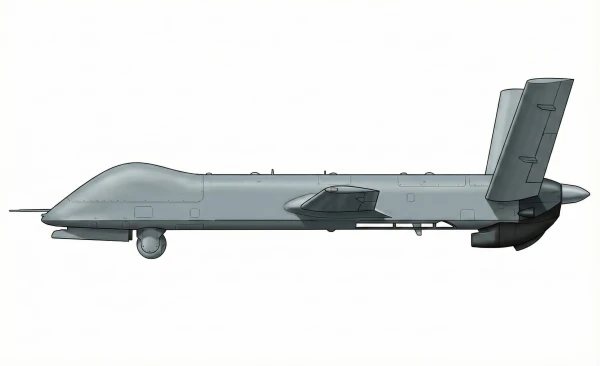
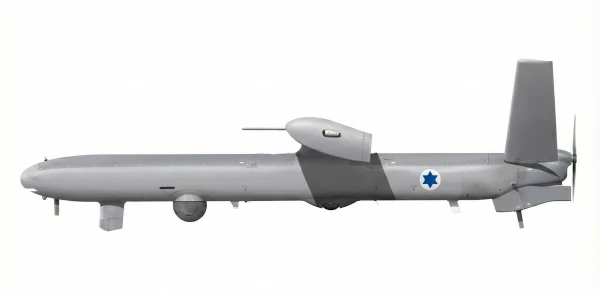
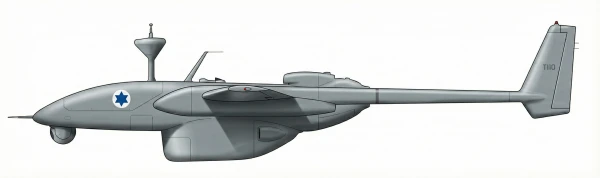
The Elbit Systems Hermes 900 is an Israeli medium-altitude long-endurance (MALE) tactical unmanned aerial vehicle designed for reconnaissance, surveillance, and communications relay. Developed as the successor to the Hermes 450 series, the aircraft entered operational service with the Israeli Air Force on 11 November 2015 following initial combat usage in July 2014. The platform is notable for its payload capacity and for becoming the first MALE UAV to receive civil certification for operation in civilian airspace.
Development
Elbit Systems designed the Hermes 900 as a larger medium-sized successor to the Hermes 450 series. To meet Swiss military requirements for all-weather civilian airspace integration, the platform was adapted into the Hermes 900 HFE (ADS-15), incorporating a Detect-and-Avoid collision-avoidance system developed by Swiss state-owned aerospace firm RUAG. In India, the aircraft is co-manufactured under license by Adani Defence & Aerospace.
Design
The Hermes 900 has a wingspan of 15 m, a length of 8.3 m, and a maximum takeoff weight of 1,180 kg. Powered by a single 160 kW (210 hp) Rotax 916 engine, the aircraft reaches a maximum speed of 220 km/h, a cruise speed of 112 km/h, a service ceiling of 9,100 m, and an endurance of up to 36 hours. The airframe supports up to 350 kg of payload, including electro-optical/infrared sensors, synthetic-aperture radar with ground-moving target indication, electronic intelligence and electronic warfare suites, hyperspectral sensors, and specialist payloads.
Operational History
The Israeli Air Force conducted the first operational mission of the Hermes 900 on 15 July 2014 during Operation Protective Edge in Gaza, prior to completing formal integration testing. Israeli forces subsequently lost units to surface-to-air missiles over southern Lebanon in 2024 and in central and western Iran in June 2025. In May 2024, the Brazilian Air Force used the type to locate 36 flood victims during emergency operations, while an Indian Navy Drishti-10 Starliner crashed off Gujarat in January 2025 during pre-acceptance trials due to satellite communications disconnection issues. Additional military and government operators include Azerbaijan, Canada, Chile, Colombia, Iceland, Mexico, the Philippines, Serbia, Singapore, Switzerland, Thailand, and the European Maritime Safety Agency.
Variants
-
Hermes 900 Kochav: Israeli Air Force operational designation for aircraft equipped with specialist payloads.
-
Hermes 900 HFE: Swiss Armed Forces designation (ADS-15) adapted for civilian airspace operations with a Detect-and-Avoid collision-avoidance system.
-
Hermes 900 StarLiner: Unarmed variant configured for long-range maritime patrol, environmental monitoring, and Arctic surveillance operations.
-
Drishti-10 Starliner: Indian military variant co-manufactured by Adani Defence & Aerospace for maritime intelligence and overland reconnaissance.
Frequently Asked Questions
What type of aircraft is the Hermes 900?
What is the maximum speed of the Hermes 900?
What is the range of the Hermes 900?
When did the Hermes 900 first fly?
How many Hermes 900 have been built?
Which countries operate the Hermes 900?
How much does a Hermes 900 cost?
What is the service ceiling of the Hermes 900?
- AUG 62026 Updated Description updated
- JUL 232026 Updated Sources and cross-references refreshed
- APR 72026 Updated Sources and cross-references refreshed
- FEB 72026 Updated Range added