Tu-123 Yastreb
Soviet long-range high-altitude supersonic strategic unmanned reconnaissance drone, introduced in the mid-1960s and used for intelligence gathering over Europe. Key figures: top speed 2,700 km/h, range 3,200 km, service ceiling 22,800 m, max takeoff weight 35,610 kg, built 52.

| Length | 27.8 m (91.3 ft) |
| Wingspan | 8.4 m (27.6 ft) |
| Height | 4.8 m (15.7 ft) |
| Empty weight | 11,450 kg (25,243 lbs) |
| Max. takeoff weight | 35,610 kg (78,507 lbs) |
| Powerplant | 1 × Tumansky KR-15 98 kN each |
| Maximum speed | 2700 km/h (Mach 2.5) |
| Operational range | 3,200 km (1,988 mi) |
| Service ceiling | 22,800 m (74,803 ft) |

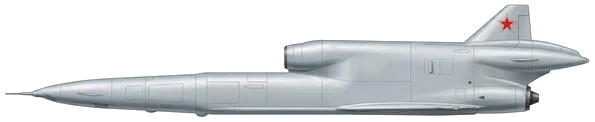
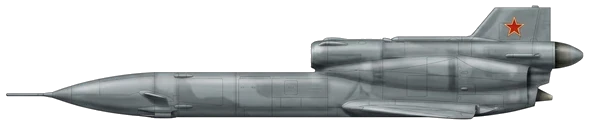
Description
The Tupolev Tu-123 Yastreb, sometimes referred to as the DBR-1, was a Soviet long-range, high-altitude supersonic unmanned reconnaissance aircraft. Developed by the Tupolev Design Bureau under the project designation I123K (later changed to Tu-123), the aircraft was a modification of the proposed Tu-121 supersonic nuclear-armed cruise missile program, which was cancelled in favor of ballistic missiles. The Tu-123 project officially launched on 16 August 1960. Factory testing was completed in September 1961, and flight tests were completed by December 1963. The aircraft entered active service on 23 May 1964. Voronezh Factory Number 64 manufactured 52 units between 1964 and 1972.
Design
The Tu-123 featured a dart-like aerodynamic shape conceptually similar to the United States' D-21. It had a length of 27.84 meters, a wingspan of 8.41 meters, and an empty weight of 11,450 kg. The aircraft was ground-launched using JATO boosters and powered in flight by a single Tumansky KR-15 afterburning turbojet engine, which produced 98.1 kN of thrust. The KR-15 was an expendable, lower-cost version of the R-15 engine used on the Mikoyan-Gurevich MiG-25 interceptor. The Tu-123 carried film cameras and SIGINT payloads. It operated at speeds up to 2,700 km/h, with a service ceiling of 22,800 meters and a range of 3,200 km. The Tu-123 was an expendable system that parachuted its payload to the ground for recovery.
Operational History
The Tu-123 served with Soviet Air Force intelligence units stationed in western border military districts from 1964 until 1979. The aircraft had the operational range to cover Central and Western Europe, and it was utilized in training exercises. Due to the financial cost of operating an expendable system, the Soviet Air Force gradually retired the Tu-123 and replaced it with the MiG-25R reconnaissance aircraft.
Variants
- Tu-139 Yastreb 2: A reusable version designed to land on unprepared airstrips, which was never put into production.
Frequently Asked Questions
What type of aircraft is the Tu-123 Yastreb?
What is the maximum speed of the Tu-123 Yastreb?
What is the range of the Tu-123 Yastreb?
When did the Tu-123 Yastreb first fly?
How many Tu-123 Yastreb have been built?
Which countries operate the Tu-123 Yastreb?
What is the service ceiling of the Tu-123 Yastreb?
- JUL 62026 Created Page created: Tu-123 Yastreb