DC-3 vs DHC-6 Twin Otter
The DC-3 and the DHC-6 Twin Otter are both Military Transport Aircraft, manufactured by Douglas and De Havilland Canada respectively. Top speed is 413 km/h for the DC-3 vs 315 km/h for the DHC-6 Twin Otter. The DC-3 has an operational range of 2,540 km vs 1,480 km for the DHC-6 Twin Otter. The DHC-6 Twin Otter operates at altitudes up to 7,620 m compared to 7,071 m for the DC-3. At 13,154 kg MTOW, the DC-3 is 2.3x the DHC-6 Twin Otter's 5,670 kg. The DC-3 has been produced in 10,174 units vs 985 for the DHC-6 Twin Otter. Unit cost is $0.08M for the DC-3 vs $7M for the DHC-6 Twin Otter. The DC-3 first flew 24 years before the DHC-6 Twin Otter (1941 vs 1965).
| American commercial airliner, renowned for significant contributions to World War II airlift operations, frequently used for cargo and passenger transport. | |
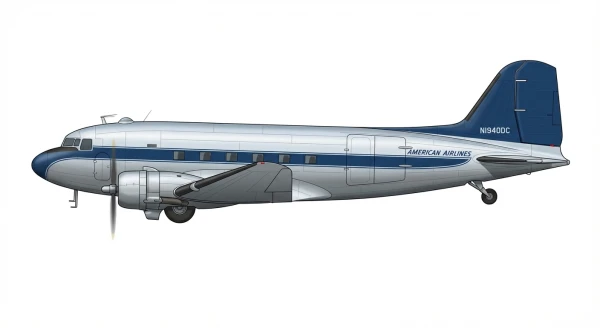
|
|
| Origin country | 🇺🇸 United States |
| Category | Military Transport Aircraft |
| Manufacturer | Douglas |
| First flight | 23 December 1941 |
| Year introduced | 1936 |
| Number produced | 10174 units |
| Average unit price | $0.1 million |
| Canadian utility aircraft, vital in civil and military operations worldwide since the 1960s, famous for its STOL capabilities. | |
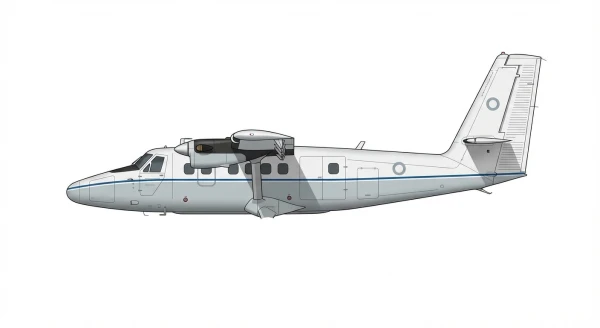
|
|
| Origin country | 🇨🇦 Canada |
| Category | Military Transport Aircraft |
| Manufacturer | De Havilland Canada |
| First flight | 20 May 1965 |
| Year introduced | 1966 |
| Number produced | 985 units |
| Average unit price | $7 million |
| Wing area | 91.7 m² ◉ |
| Wingspan | 29.0 m ◉ |
| Height | 5.6 m ◉ |
| Length | 22.7 m ◉ |
| Maximum speed | 413 km/h ◉ |
| Operational range | 2,540 km ◉ |
| Service ceiling | 7,071 m ◉ |
| Max. takeoff weight | 13,154 kg ◉ |
| Empty weight | 6,450 kg ◉ |
| Total thrust | 3 x 875 kW ◉ |
| Wing area | 39.0 m² ◉ |
| Wingspan | 20.0 m ◉ |
| Height | 6.0 m ◉ |
| Length | 15.8 m ◉ |
| Maximum speed | 315 km/h ◉ |
| Operational range | 1,480 km ◉ |
| Service ceiling | 7,620 m ◉ |
| Max. takeoff weight | 5,670 kg ◉ |
| Empty weight | 3,175 kg ◉ |
| Total thrust | 2 x 410 kW ◉ |
Performance Radar Chart
Frequently Asked Questions
Which is faster, the DC-3 or DHC-6 Twin Otter?
The DC-3 is faster with a maximum speed of 413 km/h compared to the DHC-6 Twin Otter's 315 km/h, a difference of 98 km/h.
Which has longer range, the DC-3 or DHC-6 Twin Otter?
The DC-3 has a longer range at 2,540 km compared to the DHC-6 Twin Otter's 1,480 km.
Which can fly higher, the DC-3 or DHC-6 Twin Otter?
The DHC-6 Twin Otter has a higher service ceiling at 7,620 meters (25,000 ft) compared to the DC-3's 7,071 meters (23,198 ft).
Which is heavier, the DC-3 or DHC-6 Twin Otter?
The DC-3 has a higher maximum takeoff weight at 13,154 kg compared to the DHC-6 Twin Otter's 5,670 kg.
Which is larger, the DC-3 or DHC-6 Twin Otter?
The DC-3 is longer at 22.7 meters compared to the DHC-6 Twin Otter's 15.8 meters.
Which is more expensive, the DC-3 or DHC-6 Twin Otter?
The DHC-6 Twin Otter is more expensive at approximately $7.0 million per unit compared to the DC-3 at $0.1 million.
Which entered service first, the DC-3 or DHC-6 Twin Otter?
The DC-3 entered service first in 1936, 30 years before the DHC-6 Twin Otter which entered service in 1966.
Which has been built in greater numbers, the DC-3 or DHC-6 Twin Otter?
The DC-3 has been produced in greater numbers with 10,174 units compared to 985 units of the DHC-6 Twin Otter.