DHC-3 Otter vs PC-7 Turbo Trainer
Overview
The DHC-3 Otter and the PC-7 Turbo Trainer are both Military Training Aircraft, manufactured by De Havilland Canada and Pilatus respectively.
Top speed is 257 km/h for the DHC-3 Otter vs 412 km/h for the PC-7 Turbo Trainer. The DHC-3 Otter has an operational range of 1,540 km vs 1,200 km for the PC-7 Turbo Trainer. The PC-7 Turbo Trainer operates at altitudes up to 10,060 m compared to 5,730 m for the DHC-3 Otter.
The DHC-3 Otter has been produced in 466 units vs 618 for the PC-7 Turbo Trainer. Unit cost is $0.6M for the DHC-3 Otter vs $1.5M for the PC-7 Turbo Trainer. The DHC-3 Otter first flew 15 years before the PC-7 Turbo Trainer (1951 vs 1966).
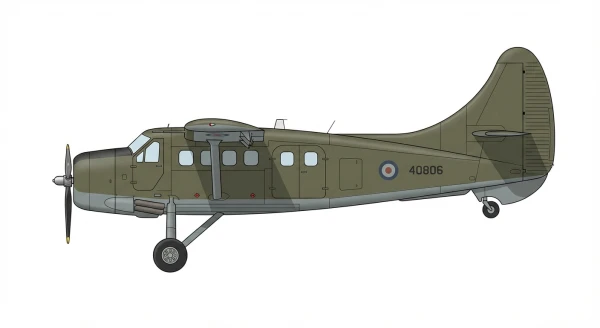
| Canadian utility aircraft, noted for its use in bush flying and rugged environments during the mid-20th century. | |
|
|
| Origin country | 🇨🇦 Canada |
| Category | Military Training Aircraft |
| Manufacturer | De Havilland Canada |
| First flight | 12 December 1951 |
| Year introduced | 1953 |
| Number produced | 466 units |
| Average unit price | $600K |
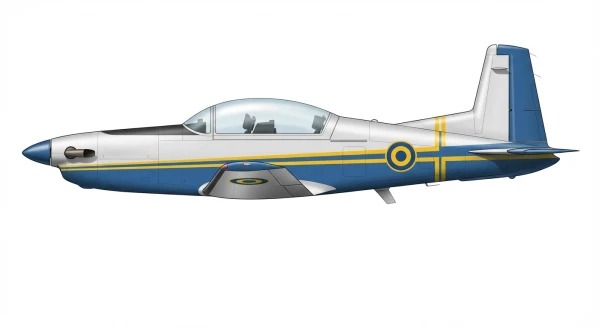
| Swiss-made turbo trainer, distinguished by service in over 30 air forces, dating back to the late 1970s. | |
|
|
| Origin country | 🇨🇭 Switzerland |
| Category | Military Training Aircraft |
| Manufacturer | Pilatus |
| First flight | 12 April 1966 |
| Year introduced | 1978 |
| Number produced | 618 units |
| Average unit price | $1.5 million |
| Wing area | 35.0 m² ◉ |
| Wingspan | 18.0 m ◉ |
| Height | 3.8 m ◉ |
| Length | 12.8 m ◉ |
| Maximum speed | 257 km/h ◉ |
| Operational range | 1,540 km ◉ |
| Service ceiling | 5,730 m ◉ |
| Max. takeoff weight | 3,629 kg ◉ |
| Empty weight | 2,010 kg ◉ |
| Total thrust | 1 x 447 kW ◉ |
| Wing area | 16.6 m² ◉ |
| Wingspan | 10.4 m ◉ |
| Height | 3.2 m ◉ |
| Length | 9.8 m ◉ |
| Maximum speed | 412 km/h ◉ |
| Operational range | 1,200 km ◉ |
| Service ceiling | 10,060 m ◉ |
| Max. takeoff weight | 2,700 kg ◉ |
| Empty weight | 1,330 kg ◉ |
| Total thrust | 1 x 410 kW ◉ |
Performance Radar Chart
Detailed Comparison
Loading analysis...
Generating comparison analysis...
Unable to generate comparison at this time.
Frequently Asked Questions
Which is faster, the DHC-3 Otter or PC-7 Turbo Trainer?
The PC-7 Turbo Trainer is faster with a maximum speed of 412 km/h compared to the DHC-3 Otter's 257 km/h, a difference of 155 km/h.
Which has longer range, the DHC-3 Otter or PC-7 Turbo Trainer?
The DHC-3 Otter has a longer range at 1,540 km compared to the PC-7 Turbo Trainer's 1,200 km.
Which can fly higher, the DHC-3 Otter or PC-7 Turbo Trainer?
The PC-7 Turbo Trainer has a higher service ceiling at 10,060 meters (33,005 ft) compared to the DHC-3 Otter's 5,730 meters (18,799 ft).
Which is heavier, the DHC-3 Otter or PC-7 Turbo Trainer?
The DHC-3 Otter has a higher maximum takeoff weight at 3,629 kg compared to the PC-7 Turbo Trainer's 2,700 kg.
Which is larger, the DHC-3 Otter or PC-7 Turbo Trainer?
The DHC-3 Otter is longer at 12.8 meters compared to the PC-7 Turbo Trainer's 9.8 meters.
Which is more expensive, the DHC-3 Otter or PC-7 Turbo Trainer?
The PC-7 Turbo Trainer is more expensive at approximately $1.5 million per unit compared to the DHC-3 Otter at $0.6 million.
Which entered service first, the DHC-3 Otter or PC-7 Turbo Trainer?
The DHC-3 Otter entered service first in 1953, 25 years before the PC-7 Turbo Trainer which entered service in 1978.
Which has been built in greater numbers, the DHC-3 Otter or PC-7 Turbo Trainer?
The PC-7 Turbo Trainer has been produced in greater numbers with 618 units compared to 466 units of the DHC-3 Otter.