Serbia (ranked #63 globally) holds a stronger overall military position than Croatia (#64) on the ARMS Index. Croatia fields 20,000 active troops vs 32,000 for Serbia, backed by 50,150 reserves and 3,000 paramilitary. Croatia allocates $1.9B to defense compared to $2.3B for Serbia.
Six-pillar composite: manpower, ground forces, naval power, air power, nuclear deterrent and defense budget, with a readiness modifier from budget per soldier. Full methodology.
Pillar
Weight
Score
Basis
Manpower
15%
53.8
25250 effective
Ground forces
20%
44.7
45 main battle tanks
Naval power
20%
30.7
Carrier tiers, nuclear vs conventional submarines
Air power
25%
32.9
Weighted by aircraft type & fleet age
Nuclear deterrent
10%
0.0
No declared capability
Defense budget
10%
38.2
$1.9B, PPP-adjusted
Readiness
modifier
×1.08
Budget per soldier
🇷🇸 Serbia
World #63
33.5/ 100
Six-pillar composite: manpower, ground forces, naval power, air power, nuclear deterrent and defense budget, with a readiness modifier from budget per soldier. Full methodology.
🇭🇷 Croatia: Leverages collective security within NATO and European integration, focusing on modernizing its forces to Western standards to protect its Adriatic maritime zone and ensure regional stability.
🇷🇸 Serbia: Maintains strict military neutrality and "Total Defense" doctrine, utilizing a strong domestic defense industry to balance relations between East and West while prioritizing territorial integrity.
2. Combat Power Snapshot
Domain
Croatia
Serbia
Edge
Air Power
12 Rafale F3-R fighters, transitioning entirely to NATO-standard rotary wings
Procuring advanced Western precision (HIMARS, CAESAR)
Deep reserves of Nora B-52s, MRLs, and domestic loitering munitions
🇷🇸
3. Scenario: First 7 Days of War
A rapid escalation of geopolitical tensions in the Western Balkans draws both states into a localized, high-intensity conventional clash along shared access vectors.
Days 1-2: Serbia leverages its significant numerical advantage in heavy armor and tube artillery to push toward strategic transport nodes, utilizing its layered air defense to heavily restrict airspace.
Days 3-4: Croatia absorbs the initial armored thrusts using Bradley IFVs and anti-tank assets, launching precision strikes with Rafale F3-R fighters to degrade Serbian C2 and logistical hubs.
Days 5-7: NATO intelligence and ISR assets begin feeding real-time targeting data to Croatian forces. Serbia heavily deploys domestic loitering munitions (Raven) and heavy rocket artillery to suppress Croatian mechanized counter-attacks.
Outcome: A bloody operational stalemate where Serbian ground mass and artillery volume are neutralized by Croatian precision strikes and NATO intelligence overwatch.
4. Wildcards
🛡️ NATO Article 5: Croatia's status as a NATO member guarantees coalition intervention if its sovereign territory is directly attacked, fundamentally shifting the balance of power.
🏭 Industrial Autonomy: Serbia’s robust, export-oriented domestic defense sector (ammunition, artillery, drones) provides superior sustainment capabilities in a protracted, attritional conflict.
⚙️ Logistical Complexity: Serbia operates a highly fragmented equipment roster combining Russian, Chinese, and Western platforms, risking severe maintenance bottlenecks under combat stress.
5. Verdict
Serbia possesses a distinct quantitative superiority in ground mass, armor, and organic artillery, but Croatia successfully offsets this through qualitative advantages in modern air power and the strategic deterrence of its NATO membership.
Short War
Long War
Conventional
🇷🇸 Serbian ground advances
🇭🇷 NATO intervention overwhelms 🇷🇸
Hybrid/Asymmetric
⚖️ Border skirmishes stabilize
🇷🇸 Serbia sustains via domestic industry
This analysis is a speculative scenario generated by artificial intelligence for informational and entertainment purposes only. It does not constitute a military assessment and should not be interpreted as a prediction of any real-world outcome.
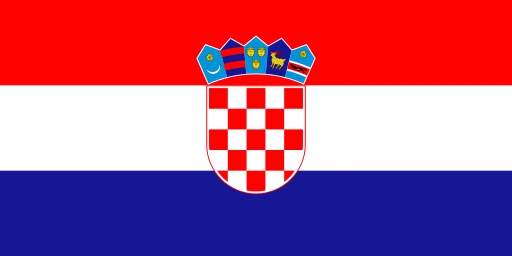 Croatia vs
 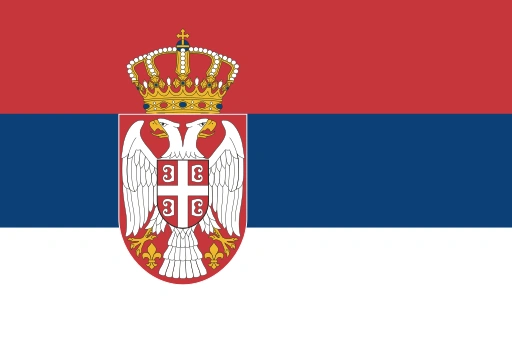 Serbia