Ivory Coast Military Forces
The Ivory Coast ranks #117 of 170 militaries worldwide in 2026, with 27,400 active troops. The Ivorian Army fields 5 main battle tanks; the Air Force flies 19 aircraft. The Ivory Coast has no nuclear weapons.
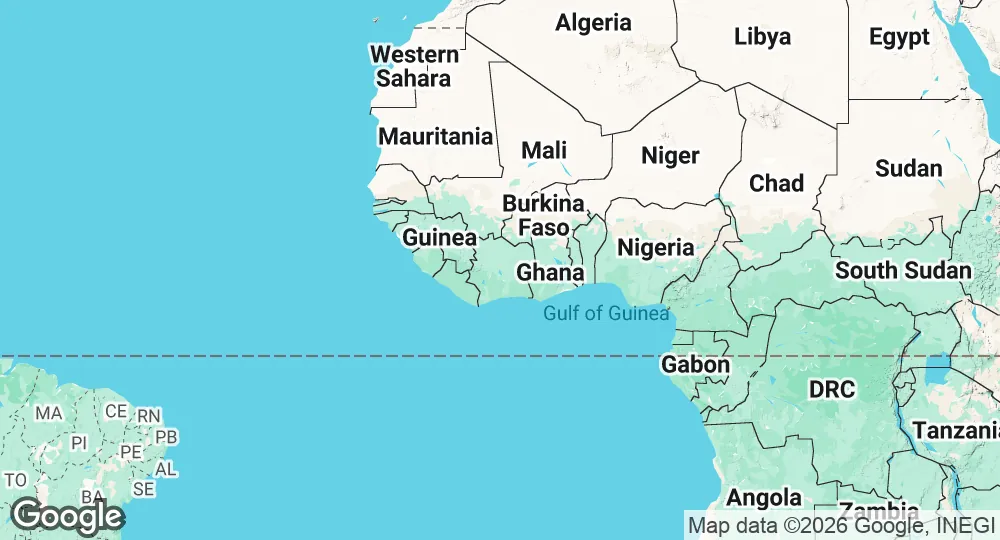
Armed Forces in 2026
| Domain | Strength | Composition |
|---|---|---|
| Air Force | 19 aircraft | 10 helicopters +3 on order |
| Ground Forces | 5 tanks | |
| Personnel | 27,400 active |
ATLAS Index (Aggregate Total of Land, Air and Sea strength)
Full ranking →| Pillar | Weight | Score | Basis |
|---|---|---|---|
| Manpower | 10% | 29.7 | Active, reserve & paramilitary personnel |
| Ground forces | 20% | 13.8 | ARMS inventory power: armour & artillery by type and era, attack helicopters, armament |
| Naval power | 20% | 0.0 | SEAS inventory power: hulls by type, size and era, air wing, sustainment, armament |
| Air power | 25% | 14.7 | AIRS inventory power: aircraft by type and generation, enablers, armament |
| Nuclear deterrent | 10% | 0.0 | No declared nuclear capability |
| Defense budget | 15% | 16.6 | Annual spending, purchasing-power adjusted |
| Availability | modifier | ground ×0.89 · naval ×1.00 · air ×1.08 | Budget per point of each force, from the branch indexes |
Country File
| Population | 32.7M (2025) |
| GDP | $99.8 billion (2025) |
| GDP per capita | $3,050 |
| Military budget | $697M (2024) |
| Share of GDP | 0.8% (2024) |
| Military spending per capita | $21 (2024) |
| Inflation rate | 0.13% (2025) |
| Capital | Yamoussoukro |
| Region | Africa |
| Land area | 318,003 km² |
| Coastline | 515 km |
| Land borders | 3,110 km |
| Bordering countries | 5 |
| Currency | XOF |
Strategic Overview in 2026
The military and defense posture of Ivory Coast (Côte d’Ivoire) is defined by its transition toward strategic autonomy following the withdrawal of permanent French combat forces and a focus on counter-terrorism along its northern borders. The Forces Armées de Côte d'Ivoire (FACI) are currently undergoing a modernization phase to address asymmetric threats originating from the Sahel.
Strategic Position
The primary security concern for Ivory Coast is the southward expansion of jihadist militancy from Mali and Burkina Faso. In response, the government has established the Northern Operational Zone (ZON), a military theater dedicated to securing the northern frontier. This area has seen increased deployments to prevent incursions and manage migratory flows resulting from regional instability.
Ivory Coast maintains a bilateral defense partnership with France, which underwent a transition in early 2025. The permanent French military base at Port-Bouët in Abidjan was handed over to Ivorian authorities in February 2025. The French presence is now characterized by a non-permanent training and advisory mission of approximately 100 personnel focused on signals intelligence and commando instruction.
Regional security cooperation is managed through the Economic Community of West African States (ECOWAS) and the Accra Initiative. In 2025, Ivory Coast and Benin established an operational military partnership supported by France to secure the Gulf of Guinea. The United States also maintains a security relationship with the country, selecting Ivory Coast to host the multinational Flintlock special operations exercises in 2025 and 2026.
Military Forces
The FACI is organized into four main branches: the Army, Navy, Air Force, and National Gendarmerie. The President serves as the Commander-in-Chief, with administrative oversight provided by the Ministry of Defense. Total active military personnel are approximately 27,000, supported by a paramilitary Gendarmerie of roughly 15,000–18,000 and a National Police force of similar size.
Army: The largest branch is divided into four military regions headquartered in Abidjan, Daloa, Bouaké, and Korhogo. Key units include the 1st Infantry Battalion, the Armored Battalion, and the 1st Parachute Commando Battalion. The army fields T-55 main battle tanks and a variety of light armored vehicles, including BMP-1 infantry fighting vehicles and BTR-60/80 and VAB armored personnel carriers. Recent additions include Turkish-made Cobra II vehicles and US-donated light armored trucks for border patrol.
Navy: The National Navy is primarily tasked with coastal surveillance and combating piracy in the Gulf of Guinea. It maintains a fleet that includes OPV 45 patrol vessels and smaller fast attack craft from manufacturers such as Raidco Marine. In 2025, the navy entered negotiations with Turkish shipyards for the acquisition of larger transport and patrol ships.
Air Force: The Air Force operates out of bases in Abidjan and Bouaké. The fleet includes Mi-24 attack helicopters and Mi-17 transport helicopters. Modernization efforts in 2025 and 2026 involve the procurement of Chinese-made K-8 Karakorum light attack/trainer aircraft and Harbin Z-9 helicopters.
Specialized Capabilities:
-
Special Forces: Established in 2012, this elite unit includes specialized detachments for urban intervention (Commando Delta) and jungle warfare.
-
Cyber Defense: In April 2025, the National Assembly ratified a digital security bill establishing the National Agency for Information Systems Security (ANSSI) as the lead body for protecting critical infrastructure and coordinating responses to cyber incidents.
Strategic Trends
Defense spending is approximately 0.9% of GDP. Procurement priorities focus on border surveillance and intelligence-gathering technologies. The Ivorian General Staff is currently integrating Ground Master 200 radars to improve airspace and border monitoring.
A notable trend is the diversification of security partners. While maintaining ties with Western nations, Ivory Coast has increasingly sought equipment and financing from China, Turkey, and Israel. However, Israeli exports of light weaponry and loitering munitions faced restrictions in early 2025 due to concerns over domestic political stability surrounding the October 2025 presidential and December 2025 legislative elections.
The military's future force structure emphasizes professionalization and the integration of satellite intelligence and unmanned aerial vehicles (UAVs) to compensate for the reduction in foreign troop presence and to provide persistent surveillance of the northern border zones.
Military Expenditure: CIA World Factbook. Last updated on 25 September 2026. Suggest a change
Frequently Asked Questions
How large is Ivory Coast's military?
What is Ivory Coast's defense budget?
How does Ivory Coast rank militarily in the world?
Does Ivory Coast have nuclear weapons?
How many aircraft does Ivory Coast's air force have?
How many tanks does Ivory Coast have?
What percentage of GDP does Ivory Coast spend on defense?
What is Ivory Coast's military personnel per capita?
- SEP 252026 Updated Population, GDP and inflation added for 2025; inflation series revised
- AUG 42026 Updated Global Military Index updated in a site-wide editorial pass
- JUL 162026 Updated Global Military Index updated in a site-wide editorial pass
- JUN 162026 Updated Yearly statistics, military spending and 2 more fields updated
- JAN 172026 Updated Main battle tank count and Global Military Index updated
- JAN 132026 Updated Description updated