Dominican Republic Military Forces
The Dominican Republic ranks #106 of 170 militaries worldwide in 2026, with 56,050 active troops. The Dominican Army fields 5 main battle tanks; the Air Force flies 80 aircraft, including 8 combat aircraft. The Dominican Republic has no nuclear weapons.
Armed Forces in 2026
| Domain | Strength | Composition |
|---|---|---|
| Air Force | 80 aircraft | 8 combat 36 helicopters 1 air bases |
| Ground Forces | 5 tanks | |
| Personnel | 56,050 active | 15,000 paramilitary |
ATLAS Index (Aggregate Total of Land, Air and Sea strength)
Full ranking →| Pillar | Weight | Score | Basis |
|---|---|---|---|
| Manpower | 10% | 36.2 | Active, reserve & paramilitary personnel |
| Ground forces | 20% | 13.8 | ARMS inventory power: armour & artillery by type and era, attack helicopters, armament |
| Naval power | 20% | 0.0 | SEAS inventory power: hulls by type, size and era, air wing, sustainment, armament |
| Air power | 25% | 18.0 | AIRS inventory power: aircraft by type and generation, enablers, armament |
| Nuclear deterrent | 10% | 0.0 | No declared nuclear capability |
| Defense budget | 15% | 18.1 | Annual spending, purchasing-power adjusted |
| Availability | modifier | ground ×0.89 · naval ×1.00 · air ×1.00 | Budget per point of each force, from the branch indexes |
Country File
| Population | 11.5M (2025) |
| GDP | $127.4 billion (2025) |
| GDP per capita | $11,059 |
| Military budget | $994M (2024) |
| Share of GDP | 0.8% (2024) |
| Military spending per capita | $86 (2024) |
| Inflation rate | 3.87% (2025) |
| Capital | Santo Domingo |
| Region | America |
| Land area | 48,320 km² |
| Coastline | 1,288 km |
| Land borders | 360 km |
| Bordering countries | 1 |
| Currency | DOP |
Strategic Overview in 2026
Strategic Position
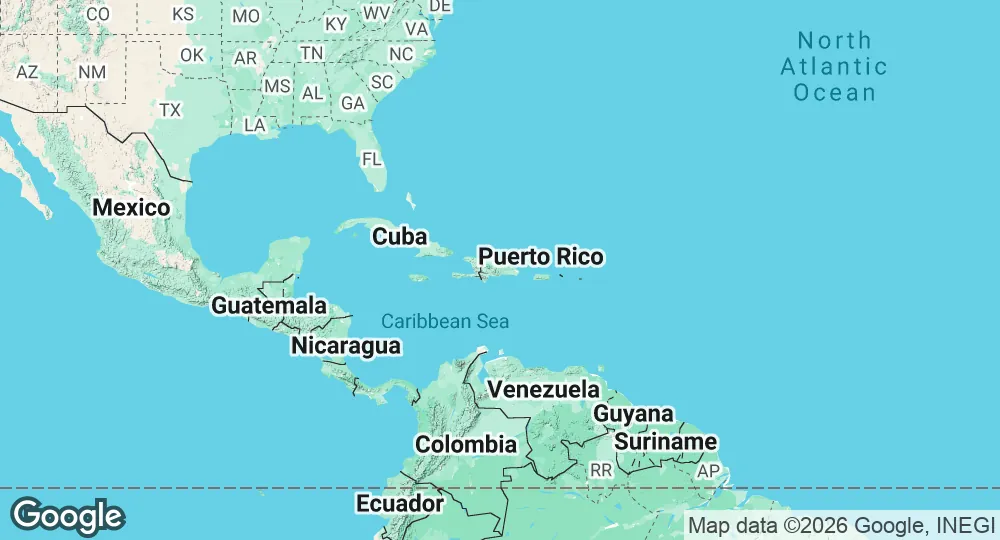
The Dominican Republic occupies a central position in the Caribbean, sharing the island of Hispaniola with Haiti. The nation's defense doctrine is primarily shaped by the persistent political and humanitarian instability in Haiti, which drives concerns regarding irregular migration, transnational organized crime, and border security. In 2025 and 2026, the Dominican government accelerated the construction of a border wall, planned to reach 176 kilometers in length by late 2026. This barrier integrates physical obstacles with advanced surveillance technologies, including motion sensors, drones, and fiber-optic systems.
Geopolitically, the Dominican Republic maintains a close security partnership with the United States. In late 2025, the government authorized a technical agreement allowing U.S. military forces temporary access to restricted zones at San Isidro Air Base and Las Américas International Airport to support counter-narcotics and maritime interdiction operations. Regionally, the country is a member of the Central American Integration System (SICA) and the Rio Treaty. It frequently participates in regional security exercises, such as Tradewinds, to enhance interoperability with Caribbean and North American partners.
Military Forces
The Armed Forces of the Dominican Republic (Fuerzas Armadas de la República Dominicana) are overseen by the Ministry of Defense and consist of three primary branches. Total active personnel are estimated between 60,000 and 90,000, supplemented by a significant reserve component.
- Army (Ejército de República Dominicana - ERD): The largest branch, organized into six infantry brigades, an air cavalry squadron, and a combat service support brigade. The Army maintains a heavy presence along the 392-kilometer border with Haiti, utilizing the Specialized Corps for Land Border Security (CESFRONT). Equipment includes light armored vehicles, such as the VAMTAC, and older M-41 light tanks, though recent modernization focuses on mobile infantry and surveillance capabilities rather than heavy armor.
- Navy (Armada de República Dominicana - ARD): Tasked with coastal defense and maritime law enforcement. The fleet consists primarily of coastal patrol vessels, interceptor boats, and several larger ocean-going patrol ships. The Navy operates a small aviation wing equipped with utility helicopters for search and rescue and maritime surveillance.
- Air Force (Fuerza Aérea de República Dominicana - FARD): Operates from two main bases: San Isidro in the south and Puerto Plata in the north. The primary combat capability is centered on a fleet of A-29 Super Tucano light attack aircraft used for border patrol and counter-narcotics missions. The inventory also includes transport aircraft (such as the EADS CASA C-212) and a variety of helicopters, including UH-1H Huey II and Bell 430 models.
Specialized capabilities include the C5i system (Command, Control, Communications, Computers, Cybersecurity, and Intelligence), which serves as the central technological hub for inter-agency coordination. The military also maintains specialized counter-terrorism and disaster relief units.
Strategic Trends
The Dominican defense budget for 2025 is approximately $1.1 billion, representing roughly 0.7% of GDP. Spending trends indicate a shift toward technological modernization and border fortification rather than traditional territorial defense against state actors. A new Strategic Plan (2025–2028) emphasizes the acquisition of unmanned aerial vehicles (UAVs) and the enhancement of cyber defense capabilities to protect critical infrastructure.
Procurement priorities focus on the renewal of the naval fleet and the acquisition of additional air defense systems to secure national airspace. Domestic defense activity is largely restricted to the maintenance and repair of existing platforms, with the country remaining heavily reliant on imports from the United States, Spain, and Brazil for advanced military hardware.
The primary constraint facing the military is the volatility of the situation in Haiti, which necessitates the permanent deployment of over 10,000 troops to the border region. This sustained operational tempo places significant pressure on the personnel budget and equipment readiness. Additionally, the Dominican Republic is increasingly positioning itself as a regional security leader, coordinating sub-regional roadmaps to combat the illicit trafficking of firearms and ammunition through 2026.
Military Expenditure: CIA World Factbook. Last updated on 25 September 2026. Suggest a change
Frequently Asked Questions
How large is Dominican Republic's military?
What is Dominican Republic's defense budget?
How does Dominican Republic rank militarily in the world?
Does Dominican Republic have nuclear weapons?
How many aircraft does Dominican Republic's air force have?
How many tanks does Dominican Republic have?
What percentage of GDP does Dominican Republic spend on defense?
What is Dominican Republic's military personnel per capita?
Does Dominican Republic have paramilitary forces?
- SEP 252026 Updated Population, GDP and inflation added for 2025; GDP series revised
- AUG 42026 Updated Global Military Index updated in a site-wide editorial pass
- AUG 32026 Updated Global Military Index updated
- JUL 162026 Updated Global Military Index updated in a site-wide editorial pass
- JUN 162026 Updated Yearly statistics, military spending and 2 more fields updated
- JAN 172026 Updated Main battle tank count and Global Military Index updated
- JAN 132026 Updated Description added