Strategic Position
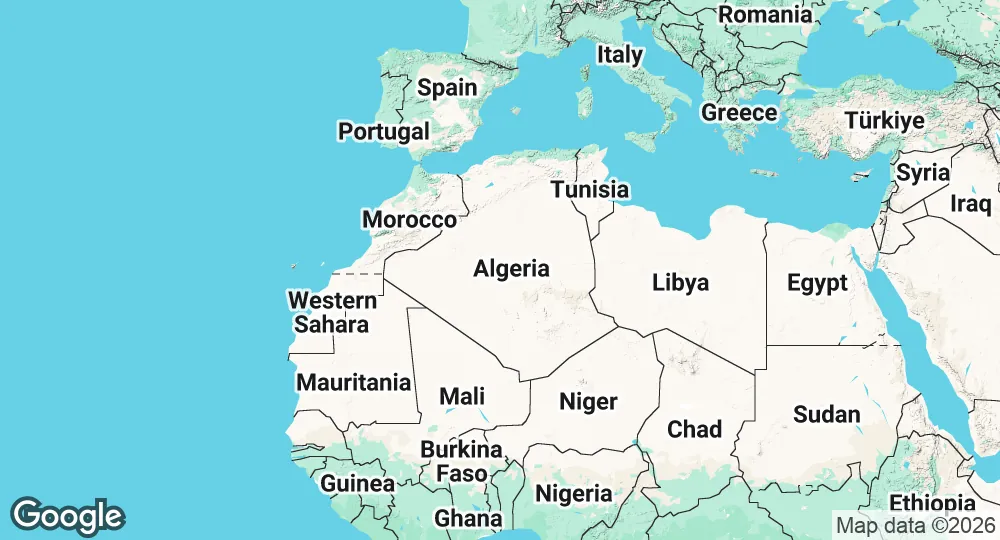
Algeria occupies a central geopolitical role in North Africa and the Sahel, sharing borders with seven states, including Libya, Mali, and Niger. The primary security concerns focus on the instability of the Sahel region, characterized by transnational militancy, arms trafficking, and the spillover of conflict from neighboring territories. A secondary priority is the long-standing structural rivalry with Morocco, centered on the Western Sahara dispute and the closed border between the two nations. Algeria provides political and military support to the Polisario Front, which remains a focal point of its regional strategy.
Defense doctrine has historically emphasized territorial integrity and non-intervention. However, a 2020 constitutional amendment allows for the deployment of the People's National Army (ANP) beyond national borders for peacekeeping and humanitarian missions under the auspices of the United Nations, African Union, or Arab League. Algeria maintains a strategic partnership with Russia, its primary arms supplier, while diversifying bilateral cooperation with China and several European nations, particularly in the Mediterranean maritime sector.
Military Forces
The People's National Army (ANP) is organized into several branches: Land Forces, Air Force, Navy, and Air Defense Forces of the Territory (DAT). The military operates under a centralized command structure with the President serving as the Minister of National Defense. Total active personnel are estimated at approximately 130,000, supported by a reserve force of 150,000 and a substantial paramilitary Gendarmerie under the defense ministry.
- Land Forces: The army is the largest branch, fielding T-90SA and T-72 main battle tanks. It operates BMP-2 and BMP-3 infantry fighting vehicles alongside BTR-80 armored personnel carriers. Specialized capabilities include Iskander-E tactical ballistic missile systems and TOS-1A thermobaric rocket launchers.
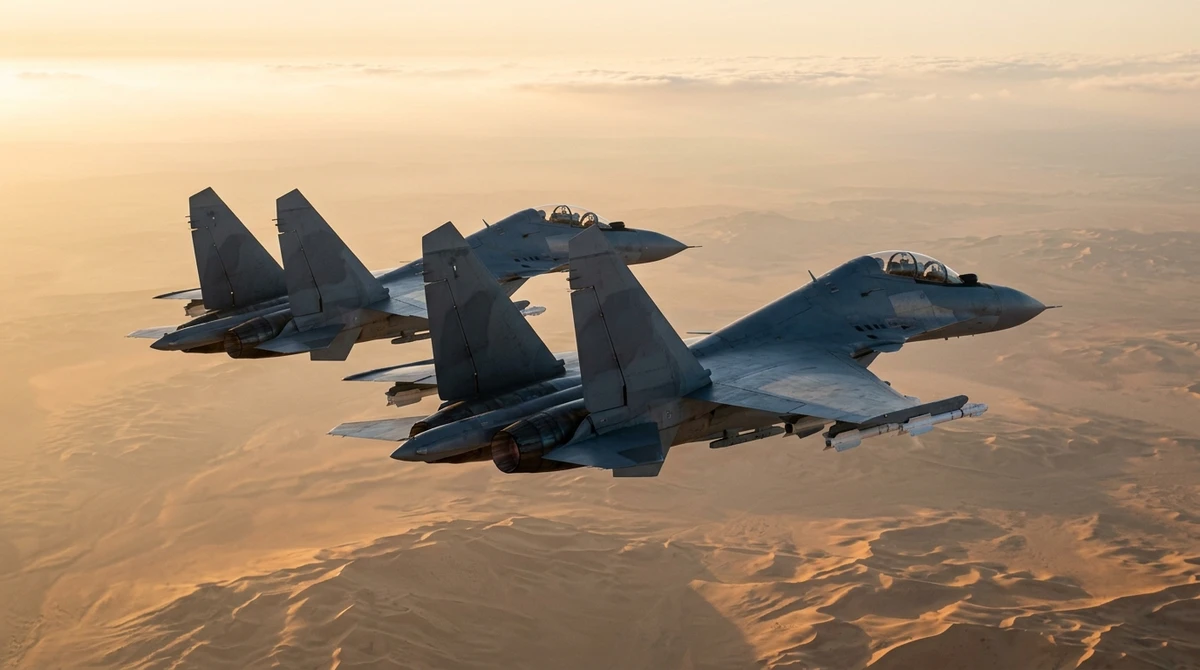
- Air Force: The fleet is centered on Su-30MKA multirole fighters and MiG-29M/M2 interceptors. Pilot training is conducted using Yak-130 advanced jet trainers. In late 2025, reports indicated the initial delivery of Su-57 fifth-generation fighters as part of a modernization initiative. Transport is facilitated by Il-76 and C-130 platforms.
- Navy: Naval capabilities focus on denial-of-access in the Western Mediterranean. The fleet includes Project 636 Kilo-class submarines, MEKO A-200 frigates, and Chinese-built C28A corvettes. These vessels are equipped with Kalibr and C-802 cruise missiles for anti-ship and land-attack missions.
- Air Defense (DAT): Algeria operates a multi-layered integrated air defense system. This includes S-300PMU-2 and S-400 Triumf long-range systems, the latter of which was publicly demonstrated in operational exercises during 2025. Short-to-medium range protection is provided by Pantsir-S1 and Tor-M2 systems.
Defense Industry
Algeria possesses an expanding domestic defense industry focused on reducing import reliance for certain platform categories. The Direction des Fabrications Militaires (DFM) oversees state-owned production facilities.
- Vehicle Production: Through joint ventures, Algeria manufactures Fuchs 2 armored personnel carriers and Mercedes-Benz tactical trucks at facilities in Tiaret and Rouiba.
- Small Arms and Munitions: The Khenchela Mechanical Company (ECMK) produces small arms under license, including AK-series rifles and PK-pattern machine guns.
- Aeronautics: Indigenous drone development has resulted in the El Djazaïr-54 and 55 unmanned aerial vehicles, which are utilized for reconnaissance and border surveillance. Maintenance and repair organizations provide overhauls for Russian-origin rotary-wing and fixed-wing aircraft.
Strategic Trends
The Algerian defense budget for 2026 is projected at approximately $25 billion, continuing a trend of high expenditure that accounts for roughly 20% of the national budget and nearly 9% of GDP. These funds are prioritized for the "full digital modernization" of the ANP, an initiative scheduled for 2026 that focuses on command-and-control systems, electronic warfare, and cybersecurity.
Procurement shifts indicate a growing interest in unmanned systems and precision-guided munitions. While Russia remains the dominant supplier, Algeria has increasingly sourced MALE (Medium-Altitude Long-Endurance) drones and radar systems from China and Turkey to monitor its 6,000 kilometers of land borders. A primary constraint on the military's modernization is the reliance on volatile hydrocarbon revenues to fund its high-cost acquisition programs and the logistical challenge of maintaining diverse equipment types from multiple international suppliers.