Morocco Military Forces
Morocco ranks #33 of 170 militaries worldwide in 2026, with 195,800 active troops. The Moroccan Army fields 6,388 ground vehicles, including 903 main battle tanks; the Air Force flies 298 aircraft, including 92 combat aircraft; the Navy operates 106 warships. Morocco has no nuclear weapons.
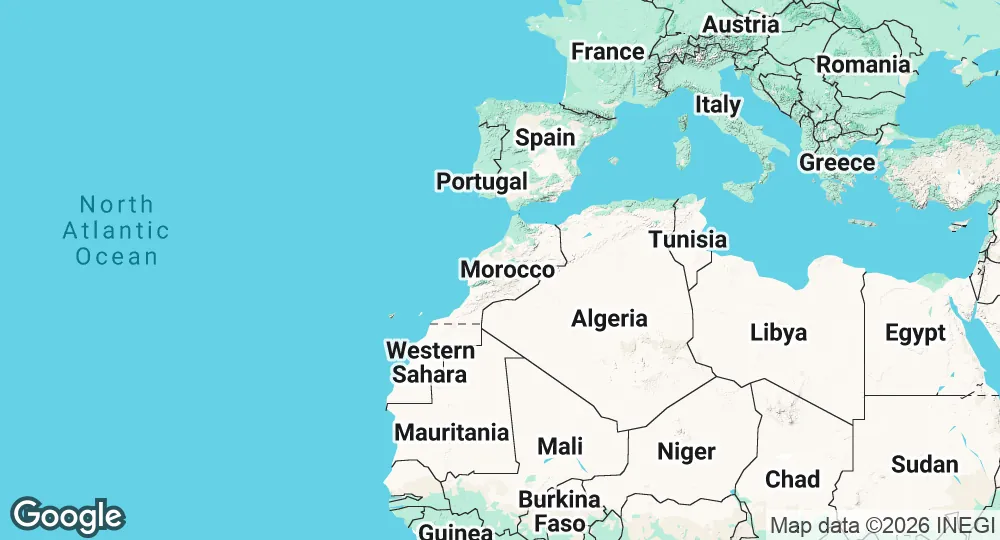
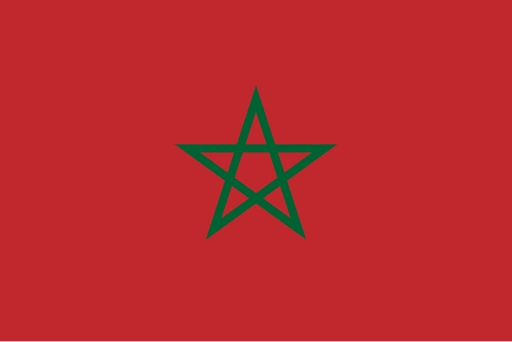
Armed Forces in 2026
| Domain | Strength | Composition |
|---|---|---|
| Royal Moroccan Air Force | 298 aircraft | 92 combat 100 helicopters 8 air bases +54 on order |
| Royal Moroccan Navy | 106 warships | 6 major combatants |
| Ground Forces | 6,388 vehicles | 903 main battle tanks |
| Personnel | 195,800 active | 150,000 reserve 50,000 paramilitary |
ATLAS Index (Aggregate Total of Land, Air and Sea strength)
Full ranking →| Pillar | Weight | Score | Basis |
|---|---|---|---|
| Manpower | 10% | 54.5 | Active, reserve & paramilitary personnel |
| Ground forces | 20% | 50.9 | ARMS inventory power: armour & artillery by type and era, attack helicopters, armament |
| Naval power | 20% | 34.1 | SEAS inventory power: hulls by type, size and era, air wing, sustainment, armament |
| Air power | 25% | 30.7 | AIRS inventory power: aircraft by type and generation, enablers, armament |
| Nuclear deterrent | 10% | 0.0 | No declared nuclear capability |
| Defense budget | 15% | 33.9 | Annual spending, purchasing-power adjusted |
| Availability | modifier | ground ×0.97 · naval ×1.04 · air ×1.06 | Budget per point of each force, from the branch indexes |
Country File
| Population | 38.1M (2024) |
| GDP | $160.6 billion (2024) |
| GDP per capita | $4,218 |
| Military budget | $6.4B (2024) |
| Share of GDP | 4.0% (2024) |
| Military spending per capita | $169 (2024) |
| Inflation rate | 0.99% (2024) |
| Capital | Rabat |
| Region | Africa |
| Land area | 446,300 km² |
| Coastline | 2,945 km |
| Land borders | 2,018 km |
| Bordering countries | 3 |
| Currency | MAD |
Strategic Overview in 2026
Strategic Position
Morocco's defense posture is centered on the territorial integrity of the Western Sahara and a long-standing geopolitical rivalry with Algeria. Following the 2020 U.S. recognition of Moroccan sovereignty over the Sahara, Rabat has transitioned toward a "StraitBelt" doctrine. This strategy emphasizes maritime sovereignty across the Mediterranean and Atlantic axes and positions the military as a regional security provider for the Sahel and West Africa.
The kingdom maintains a deep security partnership with the United States, formalized through the 2020–2030 Defense Cooperation Roadmap and its status as a Major Non-NATO Ally. Morocco is a frequent host of the African Lion exercise, the largest annual U.S. military maneuver on the continent. Additionally, the 2020 Abraham Accords facilitated a formal defense relationship with Israel, leading to the establishment of a Joint Military Committee and a 2026 military action plan focused on intelligence sharing, technology transfer, and joint training. Morocco also participates in NATO's Mediterranean Dialogue and maintains bilateral security agreements with France, Spain, and various Gulf Cooperation Council states.
Military Forces
The Royal Armed Forces (FAR) are divided into the Royal Moroccan Army, Royal Moroccan Air Force, Royal Moroccan Navy, and the Royal Gendarmerie. The force comprises approximately 200,000 active-duty personnel, supported by a reserve force and paramilitary units. In 2026, the FAR expects to add approximately 5,500 new recruits.
Royal Moroccan Army (RMA): The land force is the primary branch, tasked with border security along the "Berm" in the Western Sahara and the eastern border with Algeria. The RMA operates a diverse fleet of main battle tanks, including M1A1 and M1A2 Abrams, VT-4, and T-72B units. Artillery modernization has introduced HIMARS, PULS multi-launch rocket systems, and ATMOS 2000 self-propelled howitzers. Anti-tank capabilities rely on TOW, Kornet, and HJ-8L missile systems. Specialized units include the 1st and 2nd Parachute Brigades and a dedicated "Russian Brigade" equipped with Soviet-lineage hardware, frequently utilized in opposition-force training.
Royal Moroccan Air Force (RMAF): The RMAF is undergoing a modernization shift toward fifth-generation capabilities. Current fighter strength is built around F-16 Fighting Falcons, which are being upgraded to the Block 70/72 "Viper" standard, alongside modernized Mirage F1 and F-5 Tiger II aircraft. Unmanned Aerial Vehicles (UAVs) are a core component of the current inventory, featuring Bayraktar TB2, Wing Loong II, and MQ-9B SeaGuardian platforms. In 2026, the RMAF is exploring the potential acquisition of the F-35 Lightning II as part of a multi-decade modernization package.
Royal Moroccan Navy (RMN): The navy focuses on littoral defense and securing the Strait of Gibraltar. Its primary surface combatants include the FREMM-class frigate Mohammed VI and three SIGMA-class multi-mission frigates. These are supported by Floréal-class surveillance frigates and a fleet of offshore patrol vessels.
Air Defense and Space: Morocco operates a multi-layered air defense network including Patriot PAC-3, BARAK MX, Sky Dragon 50, and VL MICA systems. In the space domain, the military utilizes the Ofek-13 satellite for intelligence, surveillance, and reconnaissance (ISR).
Defense Industry
Since 2020, Morocco has implemented Law 10.20 and Decree 2.23.925 to establish a domestic military-industrial base. Two defense-dedicated industrial acceleration zones are scheduled to be operational by the end of 2026. These zones offer tax incentives to attract foreign investment and technology transfer.
Current industrial projects include:
- Armored Vehicles: A joint venture with Tata Advanced Systems in Berrechid to manufacture WhAP 8x8 armored vehicles.
- UAV Production: The establishment of a plant in Ben Slimane by BlueBird Aero Systems for the local production of Spy-X loitering munitions.
- Maintenance Hubs: A maintenance, repair, and overhaul (MRO) center in Benslimane for F-16 and C-130 aircraft, operated in partnership with Lockheed Martin and Sabena Engineering.
Strategic Trends
The 2026 defense budget allocates approximately 73 billion dirhams for payment credits, representing roughly 3.4% to 4% of GDP. This funding supports a shift toward "Defense 5.0," which prioritizes electronic warfare, cyber defense, and electromagnetic superiority. Procurement priorities focus on long-range precision strike capabilities, advanced ISR, and the indigenization of munitions production. A primary constraint remains the fiscal challenge of maintaining a high-tech arms race with Algeria while simultaneously funding national social and economic development programs.
Military Expenditure: CIA World Factbook. Last updated on 4 August 2026. Suggest a change
Frequently Asked Questions
How large is Morocco's military?
What is Morocco's defense budget?
How does Morocco rank militarily in the world?
Does Morocco have nuclear weapons?
How many aircraft does Morocco's air force have?
How large is Morocco's navy?
How many tanks does Morocco have?
What percentage of GDP does Morocco spend on defense?
What is Morocco's military personnel per capita?
Does Morocco have paramilitary forces?
- AUG 42026 Updated Global Military Index updated in a site-wide editorial pass
- AUG 32026 Updated Global Military Index updated
- JUL 242026 Updated Global Military Index updated
- JUL 162026 Updated Global Military Index updated in a site-wide editorial pass
- JUL 12026 Updated Rank insignia and ranks overview added
- JUN 162026 Updated Yearly statistics, military spending and 2 more fields updated
- JAN 172026 Updated Main battle tank count and Global Military Index updated