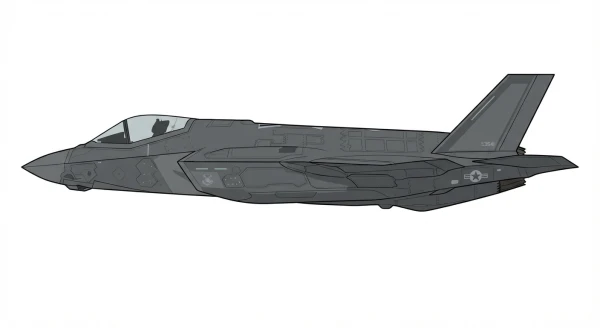
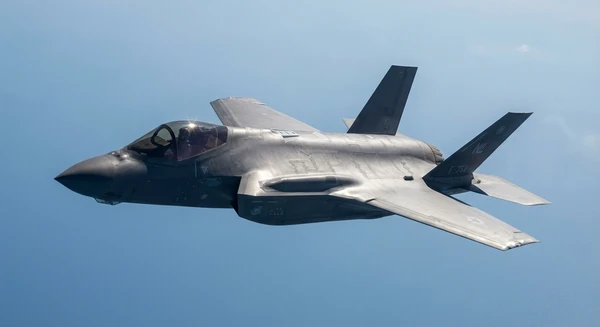
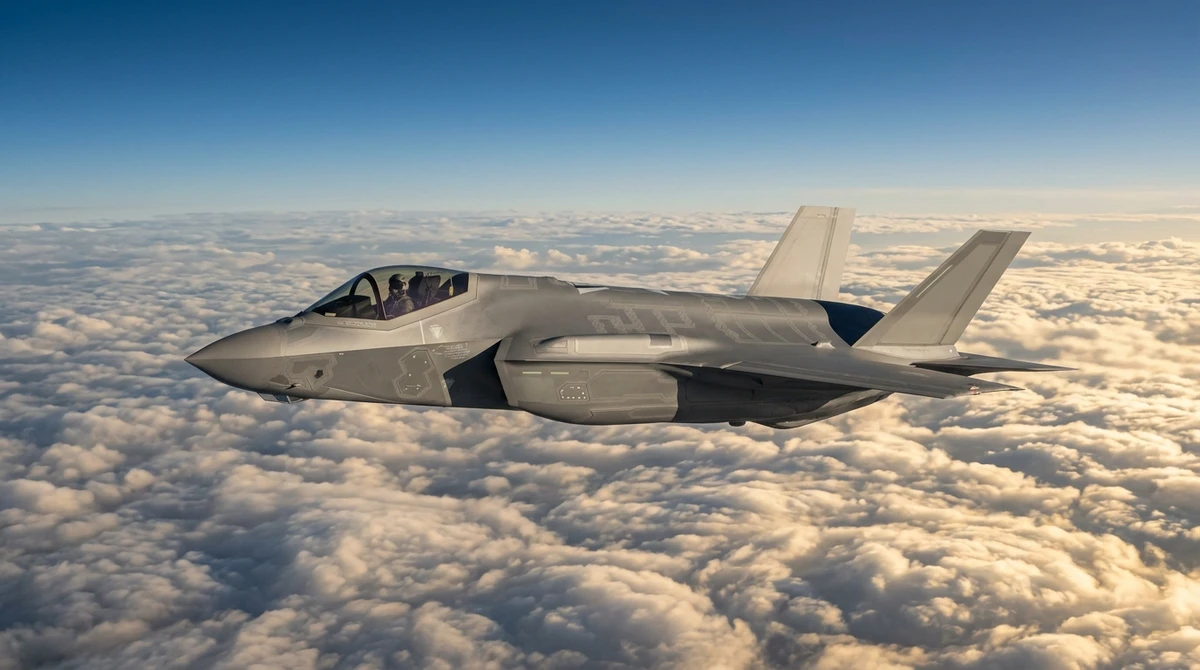
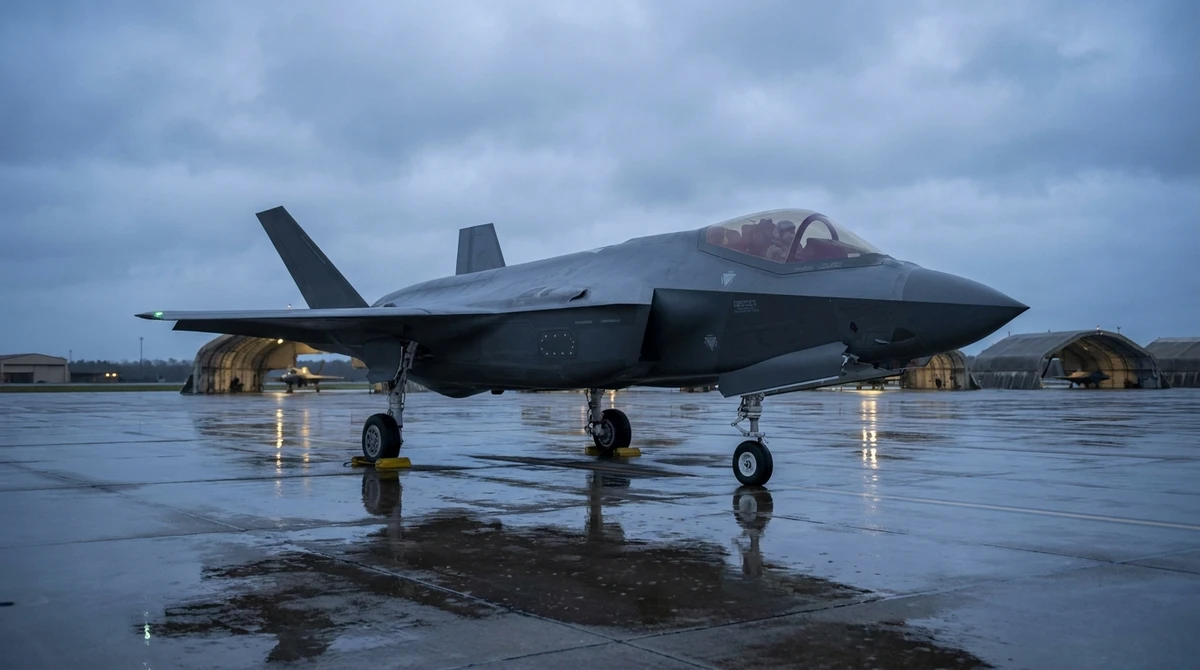
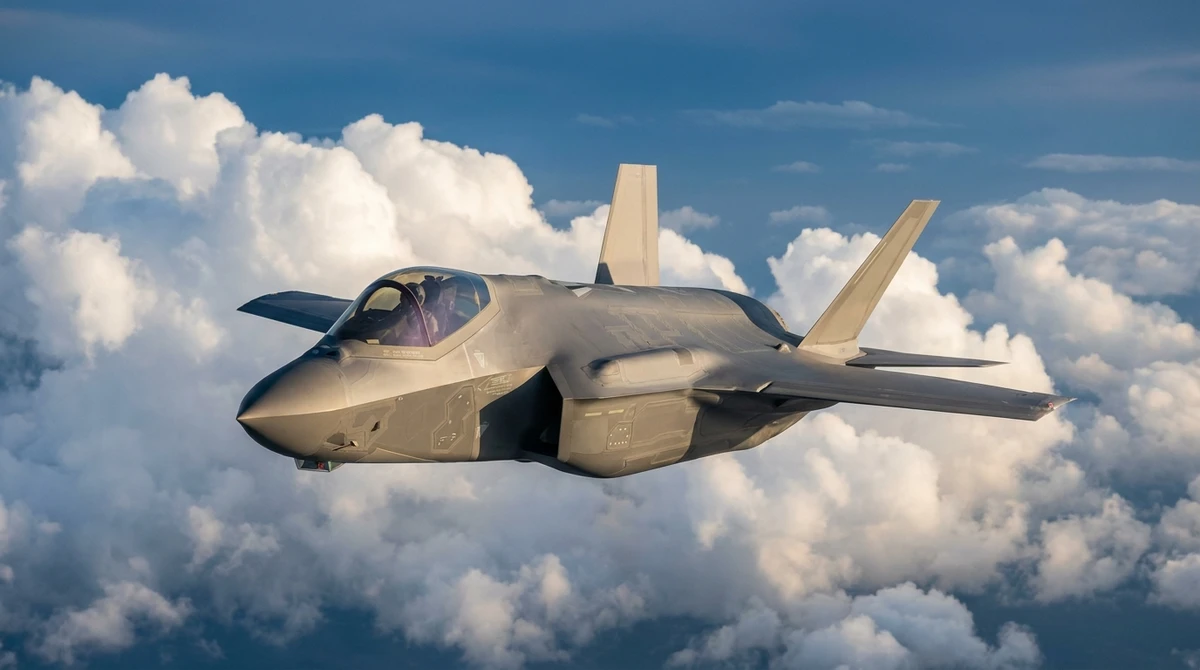
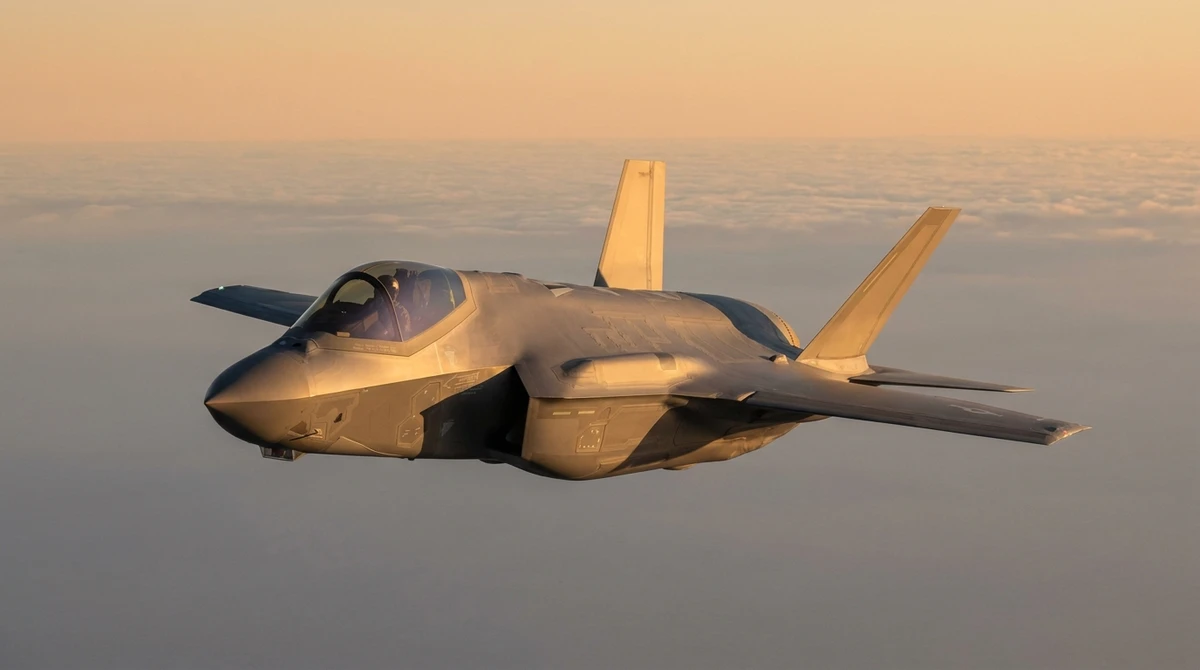
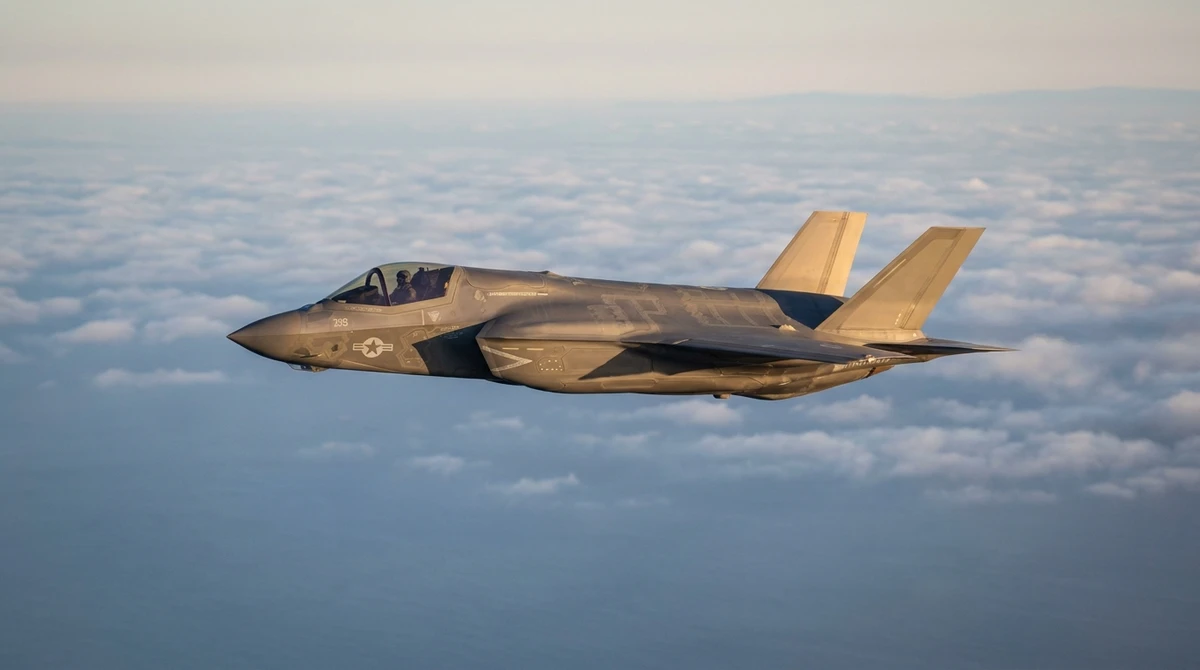
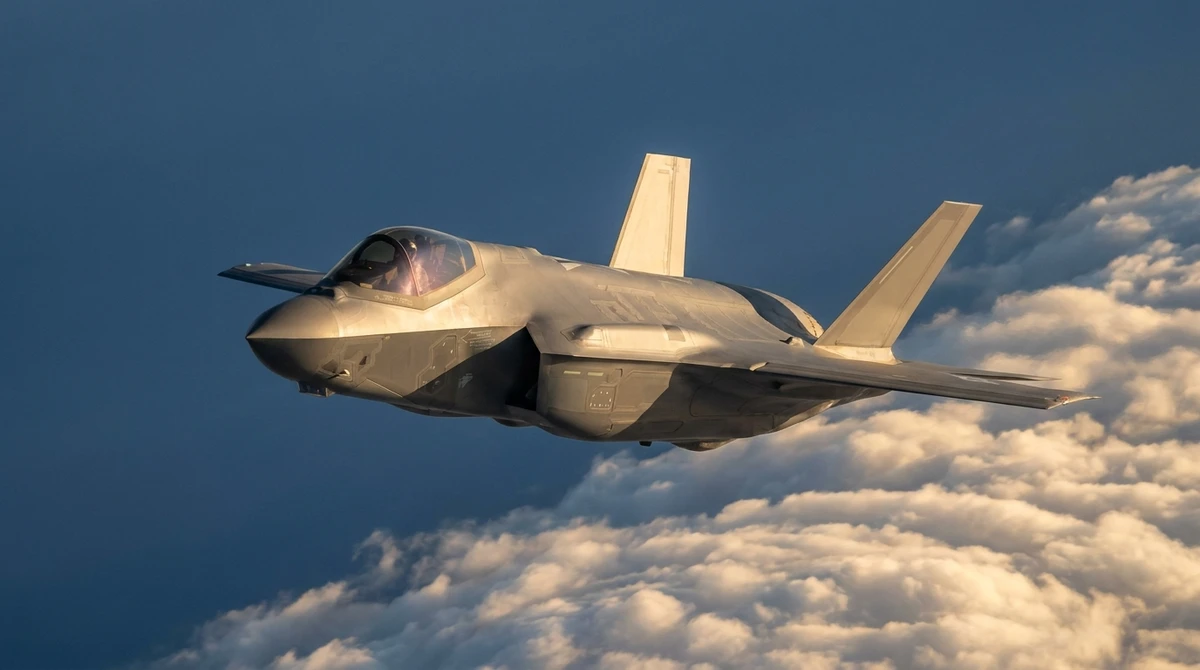
The Lockheed Martin F-35 Lightning II is an American family of single-seat, single-engine, supersonic stealth multirole strike fighters developed for air superiority, strike, electronic warfare, and intelligence missions. Lockheed Martin serves as prime contractor, partnered with Northrop Grumman and BAE Systems. The aircraft entered service in 2015 with the US Marine Corps, followed by the US Air Force in 2016 and US Navy in 2019. It is known as the world's most-numerous stealth aircraft, with 883 in service as of 2025, operating across land and carrier-based variants.
Development
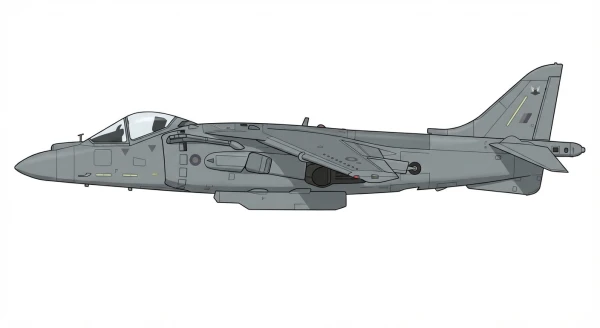
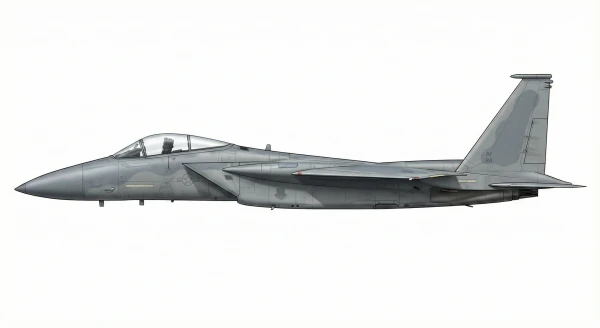
The program originated from the Joint Strike Fighter competition, which merged earlier tactical aircraft projects to replace the F-16, F/A-18, and AV-8B. In October 2001, Lockheed Martin's X-35 demonstrator won the contract over Boeing's X-32. Development was funded primarily by the United States alongside international partners including the United Kingdom, Italy, and Australia. The first production F-35A flew on 15 December 2006. Global deliveries reached approximately 1,300 aircraft by 2025, with full-rate production capacity reaching 156 units annually.
Design
The F-35 utilizes a wing-tail airframe with 35% composite materials, diverterless supersonic inlets, and canted vertical stabilizers to reduce radar cross-section. Power is provided by a Pratt & Whitney F135 turbofan generating 43,000 lbf of thrust with afterburner, reaching a maximum speed of Mach 1.6. The F-35B incorporates a shaft-driven lift fan and swivel nozzle for short takeoff and vertical landing operations. Sensors include the AN/APG-81 AESA radar, AN/AAQ-37 electro-optical distributed aperture system, and AN/ASQ-239 electronic warfare suite. The cockpit features a helmet-mounted display system that projects flight and targeting data directly onto the pilot's visor.
Armament
For low-observable missions, ordnance is carried in two internal weapons bays housing AIM-120 AMRAAM missiles, JDAM guided bombs, or B61 Mod 12 nuclear weapons on certified F-35As. Non-stealth operations utilize six external wing hardpoints, increasing maximum total payload capacity to 18,000 pounds. The F-35A carries an internal 25 mm GAU-22/A rotary cannon with 182 rounds, whereas the F-35B and F-35C employ an external centerline gun pod containing 220 rounds.
Operational History
The F-35 first saw combat in May 2018 during Israeli Air Force strikes in Syria, followed by US Marine Corps F-35B strikes in Afghanistan in September 2018. US forces subsequently deployed the aircraft in combat over Iraq, Yemen, Venezuela, and Iran. The Royal Air Force conducted its first combat sorties over Iraq and Syria in 2019. Major export operators include Australia, Israel, Italy, Japan, Norway, South Korea, and the Netherlands.
Variants
- F-35A: Conventional takeoff and landing variant built for land-based operations with an internal cannon and 9 g maneuver limit.
- F-35B: Short takeoff and vertical landing variant fitted with a shaft-driven lift fan for shipboard and short-field operations.
- F-35C: Carrier-based catapult-assisted takeoff and arrested recovery variant featuring larger foldable wings and reinforced landing gear.
- F-35I "Adir": Modified F-35A derivative operated by Israel, customized with indigenous electronic warfare systems and weapons integration capabilities.