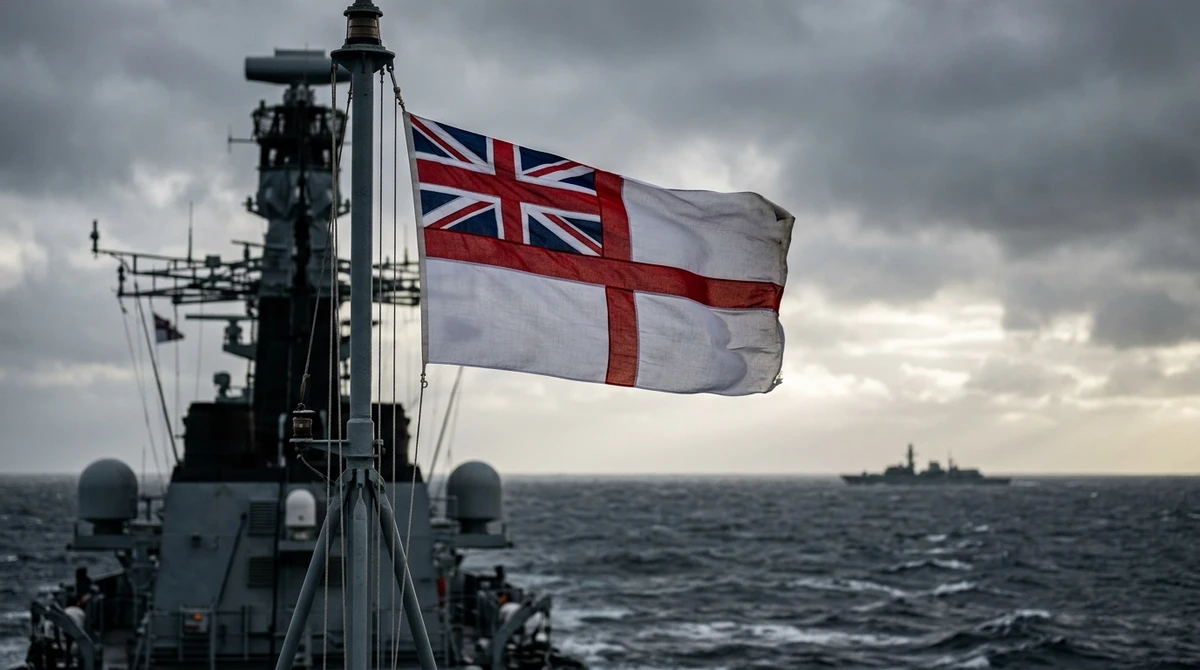
The Type 45 destroyer, also designated as the Daring class, was developed to replace the Royal Navy’s Type 42 destroyers. The project originated from the multi-national NFR-90 and Horizon-class frigate programs. Following withdrawal from the Horizon project in 1999 due to differing national requirements, the United Kingdom initiated a national design. BAE Systems served as the prime contractor, employing a modular construction method across shipyards in Govan, Scotstoun, and Portsmouth. The first vessel, HMS Daring, entered service in 2009. While twelve ships were initially planned, the procurement was subsequently reduced to six.
The class is designed for anti-aircraft and anti-missile warfare, utilizing the Sea Viper air-defence system. This system integrates SAMPSON multi-function and S1850M long-range radars to track and engage aerial targets, including supersonic sea-skimming missiles. The vessels feature a superstructure with concealed deck equipment to reduce the radar signature. The Type 45 is the first Royal Navy class to utilize integrated electric propulsion, powered by gas turbines and diesel generators. This system allows for power distribution between propulsion and onboard services. The design encountered reliability issues in warm climates attributed to the gas turbine intercoolers, leading to the Power Improvement Project to install larger diesel generators across the class. Internal arrangements include gender-neutral living spaces and individual cubicles for communal facilities.
The six ships of the class were commissioned between 2009 and 2013. Operational service has included deployments to the Persian Gulf and the Red Sea. In late 2023 and early 2024, HMS Diamond intercepted multiple drones and a ballistic missile in the Red Sea; this was the first combat ballistic missile interception by the Royal Navy. Several vessels have experienced propulsion-related failures during deployments, leading to a scheduled refit program to enhance system resilience. The class is based at HMNB Portsmouth. Current Ministry of Defence projections indicate the class will be decommissioned by the end of 2038, with the Type 83 destroyer designated as the successor.