AW101
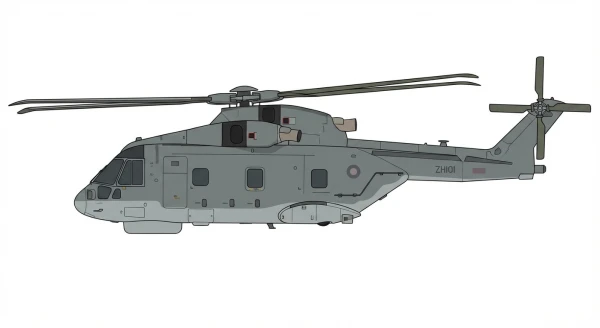
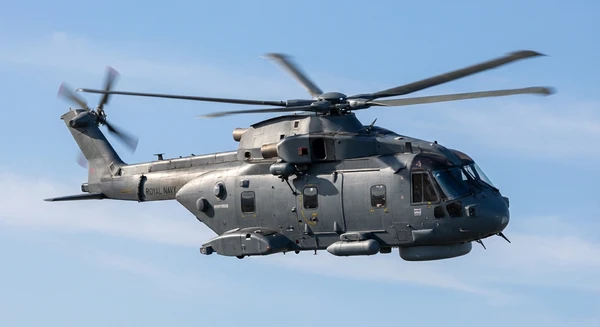
British-Italian medium-lift helicopter, notable for search and rescue, anti-submarine warfare, and troop transport operations globally since the early 2000s. Key figures: top speed 309 km/h, range 1,389 km, service ceiling 2,600 m, max takeoff weight 12,900 kg, unit price $70M, built 137. In service with 10 air forces as of 2026 — United Kingdom (54), Italy (34), Norway (16) and 7 others.
| Crew | 2 |
| Length | 20.4 m (66.9 ft) |
| Wingspan | 18.6 m (61.0 ft) |
| Height | 6.6 m (21.5 ft) |
| Empty weight | 6,850 kg (15,102 lbs) |
| Max. takeoff weight | 12,900 kg (28,440 lbs) |
| Powerplant | 3 × turboshafts Rolls-Royce Gnome H1400 1,044 kW each |
| Maximum speed | 309 km/h (192 mph) |
| Operational range | 1,389 km (863 mi) |
| Service ceiling | 2,600 m (8,530 ft) |
| Climb rate | 14.5 m/s (47.6 ft/s) |
-
 United Kingdom
54
United Kingdom
54
-
 Italy
34
Italy
34
-
 Norway
16
Norway
16
-
 Denmark
14
Denmark
14
-
 Canada
13 +3
Canada
13 +3
-
 Portugal
12
Portugal
12
-
 Japan
10
Japan
10
-
 Algeria
5
Algeria
5
-
 Poland
4 +22
Poland
4 +22
-
 Nigeria
2
Nigeria
2
Recent Events — AW101
3 events →
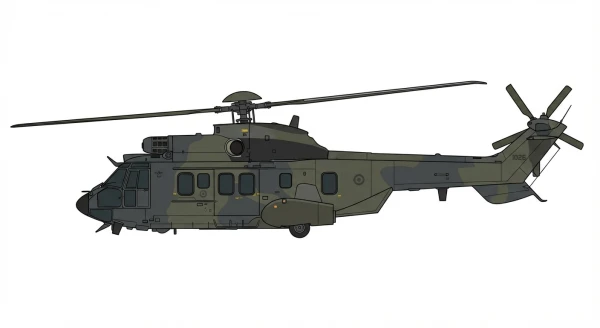
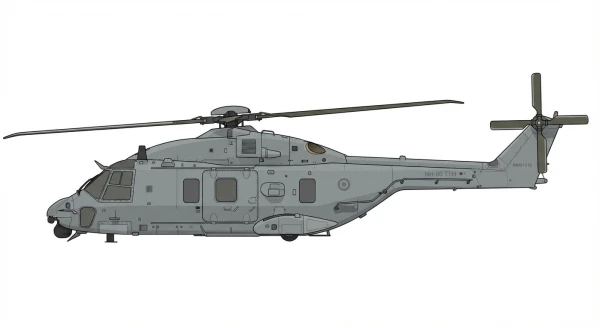
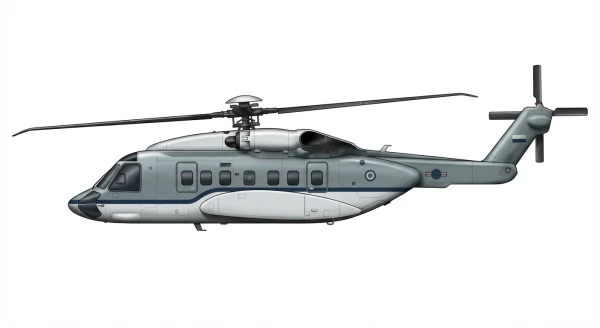
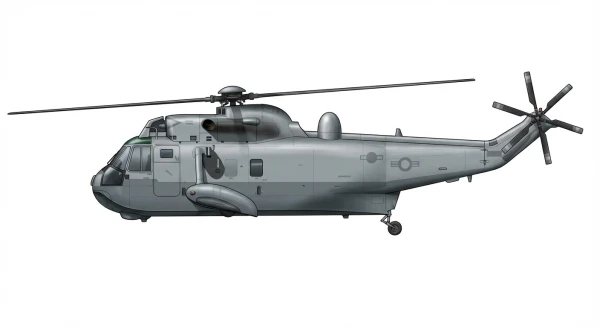
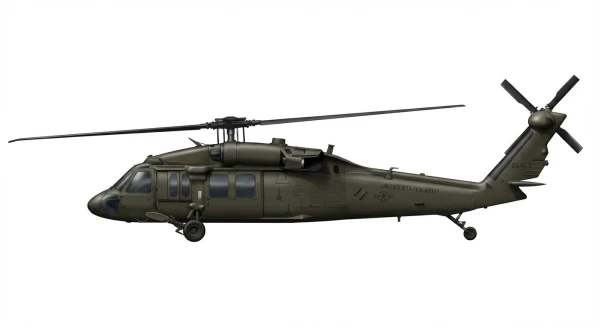
Description
The AgustaWestland AW101 is an Anglo-Italian medium-lift military and civil helicopter produced in Yeovil, England, and Vergiate, Italy. Developed by Westland Helicopters and Agusta, the type entered service in 1999 for anti-submarine warfare, search and rescue, and transport roles. It is widely designated as the Merlin.
Development
Development began in 1977 after the British Ministry of Defence issued a requirement for an anti-submarine warfare helicopter to replace the Royal Navy's Sea Kings. Westland and Agusta formed EH Industries Limited to produce the aircraft, designated EH101, which first flew on 9 October 1987. Testing was suspended for six months following a prototype crash on 21 January 1993. Initial Royal Air Force and Royal Navy deliveries began in 1997. Following Westland and Agusta's 2000 merger, the aircraft was formally rebranded as the AW101 in 2007.
Design
The AW101 utilizes a modular aluminium-lithium alloy airframe and an active vibration control system. Power is supplied by three turboshaft engines—either Rolls-Royce Turbomeca RTM322 or General Electric CT7 variants—driving an 18.59-meter five-bladed composite main rotor. The glass cockpit includes six high-definition displays and dual flight controls linked to a dual-duplex digital automatic flight control system. Radar options include the Ferranti Blue Kestrel or RDR-1600 search radars. The main cargo cabin accommodates up to 24 seated troops, 45 standing troops, 16 stretchers, or a 5,440 kg external load.
Armament
Defensive systems include chaff and flare dispensers, directed infrared countermeasures, electronic support measures, and laser warning receivers. Underside hardpoints on anti-submarine variants carry up to four Sting Ray torpedoes or Mk 11 Mod 3 depth charges. Transport variants can mount general-purpose machine guns in up to five cabin door and window apertures.
Operational History
The Royal Navy entered the Merlin into operational service in 2000, deploying HM1 and upgraded HM2 variants to Iraq, the Caribbean, and the Persian Gulf. Royal Air Force transport variants served in the Balkans, Iraq, and Afghanistan before being transferred to the Royal Navy's Commando Helicopter Force. The Italian Navy operates 22 AW101s in anti-submarine, early warning, and amphibious roles. Other operators include Canada, Denmark, Portugal, Norway, Poland, Algeria, and Japan, where Kawasaki license-assembles the MCH-101.
Variants
- Merlin HM1: Royal Navy anti-submarine warfare variant equipped with Blue Kestrel radar and FLASH dipping sonar.
- Merlin HM2: Upgraded Royal Navy anti-submarine variant featuring digital cockpits and multi-static sonar processing.
- CH-149 Cormorant: Canadian Armed Forces search and rescue variant adapted for North Atlantic operations.
- MCH-101: Japan Maritime Self-Defense Force mine countermeasures and transport variant license-assembled by Kawasaki.
- HH-101A: Italian Air Force combat search and rescue variant powered by CT7-8E engines.
Frequently Asked Questions
What type of aircraft is the AW101?
What is the maximum speed of the AW101?
What is the range of the AW101?
When did the AW101 first fly?
How many AW101 have been built?
Which countries operate the AW101?
How much does a AW101 cost?
What is the service ceiling of the AW101?
- AUG 62026 Updated Description updated
- AUG 52026 Updated Powerplant updated in a site-wide editorial pass
- JUL 232026 Updated Sources and cross-references refreshed
- APR 72026 Updated Sources and cross-references refreshed
- FEB 72026 Updated Wingspan added
- JAN 242026 Updated Top speed updated
- JAN 122026 Updated Range updated in a site-wide editorial pass